Summary
Jim Halpert is The Office's calm, camera-aware reaction figure: a Dunder Mifflin salesman whose whiteboard explanations, deadpan looks, quiet smirks, and mockumentary glances became reusable meme language. Online, Jim is most often used for restrained disbelief, smugly obvious advice, workplace frustration, consumer complaints, relationship observations, and "you see this too, right?" reactions. His memes work because he turns ordinary annoyance into a clean, controlled visual beat. On Gagbase, this page should cover Jim-centered reaction images and templates, while broader Office ensemble memes stay on the work page.
Description
Overview
Jim Halpert is the dry, camera-aware salesman from the U.S. version of The Office who became one of the internet's most useful faces for quiet disbelief, smug explanations, workplace sarcasm, and "I am trying to stay normal about this" reactions. Played by John Krasinski, Jim begins the series as a Dunder Mifflin employee whose pranks, deadpan looks, and slow-burn romance with Pam Beesly help define the show's mockumentary style.1
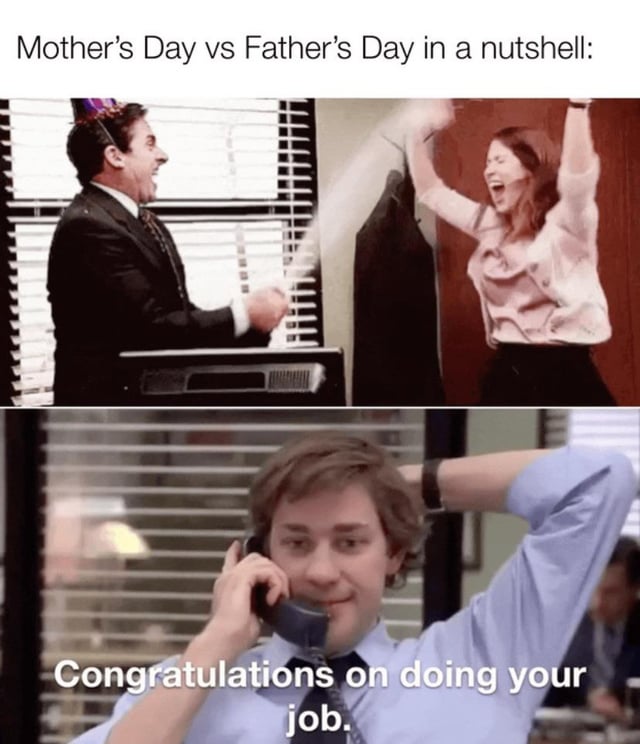
On Gagbase, this character page should cover memes where Jim himself is the main visual signal: the Jim whiteboard explanation format, Jim looking into the camera, Jim smiling through blinds, Jim's smug or disappointed reaction shots, and Office scenes where his presence carries the joke. Broader ensemble posts belong on The Office work page unless Jim is clearly the meme's central subject.
Source And Character Context
The Office is an American mockumentary sitcom adapted by Greg Daniels from the British series created by Ricky Gervais and Stephen Merchant. It aired on NBC from March 24, 2005, to May 16, 2013, and follows the employees of the fictional Dunder Mifflin Paper Company in Scranton, Pennsylvania.2
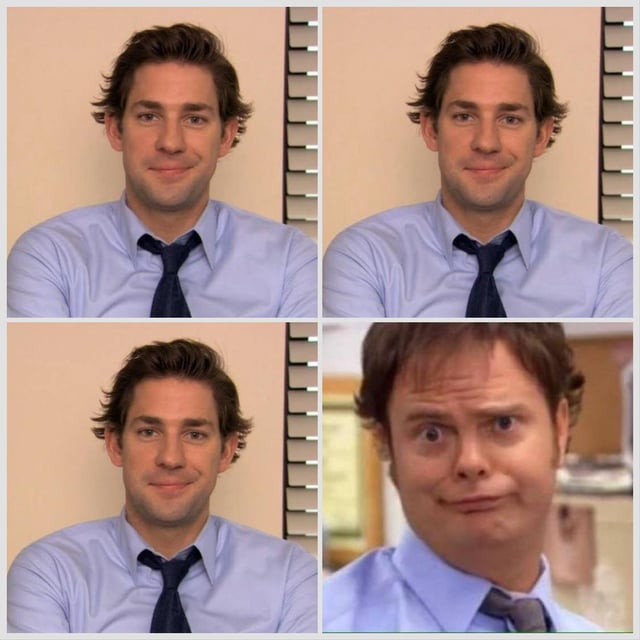
Jim's original role is built around restraint. He is often the person who notices the absurdity of the room before anyone else says it aloud. The show uses mockumentary looks to camera, awkward pauses, and desk-level reactions to let Jim act as a stand-in for the viewer. That structure became unusually meme-friendly: a single screenshot can say "you see this too, right?" without needing a caption to explain the whole scene.
Meme Development
Jim Halpert memes grew with the wider online afterlife of The Office. The series stayed visible long after its finale through streaming, reaction GIFs, quote posts, and social-media screenshots; Teen Vogue described the show's meme life as part of why it remained familiar to younger audiences.3 TIME's roundup of Office memes also highlights how the show produced recurring formats from character expressions, quotes, and awkward workplace scenes.4
Jim's strongest internet role is slightly different from Michael Scott's or Dwight Schrute's. Michael is usually exaggerated cringe or panic. Dwight is overconfident logic. Jim is the controlled observer: the person presenting a simple point on a whiteboard, glancing at the camera when reality becomes too much, or smiling as if the obvious conclusion has finally arrived.
The Jim Whiteboard Format
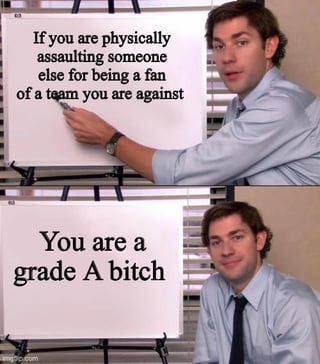
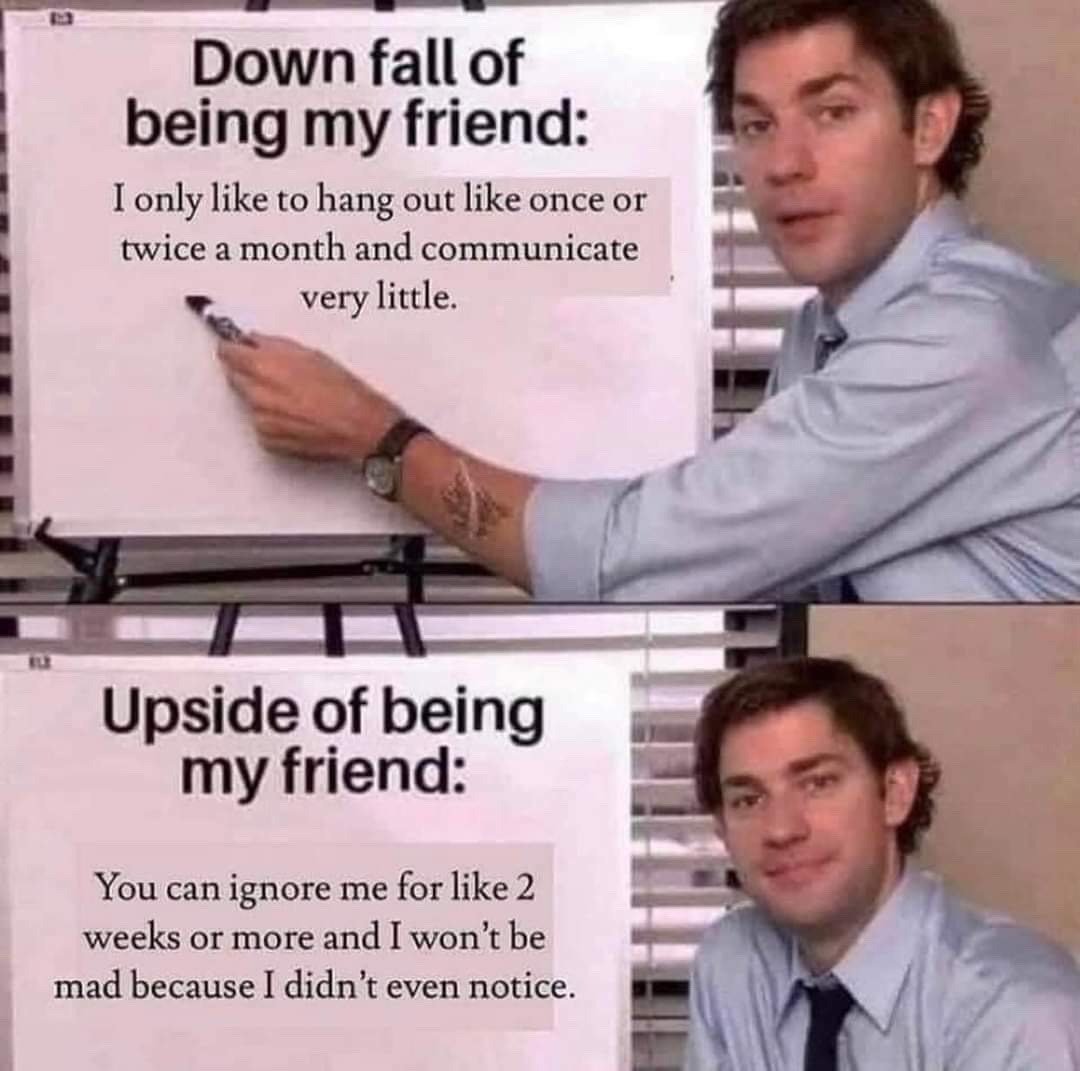
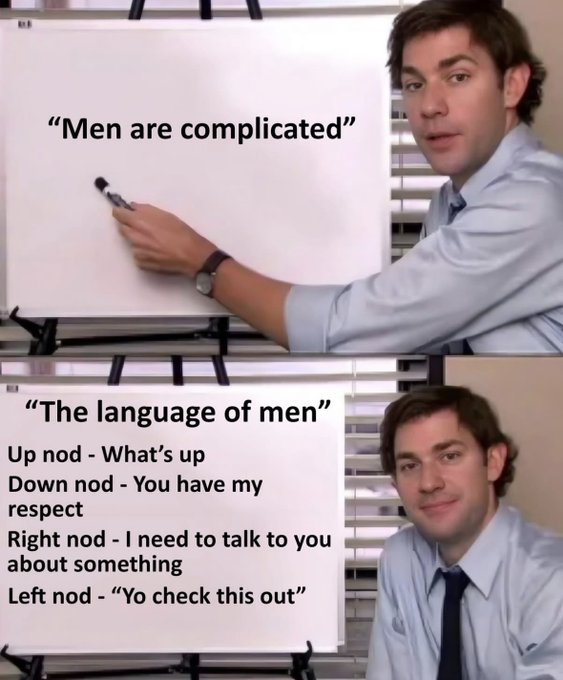
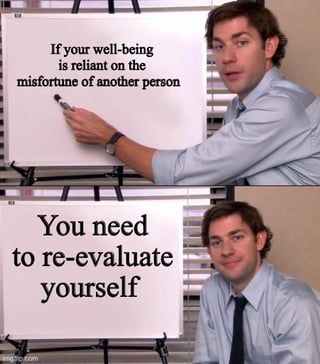
The most common Jim-specific template is the two-panel whiteboard or presentation meme. In the first panel, Jim stands near a whiteboard or flip chart and begins a premise. In the second panel, he sits or turns toward the viewer as the board reveals the punchline. The structure works because it looks like a workplace training slide but behaves like a blunt internet take.
| Element | Visual cue | Meme function |
|---|---|---|
| Setup board | Jim standing beside text | states a rule, social claim, complaint, or observation |
| Reveal board | Jim seated or smiling near the completed text | delivers the punchline as if it were obvious |
| Tone | calm, smug, deadpan, lightly instructional | makes hot takes feel like office policy |
| Common subjects | work, ads, dating, social habits, religion, tech, sports fandom, cost of living | turns broad opinions into tidy two-panel arguments |
The format is especially useful for "here is the difference" jokes. Jim's calm expression lets captions sound reasonable even when they are sarcastic, petty, or absurdly specific.
Other Common Formats
| Format | Visual or text cue | Common use |
|---|---|---|
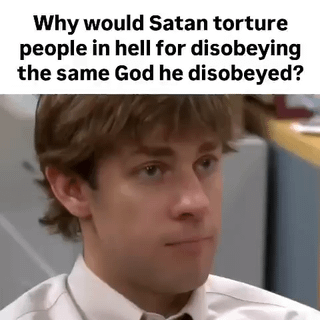
| Jim looking at the camera | direct mockumentary glance, often from his desk | disbelief, silent agreement, seeing through nonsense |
| Jim whiteboard / Jim explains | whiteboard text in two panels | blunt advice, social rules, consumer complaints, political or fandom takes |
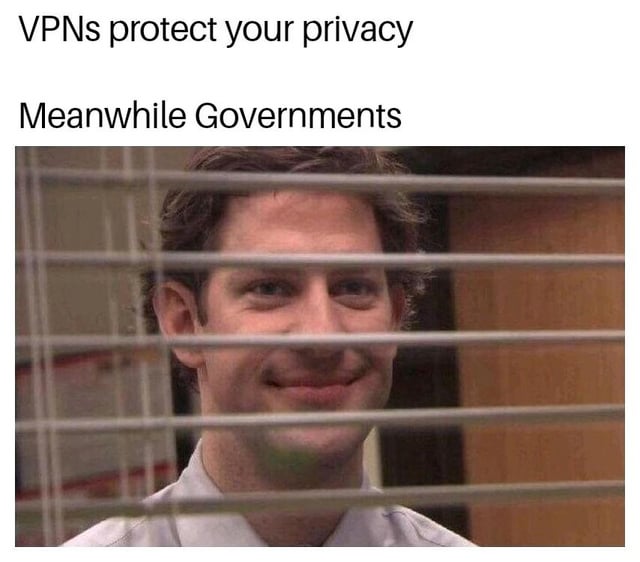
| Smiling through blinds | Jim peeking with a sly expression | surveillance jokes, secret observation, "I can still see you" humor |
| Jim and Dwight scene | Jim questioning or provoking Dwight | contrast between casual skepticism and intense overreaction |
| Jim and Pam context | workplace romance or shared looks | couple jokes, awkward affection, comparison memes |
| Jim as "normal guy" | plain office shirt, calm posture | everyday frustration, quiet judgment, self-aware relatability |
| Jim Baggins / crossover edits | Jim template remixed with another character | fandom mashups, absurd template mutation |
Visual Identifiers
Strong Jim Halpert memes usually include one or more of these signals:
- John Krasinski as Jim in an office shirt, tie, desk setting, conference room, or whiteboard setup.
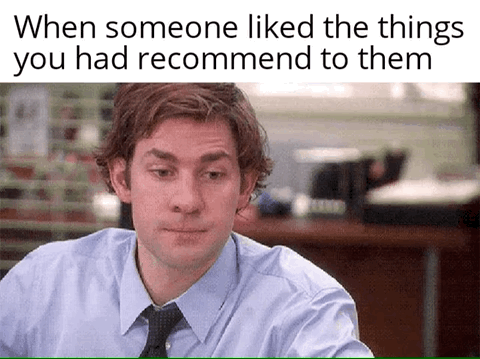
- A direct look into the camera, a knowing half-smile, a tired stare, or a controlled reaction to someone else's chaos.
- The Office mockumentary environment: blinds, desks, fluorescent office lighting, Dunder Mifflin rooms, and documentary-style framing.
- Captions that frame Jim as an explainer, quiet judge, disappointed observer, or person saying the obvious part out loud.
- Whiteboard text that turns a personal complaint into an "official" lesson.
Not every Office screenshot belongs to Jim. If Dwight, Michael, Pam, or an ensemble scene carries the punchline, use the more precise character page or the broader work page instead.
Why It Works Online
Jim works as a meme because he is low-volume but high-signal. He rarely needs to shout. A raised eyebrow, a tight smile, or a glance at the camera can express disbelief more efficiently than a full caption. That makes him easy to reuse in group chats, Reddit threads, X/Twitter replies, Tumblr-style reaction posts, and image macros where the joke is not outrage but recognition.
The whiteboard format adds a second layer. It gives internet users a clean visual structure for making a claim, then pretending the claim is just common sense. This is why Jim memes often appear around consumer annoyance, workplace policies, relationship advice, fandom arguments, social rules, and small everyday frustrations.
Gagbase Scope
Use character/jim-halpert when Jim is visibly the main subject or when the caption explicitly identifies him as the reaction figure. This includes classic whiteboard/presentation templates, single-panel Jim reaction images, Jim looking through blinds, Jim-and-Dwight dialogue scenes where Jim is an active speaker, and edits where the Jim template remains the recognizable source.
Relationship repair should stay conservative. Add canonical Jim when the image clearly shows or names Jim Halpert, but do not attach every Office meme to this page only because it comes from the same show. Crossover edits such as "Jim Baggins" can mention Jim as a source template without necessarily belonging to the canonical Jim character if the edited character is the real subject.
This run found duplicate-looking Jim branches, including the-office-jim-halpert-john-krasinski, the-office-us-tv-series-jim-halpert, and the-office-us-jim-halpert. Canonical Jim was added to high-confidence memes from those branches, while the old branches were left in place for a later explicit merge decision.
Cultural Role
Jim Halpert became a meme character because the internet constantly needs a person who can silently verify that a situation is ridiculous. He is not the loudest person in the room, and that is exactly the point. His meme value comes from controlled judgment: the small smile when someone says the quiet part out loud, the whiteboard that turns irritation into a lesson, and the camera glance that makes the audience feel included.
In meme culture, Jim is less a sitcom salesman than a reusable posture. He is the office worker who has seen this before, the friend who already knows where the argument is going, and the internet user calmly presenting a complaint as if it were a quarterly report.
-
Wikipedia, Jim Halpert, for the character's role, performer, and basic series context. ↩
-
Wikipedia, The Office (American TV series), for the U.S. series dates, adaptation background, mockumentary format, and Scranton setting. ↩
-
Teen Vogue, The Office Lives Forever Through the Power of Memes, for discussion of the show's continued social-media and meme relevance. ↩
-
TIME, The Ultimate Ranking of the Best Memes of The Office, for examples of recurring Office meme formats and reaction use. ↩