Summary
Squidward Tentacles is the SpongeBob SquarePants character whose annoyed, exhausted, jealous, and deadpan reactions made him one of the internet's most flexible cartoon meme figures. Online, Squidward represents FOMO, burnout, social fatigue, disappointment, and the grim humor of adulthood. Major formats include Squidward Looking Out the Window, Sleeping Squidward, Handsome Squidward, Squidward Dab, chair-carrying bait-and-switch edits, and feeling like Squidward mood collages. The character page should collect memes where Squidward is the visible subject or named reaction figure, while broader SpongeBob-only material belongs on the work page.
Description
Overview
Squidward Tentacles is the permanently irritated neighbor, co-worker, and reluctant straight man of SpongeBob SquarePants. Created by Stephen Hillenburg and voiced by Rodger Bumpass, Squidward first appeared in the pilot episode "Help Wanted" on May 1, 1999.1 In the show, he is a turquoise octopus who lives between SpongeBob's pineapple and Patrick's rock, works as the Krusty Krab cashier, plays clarinet with more confidence than public approval, and reacts to Bikini Bottom's chaos with weary contempt.2
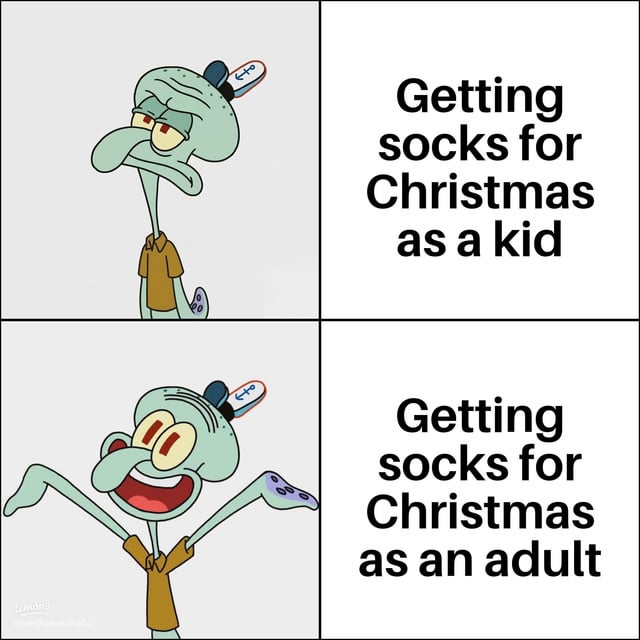
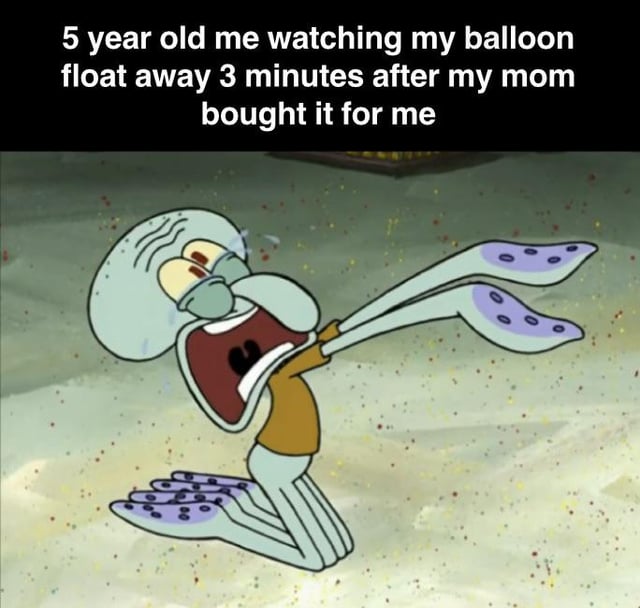
Online, that weary contempt became his superpower. Squidward is one of the most flexible SpongeBob reaction characters because his expressions cover adult annoyance, jealousy, burnout, social anxiety, disappointment, and the small humiliations of everyday life. If SpongeBob often represents chaotic optimism, Squidward often represents the person who has seen enough, clocked out emotionally, and still has to finish the shift.
Origin And Character Background
Squidward's comic function in the original series is built around contrast. SpongeBob and Patrick treat him as a friend; Squidward usually experiences them as noise. He wants refinement, privacy, artistic respect, and peace, but the show keeps returning him to customer service, neighborly disasters, and clarinet practice. That tension made him easy to detach from the original plot and reuse as a general reaction image.
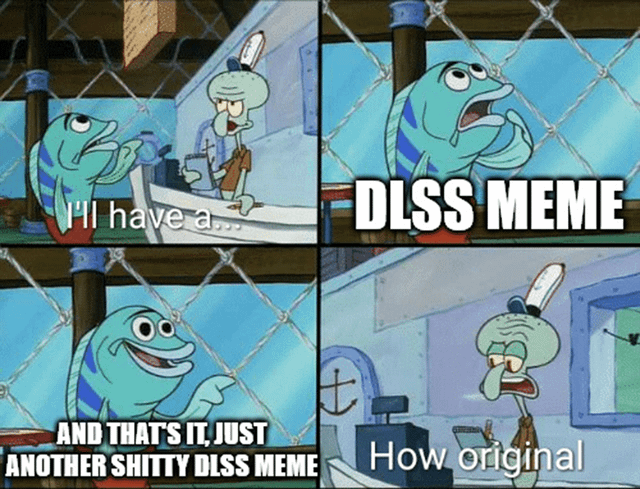
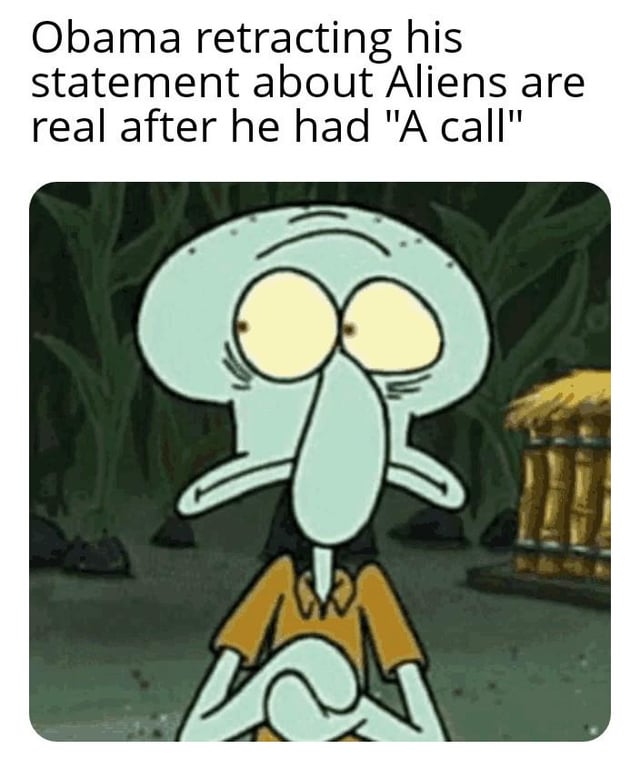
Stephen Hillenburg designed Squidward as an octopus despite the "squid" name, reportedly simplifying his normal six-limbed design for animation.1 His visual design is also unusually readable at meme size: drooping eyelids, long nose, bald head, brown shirt, lanky posture, and a face that can shift from bored to horrified with almost no setup.
Why He Works As A Meme Character
SpongeBob memes became unusually durable because the show's characters express emotions in direct, exaggerated ways. TIME's 2019 guide to SpongeBob memes quoted Know Your Meme editor Matt Schimkowitz describing the franchise as especially rich in repeated formats, while Tom Kenny noted that the characters give meme-makers "so much" emotional material to work with.3 Squidward is central to that system because his emotions are negative but not obscure. Viewers immediately understand when he is resentful, exhausted, jealous, smug, frightened, or quietly done.
That makes Squidward useful as an internet shorthand for:
- feeling left out while others have fun;
- being too tired to socialize;
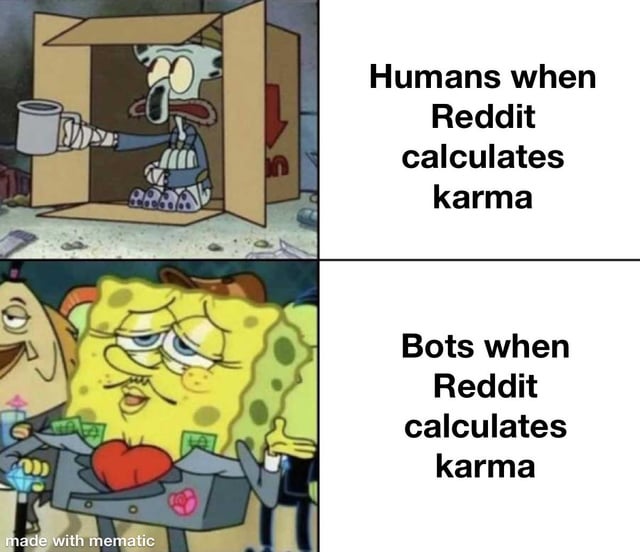
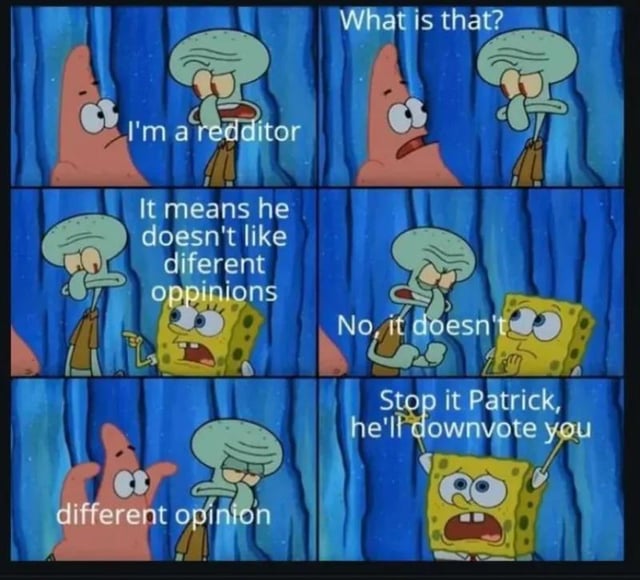
- returning to bed, work, Reddit, or a bad habit despite knowing better;
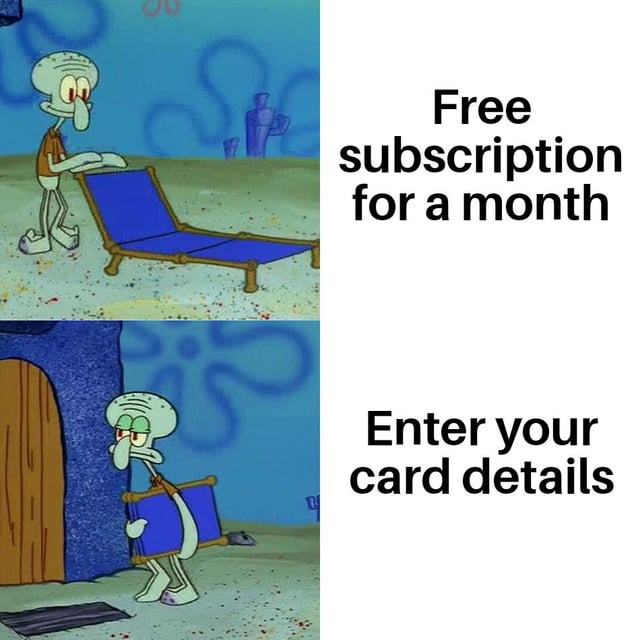
- discovering the fine print in a "good" situation;
- watching someone else enjoy something you cannot access;
- remembering a task at the worst possible moment;
- performing sarcastic dignity while everything around you gets worse.
Major Meme Formats
| Format | Common Use | Notes |
|---|---|---|
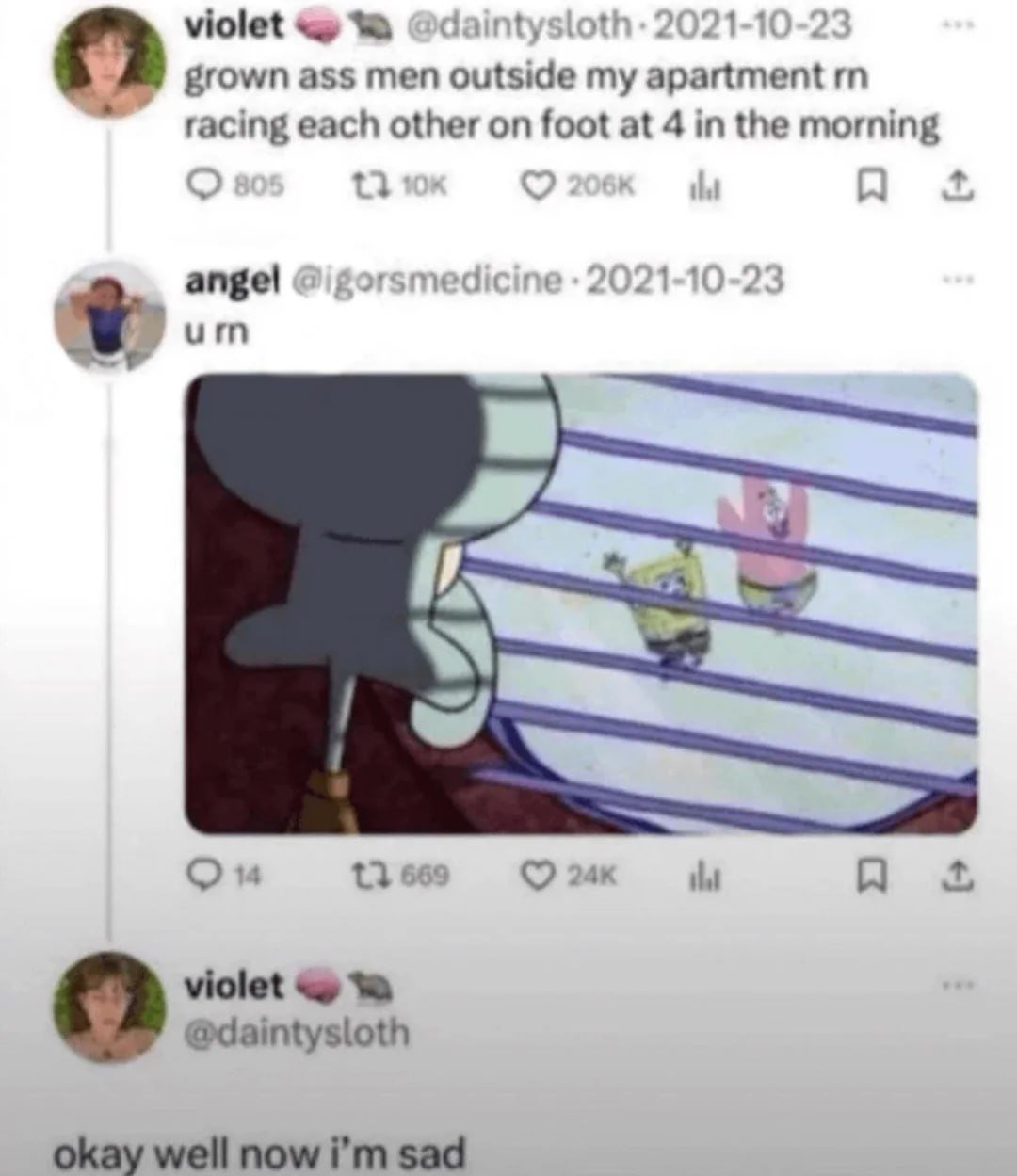
| Squidward Looking Out the Window | FOMO, jealousy, outsider status, watching others enjoy something | Know Your Meme traces the still to "That Sinking Feeling" and notes its use as a reaction and object-labeling image for watching others have fun without you.4 |
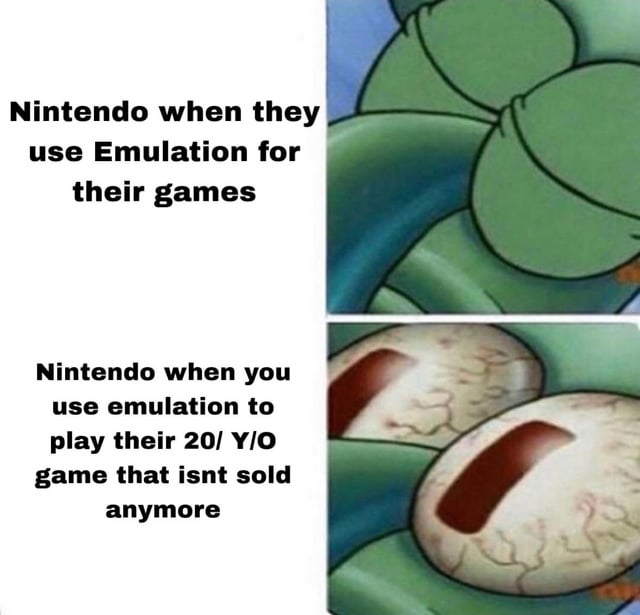
| Sleeping Squidward / Squidward's Open Eyes | Sudden memory, panic, unfinished homework, late-night anxiety | The format uses Squidward opening his eyes in bed, usually for the moment a forgotten obligation arrives in the brain at full volume.5 |
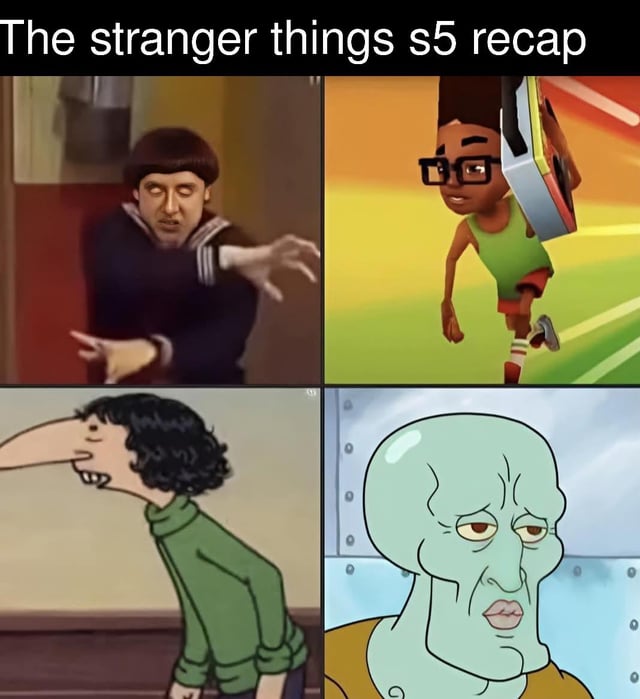
| Handsome Squidward / Squidward Falling | Exaggerated beauty, cursed attraction, remixes, fan art | The meme comes from "The Two Faces of Squidward," where a facial injury makes him comically handsome; the clip became a long-running remix and redraw source.6 |
| Squidward Dab | Mascot-video absurdity, 2016 Vine-era remix culture | A Universal Studios Orlando Squidward mascot doing the dab went viral across Vine, Instagram, Twitter, and Tumblr in early 2016.7 |
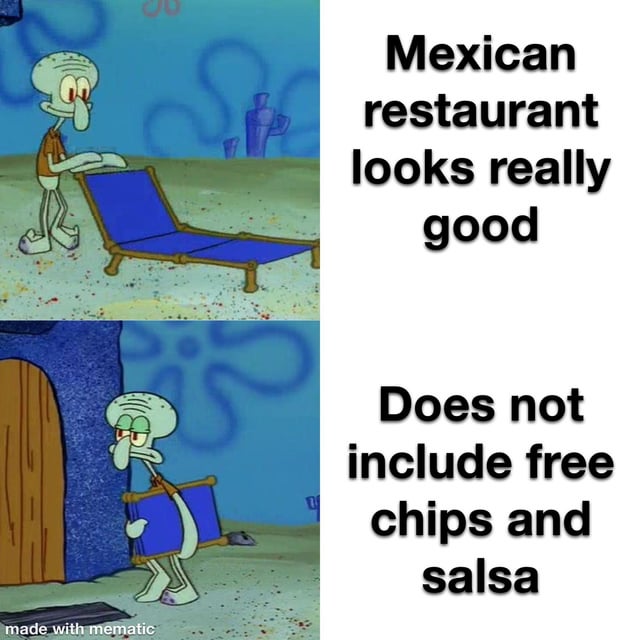
| Squidward Carrying / Setting Up A Chair | Hope followed by disappointment | Frequently used for bait-and-switch jokes: a promising announcement in the first panel, an annoying condition in the second. |
| "Feeling Like Squidward" Collages | Burnout, apathy, adulthood, social fatigue | Multi-image sets collect tired, blank, or irritated Squidward frames to summarize a mood rather than one exact event. |
Spread Across Platforms
Squidward memes circulated through the same channels that kept SpongeBob images alive generally: Tumblr photosets, Twitter/X image macros, Reddit meme communities, YouTube remix culture, Vine-era video loops, Instagram repost pages, and later TikTok edits. The "Looking Out the Window" image became especially common as an object-labeling format, because Squidward, SpongeBob, and Patrick can each be assigned a role without changing the image.
In English-language meme use, Squidward also grew beyond the original joke of "grumpy neighbor." He became an avatar for adulthood itself: being tired before the day starts, resenting noise, wanting solitude, and losing patience with other people's enthusiasm. The joke is not simply that Squidward is mean. It is that many viewers eventually recognize his reactions as more relatable than they expected when they first watched the show.
Visual Identifiers
Squidward memes are usually easy to identify even when cropped or edited. Common visual cues include:
- turquoise or blue-green skin;
- a long drooping nose;
- yellow eyes with rectangular pupils;
- a plain brown short-sleeved shirt;
- a clarinet, moai house, cashier counter, bed, or blue lounge chair;
- bored half-lidded expressions, sudden bulging eyes, or uncanny "handsome" facial edits;
- SpongeBob and Patrick nearby as sources of chaos, fun, or social contrast.
The most useful Gagbase relationship cue is simple: if the image visibly features Squidward as a subject or the caption names him as the reaction figure, it belongs on the Squidward character page. Broader images that only come from the show without a clear Squidward focus should stay anchored to the SpongeBob SquarePants work page or to the specific visible character.
Meme-Culture Meaning
Squidward's meme identity is less about one catchphrase and more about a recurring emotional role. He is the internet's exhausted observer: close enough to the fun to see it, distant enough to resent it, and self-aware enough to look miserable in a funny way. That role lets him cross contexts easily. He can represent a console owner watching another platform get a game, a worker facing Monday, a student remembering an assignment, a Reddit user hitting strict posting rules, or anyone discovering that the exciting thing has an annoying catch.
The result is a character page that should cover both canonical Squidward and the internet's broader "Squidward mood": cynical, socially drained, occasionally vain, sometimes cursed, and almost always relatable.