
Summary
Star Wars: Episode II – Attack of the Clones is the 2002 Star Wars prequel film whose earnest dialogue, expressive reaction shots, and Naboo meadow conversation became unusually durable meme material. Its best-known internet format is the four-panel Anakin and Padmé template, often called For the Better, Right?, which turns a reassuring statement into an ominous pause and a worried follow-up. Other scenes supply angry Anakin reactions, confused Obi-Wan images, and theatrical Geonosis action. Together, these reusable shots let online communities joke about bad promises, workplace frustrations, relationships, technology, games, and any situation where an answer is technically reassuring but clearly not good news.
Description
Overview
Star Wars: Episode II – Attack of the Clones is the 2002 second chapter of the Star Wars prequel trilogy. Set ten years after the Naboo crisis, it follows Jedi apprentice Anakin Skywalker as he protects Senator Padmé Amidala while Obi-Wan Kenobi investigates a conspiracy that leads toward the Clone Wars.1
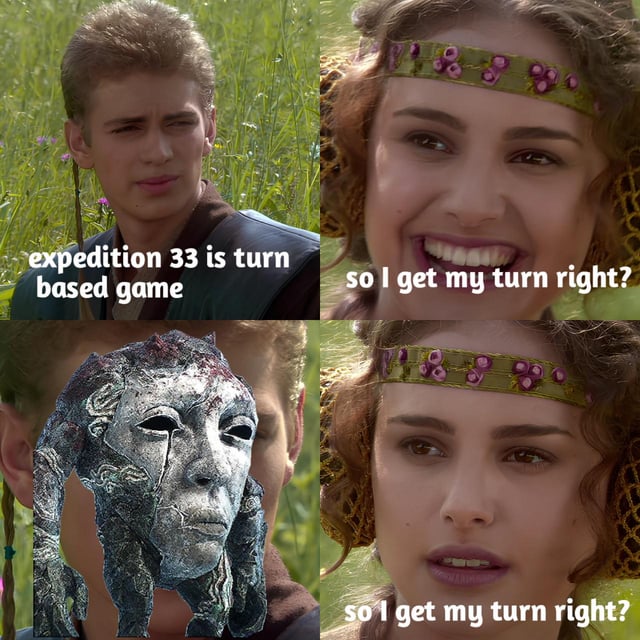
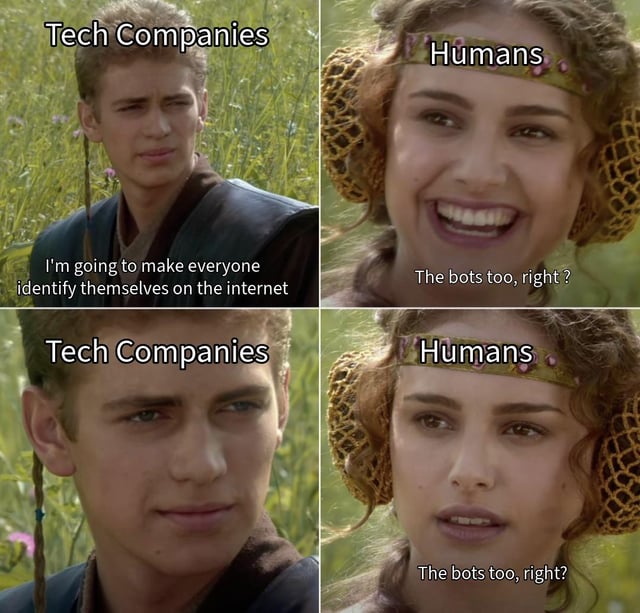
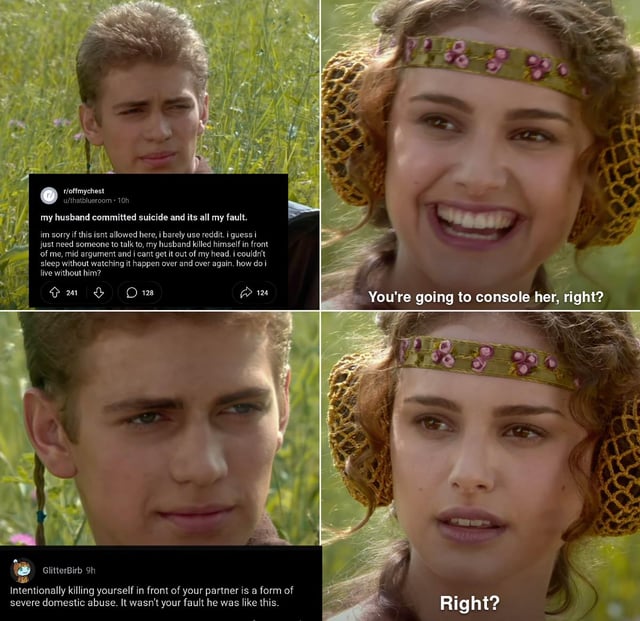
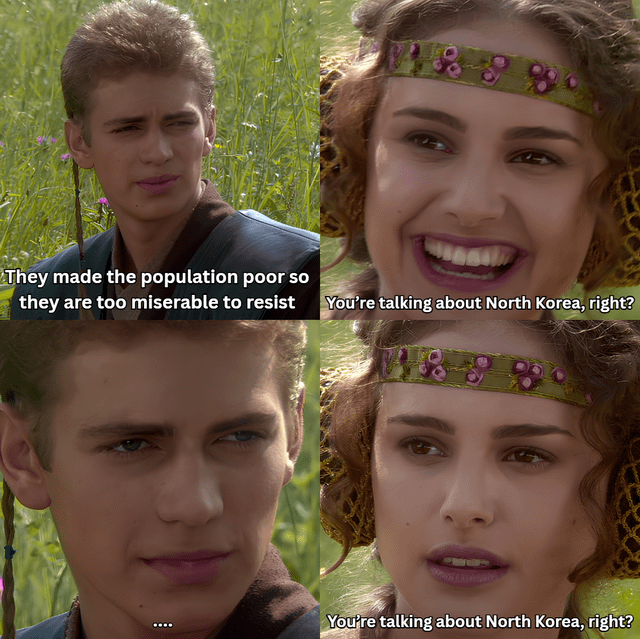
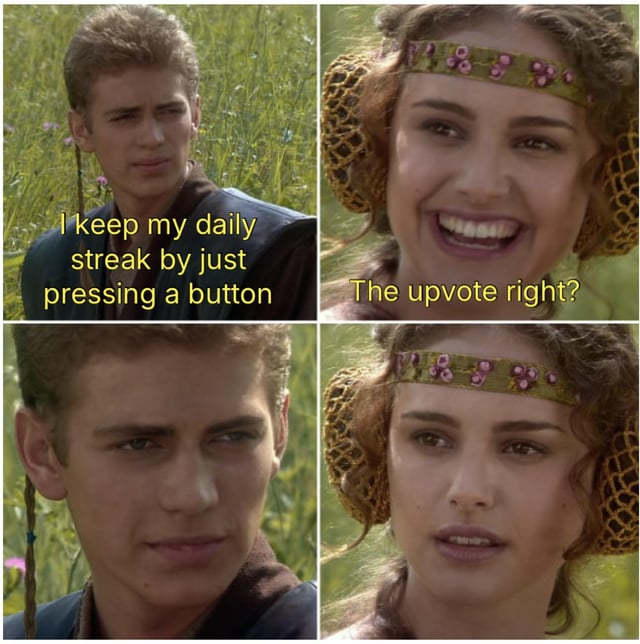
For meme culture, the film is far more than a plot waypoint. Its heightened delivery, intensely earnest romance, and readable reaction shots supplied reusable material for image macros, video edits, quote jokes, and irony-heavy fandom posting. The most recognizable example is the four-panel Anakin and Padmé meadow format, commonly called For the Better, Right?
Meme culture and spread
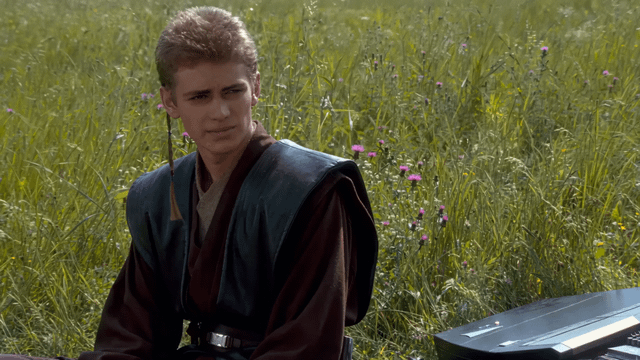
The Anakin–Padmé format usually presents a claim in the first panel, a hopeful or literal follow-up from Padmé in the second, Anakin's silent look in the third, and Padmé's increasingly worried repetition in the fourth. That built-in pause turns a short exchange into a flexible setup-and-punchline machine: it can express bad-faith assurances, loopholes, ominous omissions, or the moment when someone realizes an answer was not actually reassuring. A high-resolution template catalogued by Know Your Meme is tagged to Attack of the Clones, Anakin, and Padmé, and links the format to its For the Better, Right? entry.2
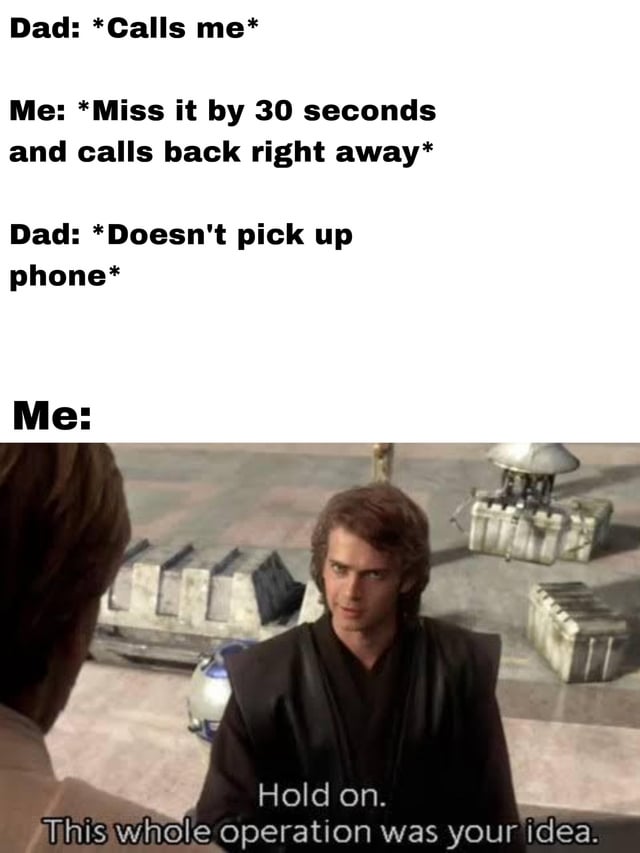
Other scenes from the film travel independently. Anakin's angry "I hate them" line has been reused as a reaction and later paired with a Kylo Ren clip in a TikTok audio trend; Know Your Meme traces that particular mashup to December 2022.3
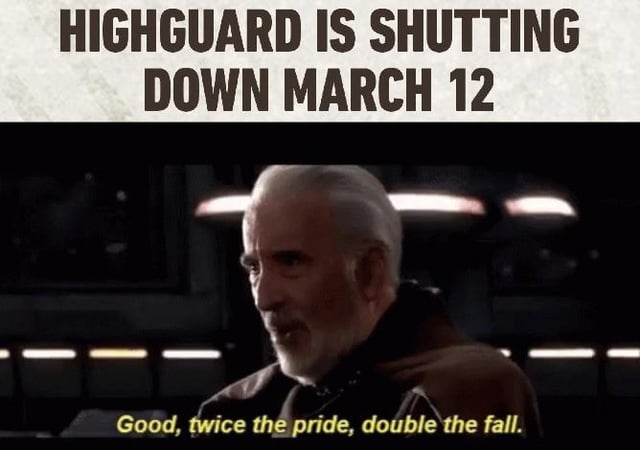
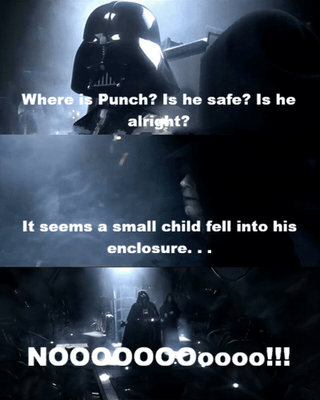
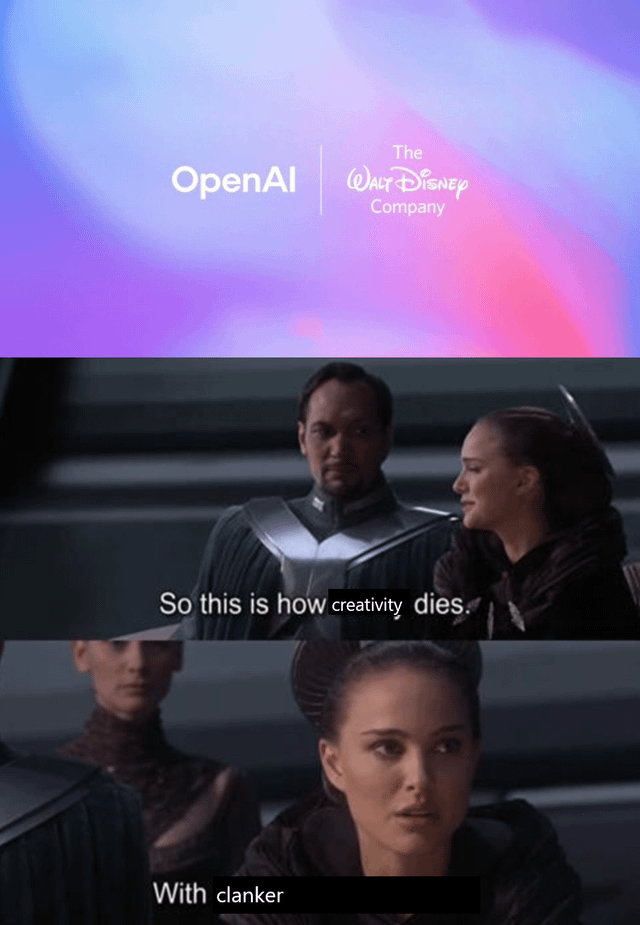
The film's meme afterlife is therefore not one single template. It is a library of expressions: Anakin's suspicion or frustration, Padmé's hopeful-to-alarmed response, Obi-Wan's confusion, and the Geonosis arena's melodramatic action. Online communities use those images for workplace complaints, platform arguments, games, relationships, politics, and deliberately over-serious everyday inconveniences.
Recognizable formats
| Format or scene | Typical online use |
|---|---|
| Anakin and Padmé four-panel meadow exchange | A troubling statement followed by "Right?" and an ominous non-answer |
| Angry Anakin | Exaggerated frustration, disgust, or a deliberately theatrical complaint |
| Obi-Wan reaction shots | Visible confusion, disbelief, or watching a bad idea unfold |
| Geonosis arena imagery | High-stakes framing for a comparatively minor problem |
Why it endures
The film's scenes are unusually easy to crop into clear emotional beats. Its straightforward shot-reverse-shot conversations give meme makers room to replace dialogue without losing the rhythm, while the prequel trilogy's broad sincerity makes remixing especially effective. The result can be affectionate, teasing, nostalgic, or satirical without requiring viewers to know every detail of the original plot.
Note
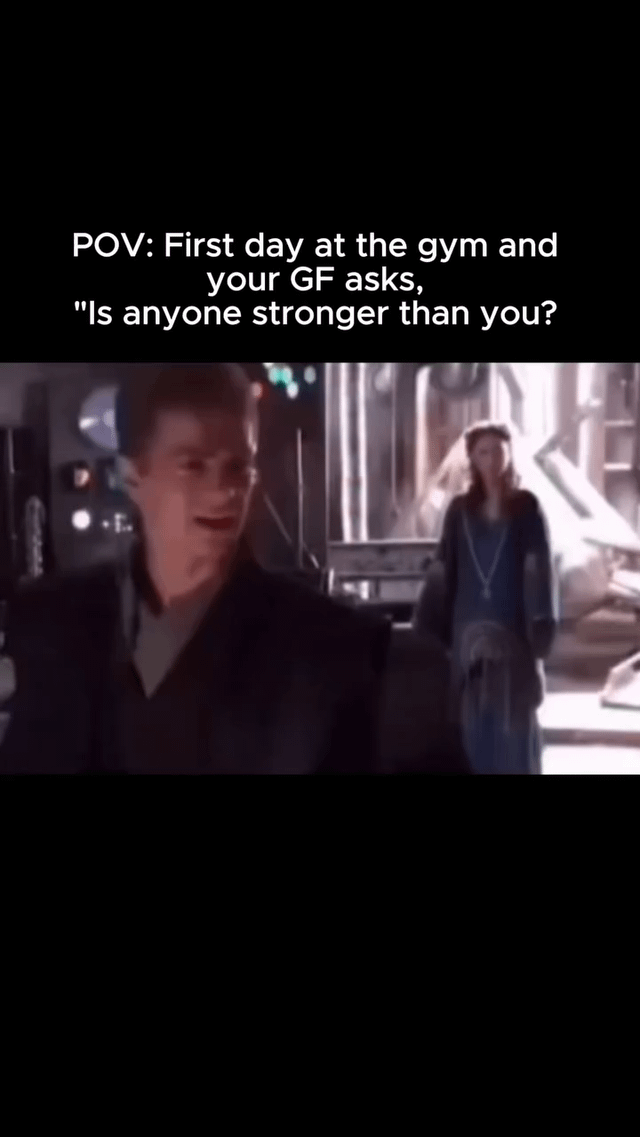
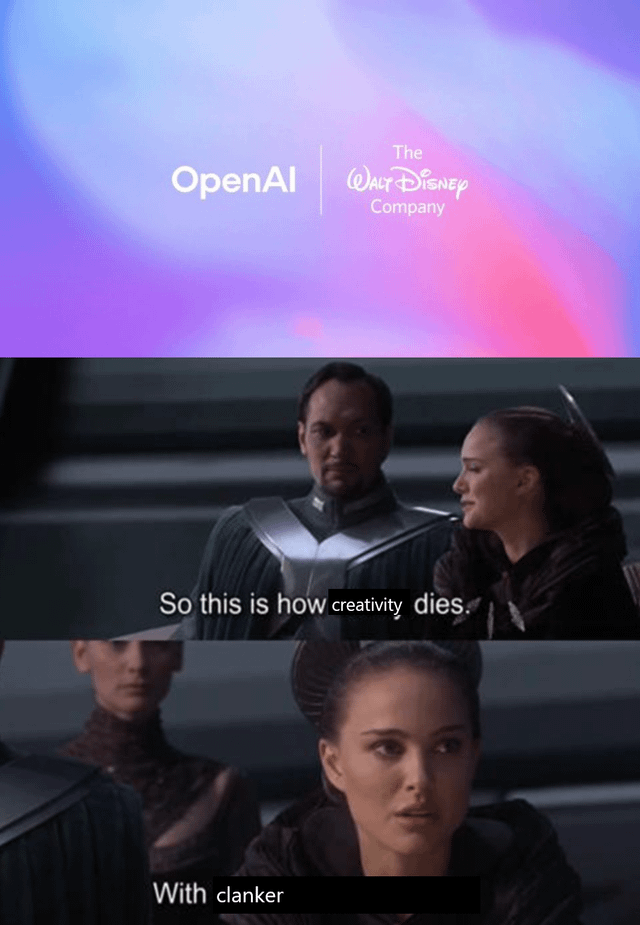
Many memes associated with Attack of the Clones use footage of Anakin or Padmé but are not quotations from the film. Captions and conversational framing are usually added by meme creators.
Related topics
- Anakin Skywalker and Padmé Amidala, the central figures in the meadow template.
- Star Wars prequel memes, the broader online culture that recirculates dialogue, reaction shots, and visual motifs from Episodes I–III.
- For the Better, Right?, the common name for the four-panel Anakin–Padmé format.