Summary
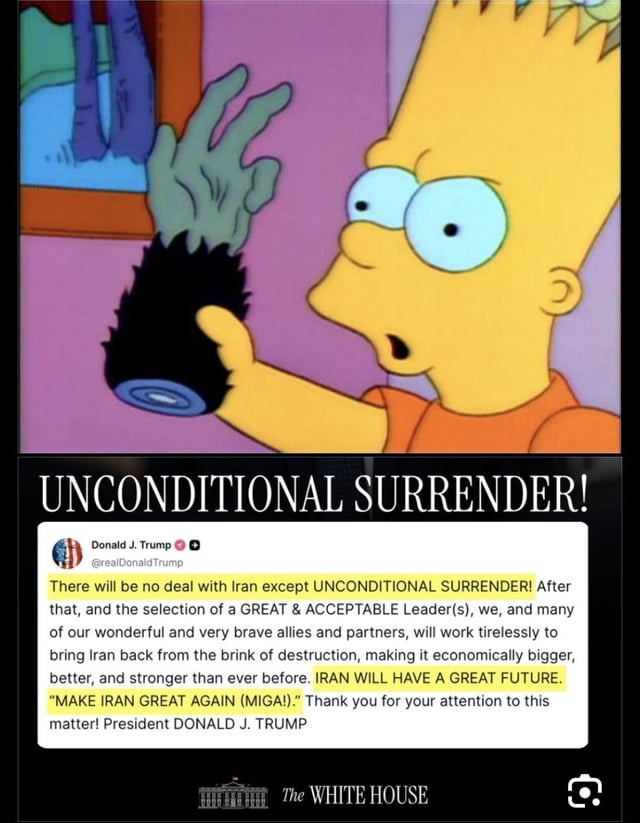
Bart Simpson is the rebellious eldest child in The Simpsons and one of the show's most durable meme figures. His catchphrases, chalkboard punishments, prank calls to Moe, and expressive reactions made him a ready-made symbol for mischief, defiance, awkward self-recognition, and internet-era social commentary. Bart memes range from classic Bartmania nostalgia and "say the line" jokes to modern image macros using his blind-cane/telescope contrast, prank-call panels, and cursed fan art. On Gagbase, the page anchors Bart-specific Simpsons memes while the broader work page covers the show.
Description
Overview
Bart Simpson is the mischievous eldest child of the Simpson family in The Simpsons. Created by Matt Groening and voiced by Nancy Cartwright, Bart first appeared with the family in the 1987 Tracey Ullman Show short "Good Night" before the half-hour series premiered on Fox in 1989.1 In meme culture, he functions as the show's compact symbol for rule-breaking, schoolyard defiance, prank logic, accidental sincerity, and the kind of exaggerated reaction that can turn a ten-year-old cartoon troublemaker into a stand-in for whole online communities.
Where Homer memes often express failure or avoidance and Lisa memes often express an argument, Bart memes tend to express an action: mouthing off, getting caught, ignoring a problem, seeing too much, committing to the bit, or being asked to repeat the one line everyone expects. His design helps: spiky hair, orange-red shirt, blue shorts, skateboard energy, and a face that can move from blank innocence to smug chaos in a single frame.
Character Background
Bart is usually described as ten years old, the son of Homer and Marge Simpson, and the older brother of Lisa and Maggie.1 His name is famously an anagram of "brat," which fits the role he played in the early public identity of The Simpsons: a child who rejected adult authority, school obedience, and the idea that a sitcom family had to be clean or inspirational.
Several of Bart's core show traits became meme fuel before the web had standardized the word "meme." His opening-sequence chalkboard punishment turns a short written sentence into a recurring joke; his prank calls to Moe's Tavern turn wordplay into a format; and his catchphrases, including "Eat my shorts," "Ay, caramba," and "Don't have a cow, man," made him one of the most quoted animated characters of the early 1990s.1 The result is a character whose meme afterlife was built into the show: captions, repetition, and remixable gestures were part of Bart from the start.
Bartmania and Early Meme Logic
Bart's first major cultural wave was Bartmania, the 1990 merchandising and catchphrase phenomenon that made him the face of the early Simpsons boom. Vulture's retrospective describes the period as a massive demand-driven merchandise explosion, with Bart shirts, bootlegs, school bans, and arguments over whether the "underachiever" persona was a bad influence or a joke about the education system.2 That controversy matters for meme history because it shows Bart operating like a pre-social-media viral mascot: easy to copy, easy to quote, easy to project politics and youth rebellion onto.
The bootleg side of Bartmania also foreshadowed internet remix culture. Bart could be redrawn as a rapper, punk, skater, public figure, superhero, protest icon, or nonsense object while still being recognizable. Later digital memes do the same thing with image macros and reaction edits: they keep the spiky silhouette and attitude, then swap the context.
Recurring Meme Formats
| Format | How Bart Works In It |
|---|---|
| Chalkboard gag | Bart writes a punishment line that becomes a caption, joke, apology, meta-comment, or topical reference. |
| Prank call to Moe | Bart's fake-name phone calls become setups for wordplay, wholesome subversions, and dialogue-panel edits. |
| "Say the line, Bart" | The audience or crowd prompts Bart to repeat an expected catchphrase or talking point, often used for repetitive discourse. |
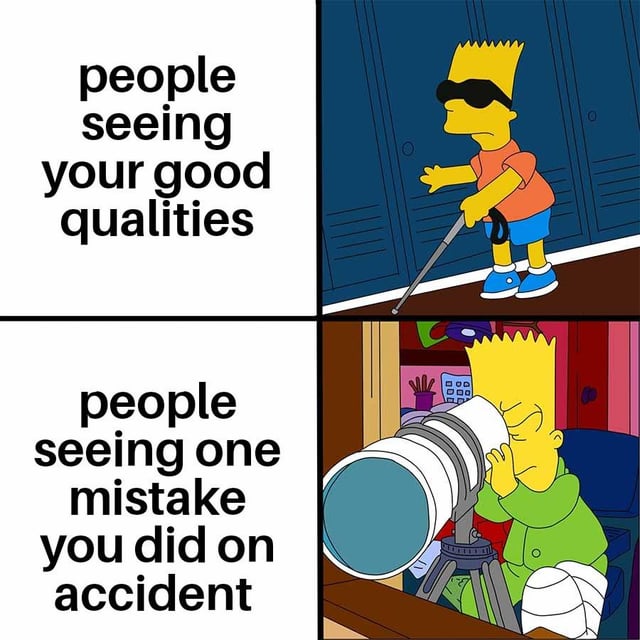
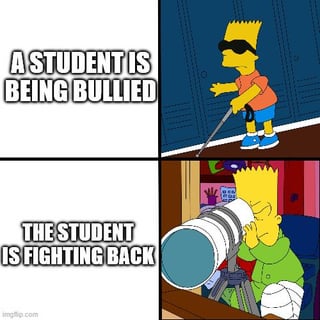
| Blind cane vs telescope | Bart appears unable to notice one thing but hyper-focused on another, making him useful for selective attention jokes. |
| Bart as reckless kid | Frames of Bart skateboarding, getting punished, arguing, or being injured support school, family, and consequence-based humor. |
| Cursed Bart art | Distorted drawings, cakes, bootlegs, and "Eat Pant" variants use Bart as a deliberately off-model icon. |
The chalkboard gag deserves special attention because it is a meme machine inside the show's own opening credits. In the sequence, Bart writes a sentence on a school chalkboard as punishment, then runs out when the bell rings; the sentence changes between episodes and can include political jokes, pop-culture references, meta-humor, or topical responses.3 Online edits work the same way: replace the line, keep the punishment frame, and let Bart become the writer of whatever the community wants repeated.
How Bart Is Used Online
Bart memes usually fall into a few recognizable moods:
- Defiance: captions about ignoring rules, refusing homework, pushing back against authority, or being proudly wrong.
- Selective attention: the blind-cane/telescope contrast, where the joke is that someone misses obvious positives but notices a tiny mistake.
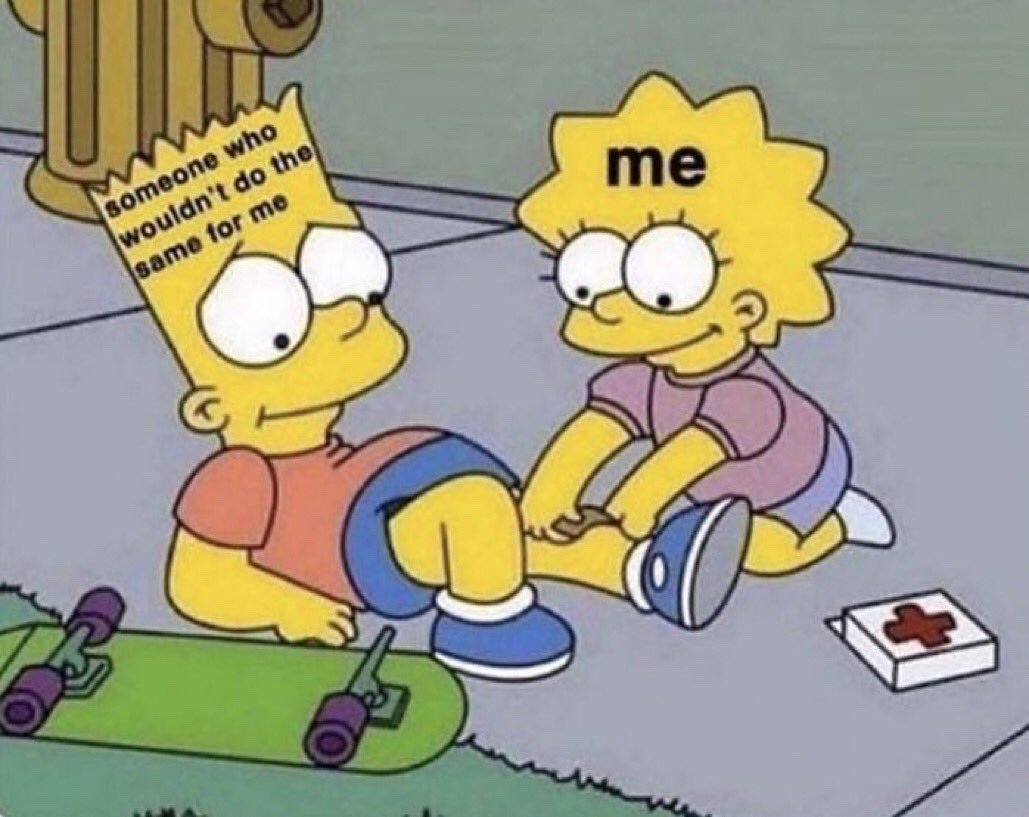
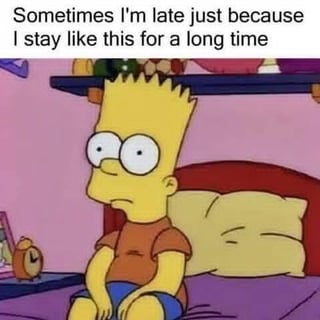
- Social awkwardness: Bart peeking, sitting on a bed, looking guilty, or being dragged into a family scene can stand in for avoidance, guilt, or embarrassment.
- Catchphrase fatigue: "Say the line, Bart" jokes capture how public figures, fandoms, platforms, and news cycles repeat the same line until the audience expects it.
- Cursed nostalgia: badly drawn Bart, off-model cakes, bootleg shirts, and distorted fan art turn a familiar character into a surreal artifact.
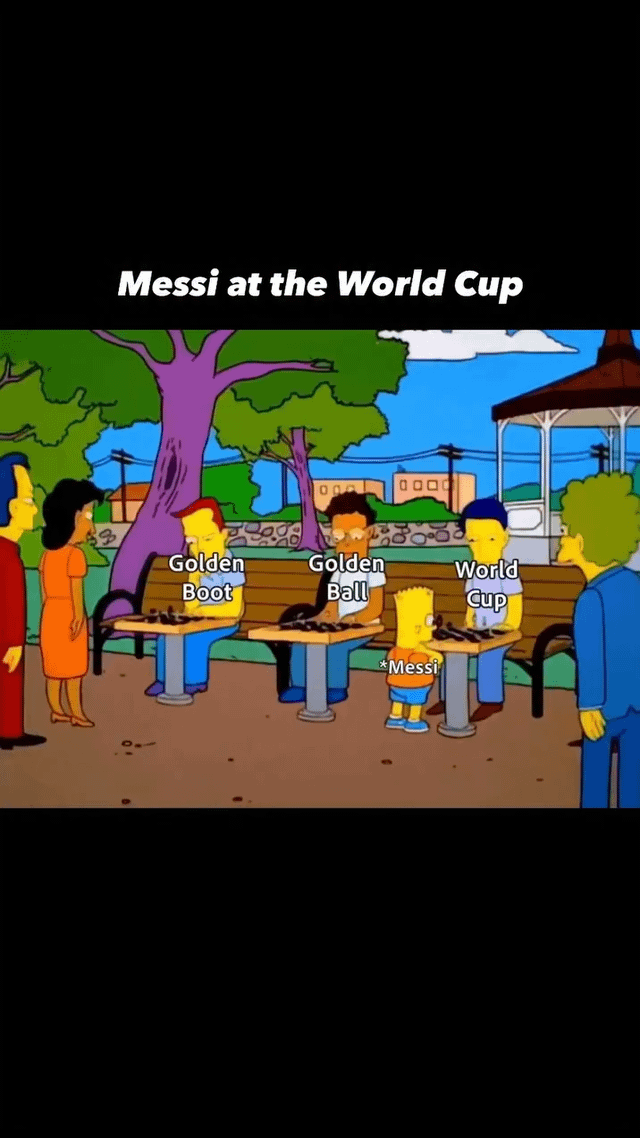
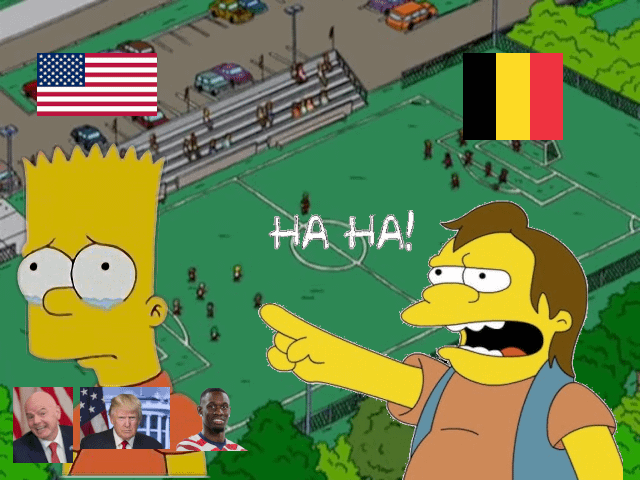
On Gagbase, the current Bart set reflects that range. Existing examples include blind-cane/telescope comparison memes about judgment and bullying, wholesome Moe prank-call edits, "Say the Line Bart" news-caption jokes, a birthday cake based on "Eat Pant" cursed Bart art, and broader Simpsons scene memes where Bart is one member of the visual ensemble.
Visual Identifiers
Bart is visually simple and therefore resilient under compression. He is usually identifiable by yellow skin, nine-point spiky hair, an orange-red short-sleeve shirt, blue shorts, blue shoes, and a short rectangular head shape. Meme edits often preserve only the hair silhouette, face, and shirt color.
Common readable frames include:
- Bart at a chalkboard, implying punishment, repetition, or written confession.
- Bart on the phone, usually signaling a prank, fake name, or Moe's Tavern joke.
- Bart wearing sunglasses and using a white cane, used as "not seeing" or willful blindness.
- Bart using a telescope or camera lens, used as hyper-attention or over-scrutiny.
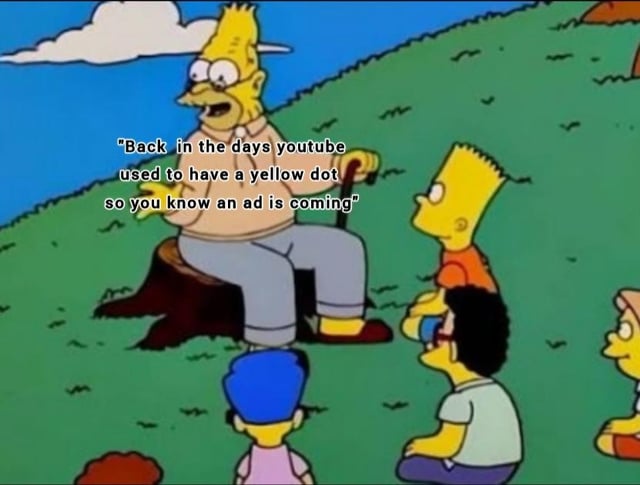
- Bart surrounded by classmates, useful for "say the line" and audience-pressure jokes.
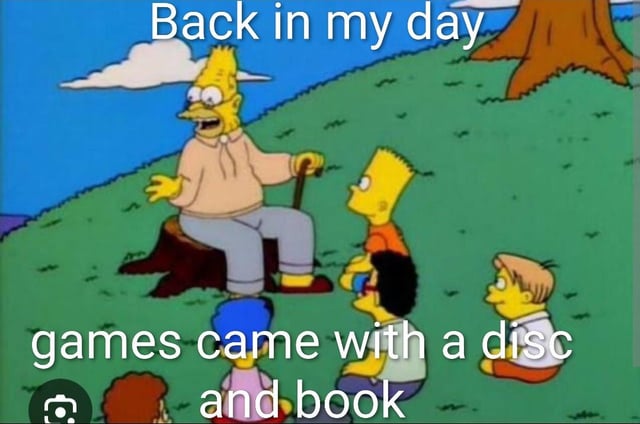
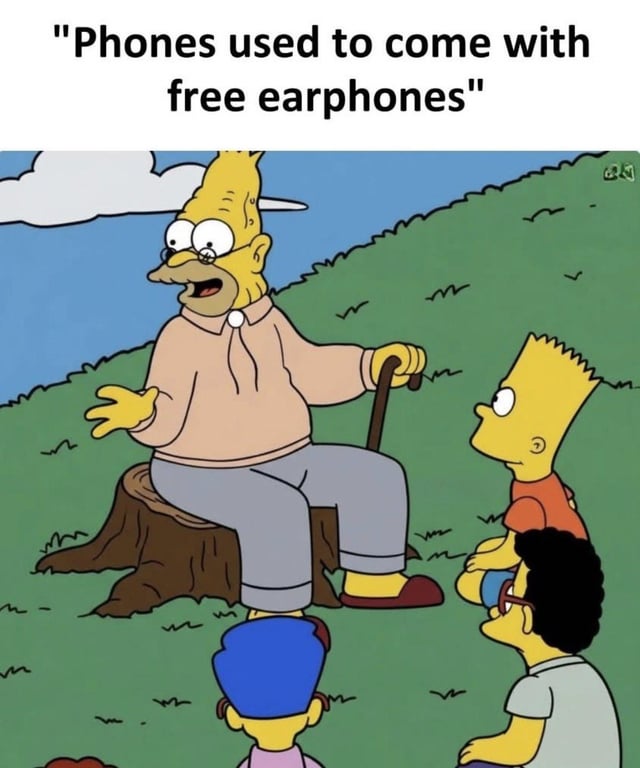
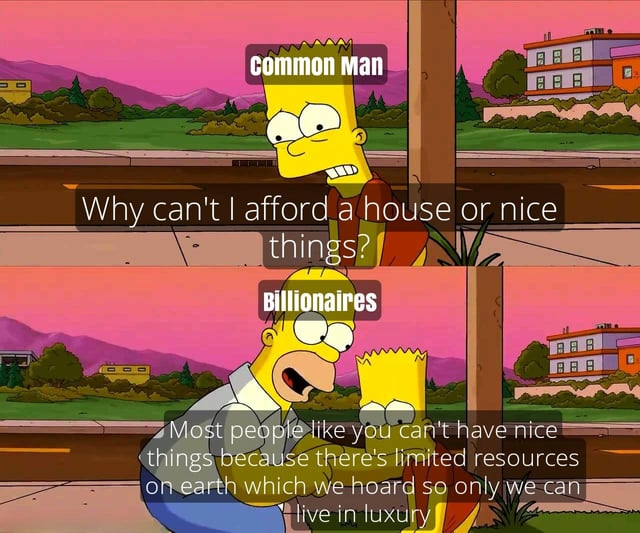
- Bart with Homer, Lisa, Moe, Milhouse, or Grampa Simpson, where the joke often depends on family or ensemble contrast.
Why It Matters In Meme Culture
Bart Simpson matters because he connects three eras of meme behavior. In the early 1990s, he was a catchphrase and T-shirt phenomenon. In forum and image-macro culture, he became one of many Simpsons frames that could carry captions about school, politics, technology, and everyday irritation. In current social platforms, he remains useful because his role is instantly legible: Bart is the kid who is about to say the wrong thing, do the wrong thing, or be forced to repeat what everyone already knows.
The character also helps explain why The Simpsons remains such a deep meme archive. The show has been running long enough to generate thousands of recognizable frames, and Groening was still describing its unexpected longevity in 2026, around the time the series had reached its 800th episode milestone.4 Bart's meme life is part of that larger archive, but his early breakout gives him a special position: he was viral before feeds, repost accounts, and template databases made virality measurable.
Related Gagbase Pages
- The Simpsons - the source work page for Bart and the broader Springfield meme ecosystem.
- Homer Simpson, Lisa Simpson, Marge Simpson, and other Simpson family character pages.
- Potential future origin/template pages: "Say the Line Bart," Bart's chalkboard gag, Bart/Moe prank calls, and the Bart blind-cane/telescope comparison format.
-
Bart Simpson, Wikipedia. ↩↩↩
-
Kathryn VanArendonk, "What the Hell Was Bartmania?", Vulture, December 17, 2024. ↩
-
The Simpsons opening sequence, Wikipedia. ↩
-
Tereza Shkurtaj and Amanda Champagne-Meadows, "Matt Groening Says The Simpsons Began as a Last-Minute Pitch for The Tracey Ullman Show", People, June 7, 2026. ↩