Summary
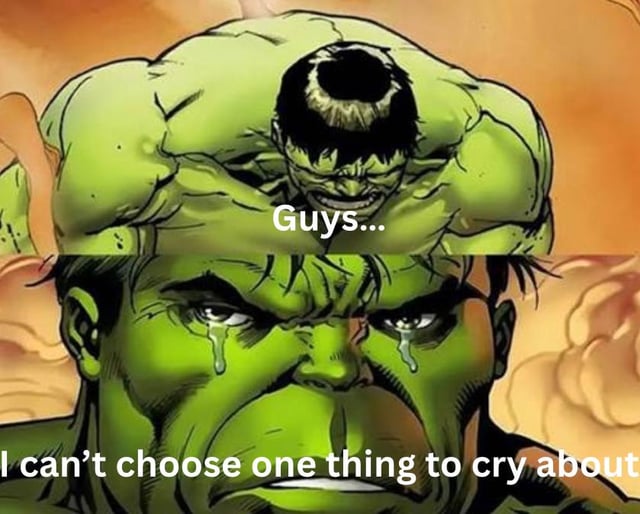
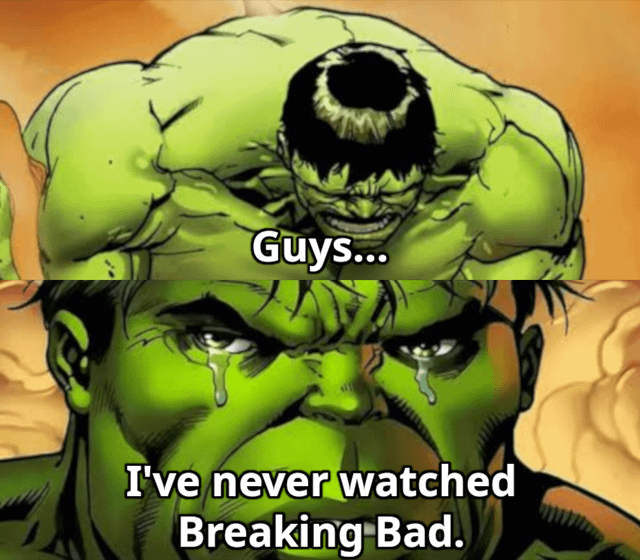
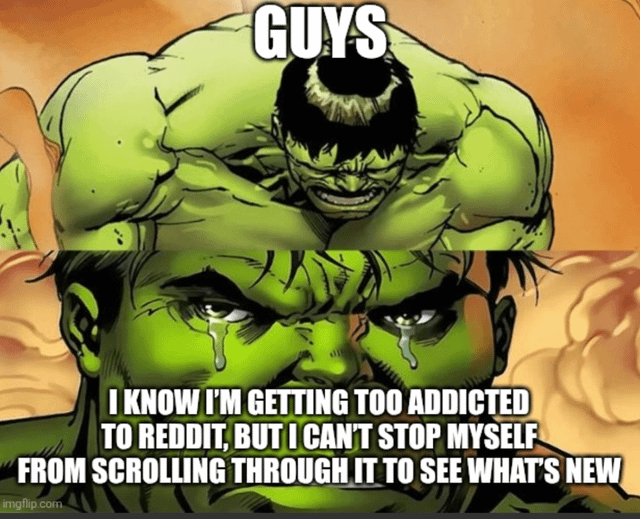
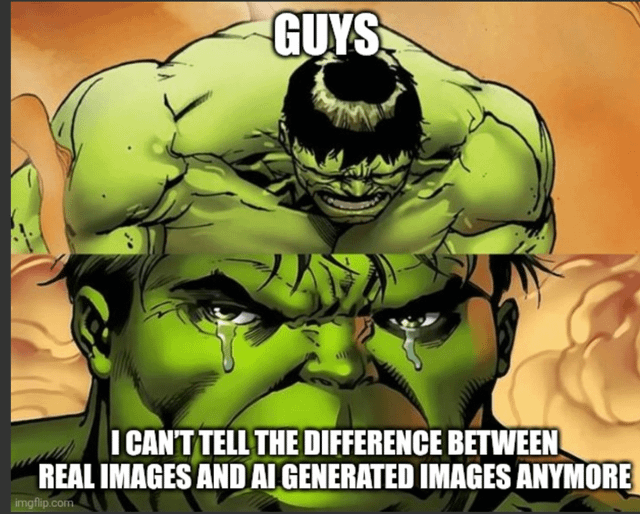
Hulk is Marvel Comics' gamma-powered alter ego of Bruce Banner and a major internet shorthand for rage, strength, and unexpectedly fragile emotion. On Gagbase, the page mainly anchors comic-art Hulk reaction memes, especially the "Guys..." crying Hulk format, where a massive green powerhouse confesses to small modern anxieties like aging, Reddit habits, AI-image confusion, nostalgia, or everyday physical decline. The page should stay distinct from MCU-specific Hulk screenshots and broad superhero ensemble memes unless Hulk is clearly the central visual subject.
Description
Overview
Hulk is the Marvel Comics character most often used to turn overwhelming force into unexpectedly fragile internet emotion. In source material, Bruce Banner's gamma-powered alter ego is a symbol of rage, danger, repression, and unstoppable physical strength.1 In memes, that same visual promise often becomes the joke: a huge green powerhouse is made to cry about small adult disappointments, aging, confusing technology, nostalgia, social media habits, or a pop-culture gap that suddenly feels personally devastating.
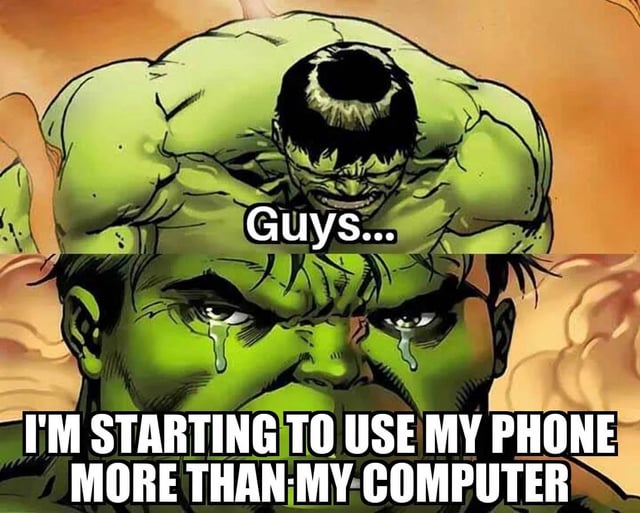
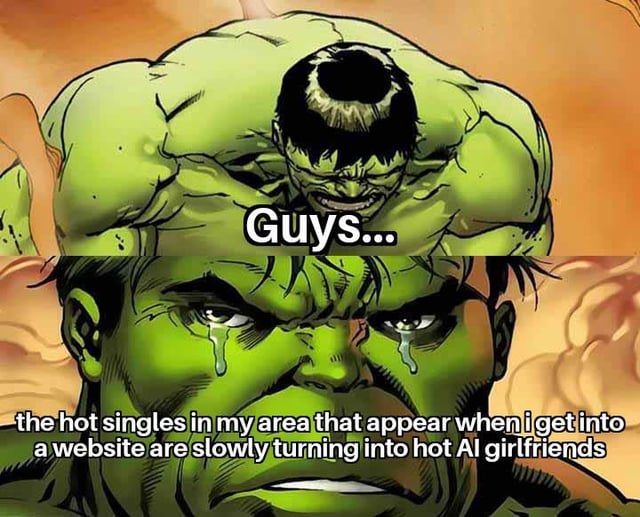
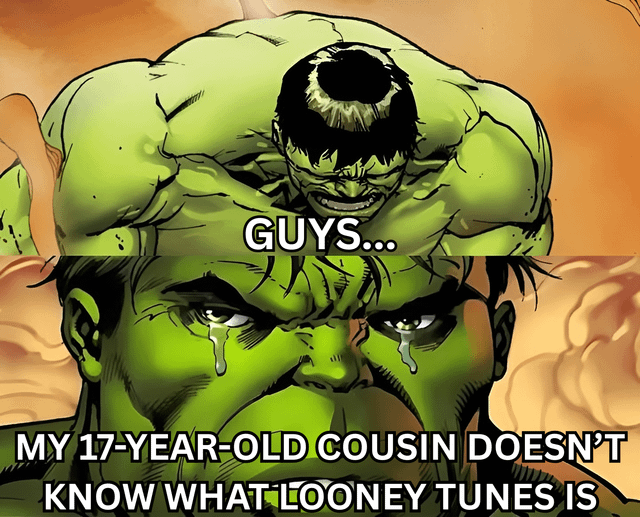
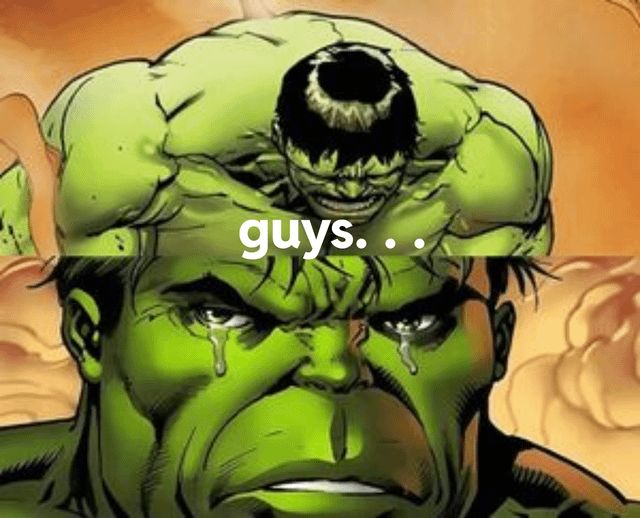
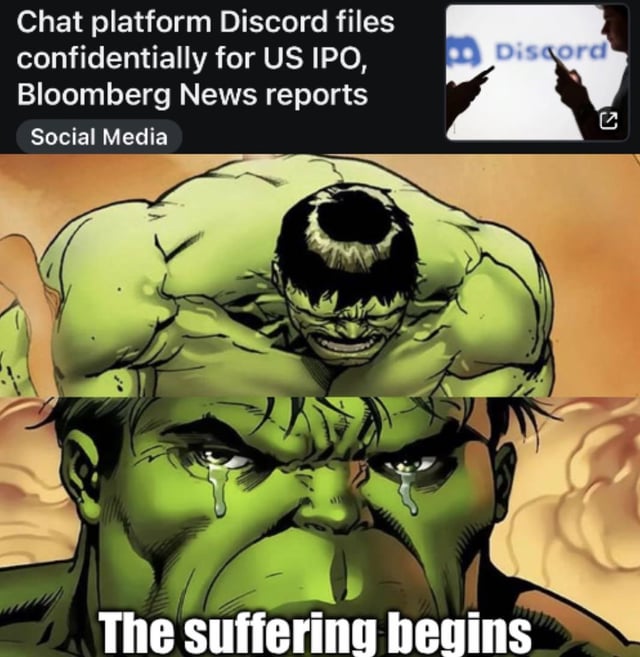
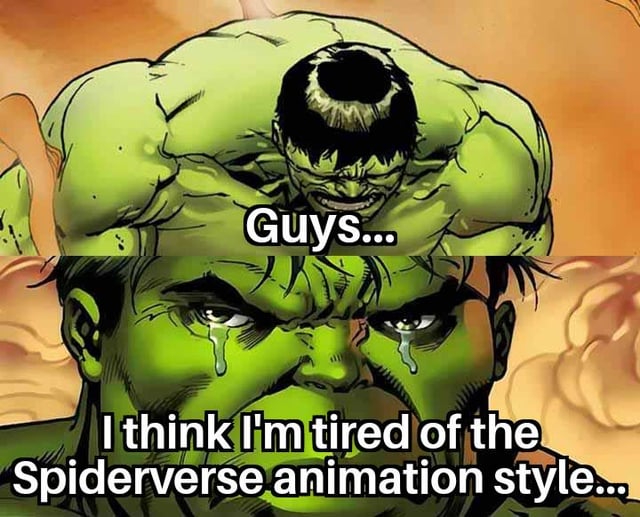
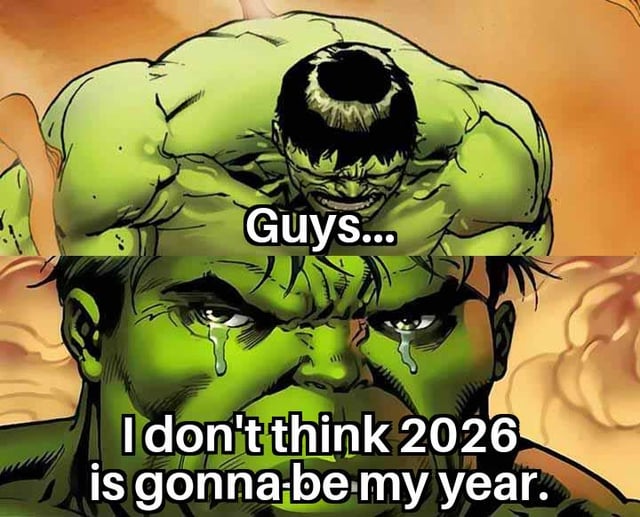
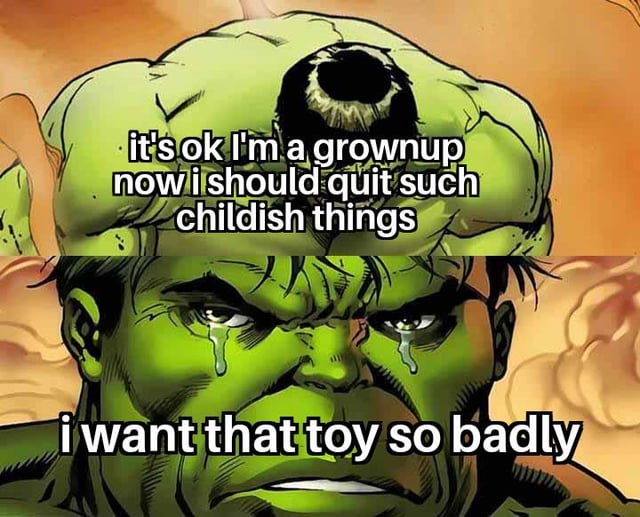
On Gagbase, this character page should cover memes where Hulk himself is the main signal, especially comic-panel and illustration-based reaction images under the Marvel Comics work page. The largest current lane is the "Guys..." crying Hulk format, where a dramatic opening panel sets up a confession and a tearful close-up delivers a mundane, painfully relatable punchline.
Source And Character Context
Hulk first appeared in The Incredible Hulk #1 in 1962, created by Stan Lee and Jack Kirby for Marvel Comics.2 Marvel's own character profile frames Bruce Banner as a brilliant but troubled scientist whose inner turmoil transforms him into the Hulk after gamma radiation exposure.1 That original split between quiet scientist and destructive monster is the engine behind most Hulk humor: the audience understands that Hulk should represent anger and power, so it is funny when the image instead communicates shame, exhaustion, tenderness, or small-scale defeat.
The character also entered wider popular speech through live-action and screen adaptations. The 1970s television series helped popularize the warning "Don't make me angry," while later films and games strengthened the shorthand of "Hulk smash" as a catchphrase for brute-force problem solving.23 Those lines matter for meme culture because Hulk's voice is easy to parody: direct, emotional, loud, and often childlike.
Why Hulk Works As A Meme
Hulk memes are powered by contrast. The character is massive, green, and usually coded as a creature of rage, but meme captions often make him confess to embarrassingly ordinary problems:
- switching from a computer to a phone more often;
- being unable to tell AI images from real ones;
- realizing a younger relative does not know an older cartoon;
- feeling addicted to Reddit;
- getting back pain from a sneeze;
- losing childhood enthusiasm for holidays, toys, or media.
The stronger the visual drama, the smaller the confession can be. Hulk's body says "world-ending event"; the caption says "my teeth hurt when I eat chocolate." That mismatch is the point.
The "Guys..." Crying Hulk Format
The most useful current Gagbase lane is the "Guys..." crying Hulk reaction image. Its structure is usually simple:
| Part | Visual cue | Meme function |
|---|---|---|
| Setup panel | Hulk looks tense, angry, or pained; caption begins with "Guys..." | prepares the reader for a serious confession |
| Reveal panel | Hulk's face is tearful or emotionally crushed | reframes the confession as absurdly vulnerable |
| Caption subject | nostalgia, technology, adulthood, fandom, aging, habit, or embarrassment | turns a small personal discomfort into melodrama |
The format is effective because it uses Hulk's familiar rage pose as emotional misdirection. Instead of smashing something, Hulk reveals that he is overwhelmed by the same quiet problems as everyone else. The result feels less like a superhero joke and more like an overpowered version of the everyday user admitting defeat.
Common Meme Lanes
| Lane | Common signals | Typical use |
|---|---|---|
| Crying Hulk / "Guys..." | two-panel Hulk art, tears, white caption text | vulnerable confession, aging, nostalgia, technology anxiety |
| Hulk smash | direct Hulk aggression, destruction, all-caps phrasing | brute-force solution, overreaction, simple anger |
| Bruce Banner contrast | Banner versus Hulk, scientist versus monster | self-control, hidden rage, calm person about to snap |
| Puny god riffs | Hulk towering over a weaker target | mocking arrogance, influencer jokes, power imbalance |
| Fandom Hulk | comic art or Marvel continuity reference | superhero debate, canon correction, Marvel meta humor |
| Parody Hulk voice | short all-caps grammar, "HULK" as subject | exaggerated slogans, ideological parody, deliberately blunt commentary |
The "Feminist Hulk" Twitter parody, active in the early 2010s, is an example of how easily Hulk's simplified speech pattern became a reusable internet voice outside ordinary Marvel fandom.4 It showed that Hulk could function not only as an image, but as a grammar: loud, declarative, emotionally certain, and instantly recognizable.
Visual Identifiers
Strong Hulk memes usually include one or more of these signals:
- green skin, enormous muscles, square jaw, heavy brow, or torn purple pants;
- Bruce Banner / Hulk contrast, especially when the joke is about restrained anger or emotional collapse;
- captions built around "Guys...", "Hulk smash", "puny", "angry", or similar Hulk-coded phrasing;
- comic-panel art, speech bubbles, thick inking, or illustration-style superhero framing;
- tearful close-ups that invert Hulk's usual rage into sadness or embarrassment.
Not every green monster belongs here. If the meme is clearly a live-action MCU still, a specific Avengers poster, or a frame from She-Hulk: Attorney at Law, the Marvel Cinematic Universe page or a narrower screen-character branch may be more accurate. If the image is a generic monster only loosely inferred to be Hulk, the relationship should stay conservative.
Gagbase Scope
Use character/hulk-marvel-comics when Hulk is visibly the main meme subject and the source fits Marvel's comics/comic-art side: drawn Hulk panels, crying Hulk reaction images, Hulk caption templates, or comic-style edits where the character identity matters more than a specific movie scene.
Do not automatically merge same-name or adjacent branches such as MCU Hulk, animated-series Hulk, or one-off Avengers-film characters. Those may be valid cleanup candidates, but this hot-wiki workflow should only repair obvious relationships. For the current page, the safest relationship rule is simple: add Hulk when the meme clearly shows or names Hulk as its central subject, and avoid attaching broad superhero ensemble images where Hulk is only a background participant.
Cultural Role
Hulk's meme role is flexible because he carries two opposite signals at once. He is the strongest person in the image and also the person least able to hide what he feels. That combination makes him ideal for jokes about modern embarrassment: the internet user who wants to be powerful, rational, and in control, but is instead undone by algorithms, nostalgia, habits, minor physical decline, or one strangely specific memory.
In that sense, Hulk memes are rarely about superhero victory. They are about emotional scale. The joke is that a tiny problem has been promoted to Hulk-level crisis, and somehow the promotion feels completely understandable.
-
Marvel, Hulk (Bruce Banner) in comics, for Marvel's official character framing of Bruce Banner, gamma transformation, rage, strength, and aliases. ↩↩
-
Wikipedia, Hulk, for publication history, first appearance, creators, and the broader popularization of Hulk through television and other media. ↩↩
-
Wikipedia, The Incredible Hulk (film), for screen-adaptation context and the modern pop-culture use of "Hulk smash." ↩
-
Wikipedia, Feminist Hulk, for an example of Hulk-style all-caps parody voice spreading through social media. ↩