Question on perceived double standard around majority demographic concern framing

Text content
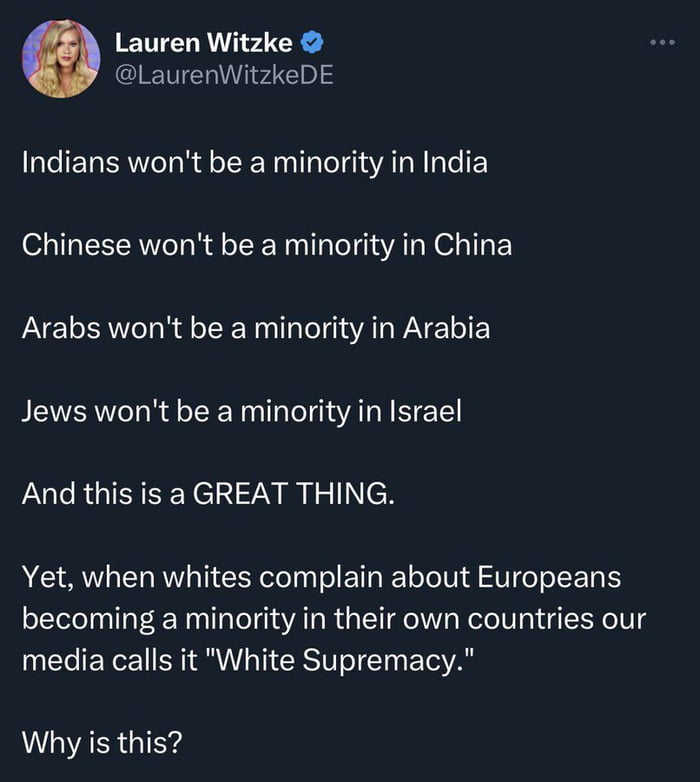
Indians won't be a minority in India
Chinese won't be a minority in China
Arabs won't be a minority in Arabia
Jews won't be a minority in Israel
And this is a GREAT THING.
Yet, when whites complain about Europeans becoming a minority in their own countries our media calls it "White Supremacy."
Why is this?
Overview
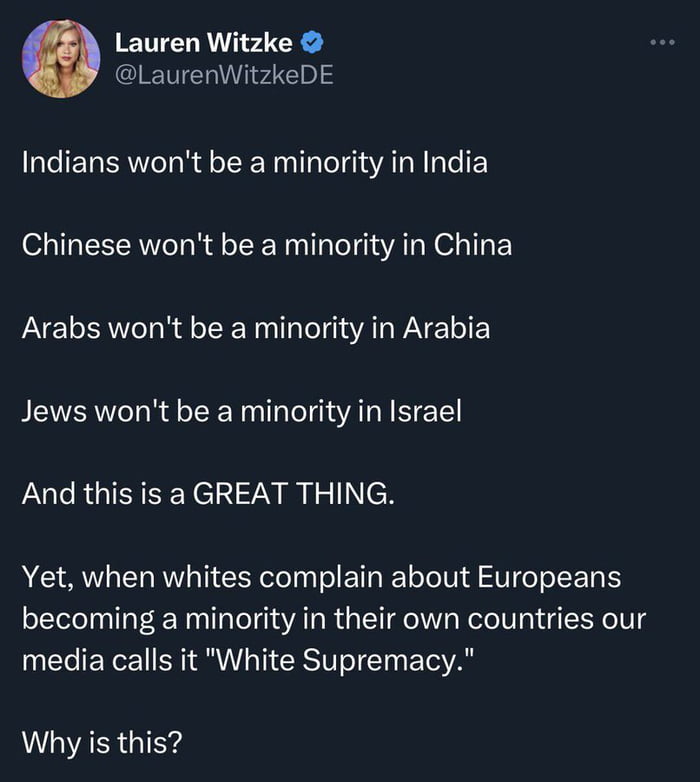
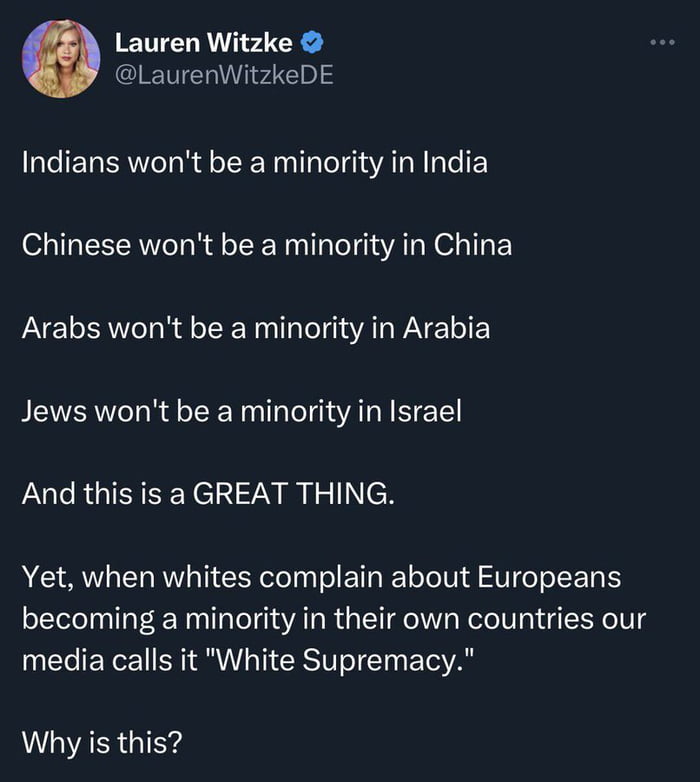
This is a screenshot of a public tweet from verified far-right commentator Lauren Witzke. The tweet first lists four points stating it is viewed as a positive thing that Indians are the majority in India, Chinese in China, Arabs in Arabia, and Jews in Israel. It then argues that there is a double standard: when white people express concern about Europeans becoming a demographic minority in historically majority-white European countries, mainstream media labels this sentiment as "White Supremacy", ending with the question "Why is this?". This perceived discrepancy is commonly explained by differing historical context: majority-white European nations have a well-documented history of colonialism, violent white supremacist ideologies, and systemic oppression of non-white groups, so concerns about white demographic decline are frequently linked to exclusionary, racist political movements. By contrast, the other majority groups listed are largely indigenous populations in their native lands, many of which were subject to foreign colonial rule, so their desire to retain majority status is often framed as a defense of their cultural identity against historical erasure.
Origin notes
This content originates as a public tweet posted by far-right American commentator Lauren Witzke on the X (formerly Twitter) platform. It was later reposted to 9Gag, as confirmed by the provided additional source information noting it is from a 9Gag RSS feed. The tweet went viral for its controversial framing of perceived double standards in how media outlets discuss demographic majority concerns across different ethnic and national groups.