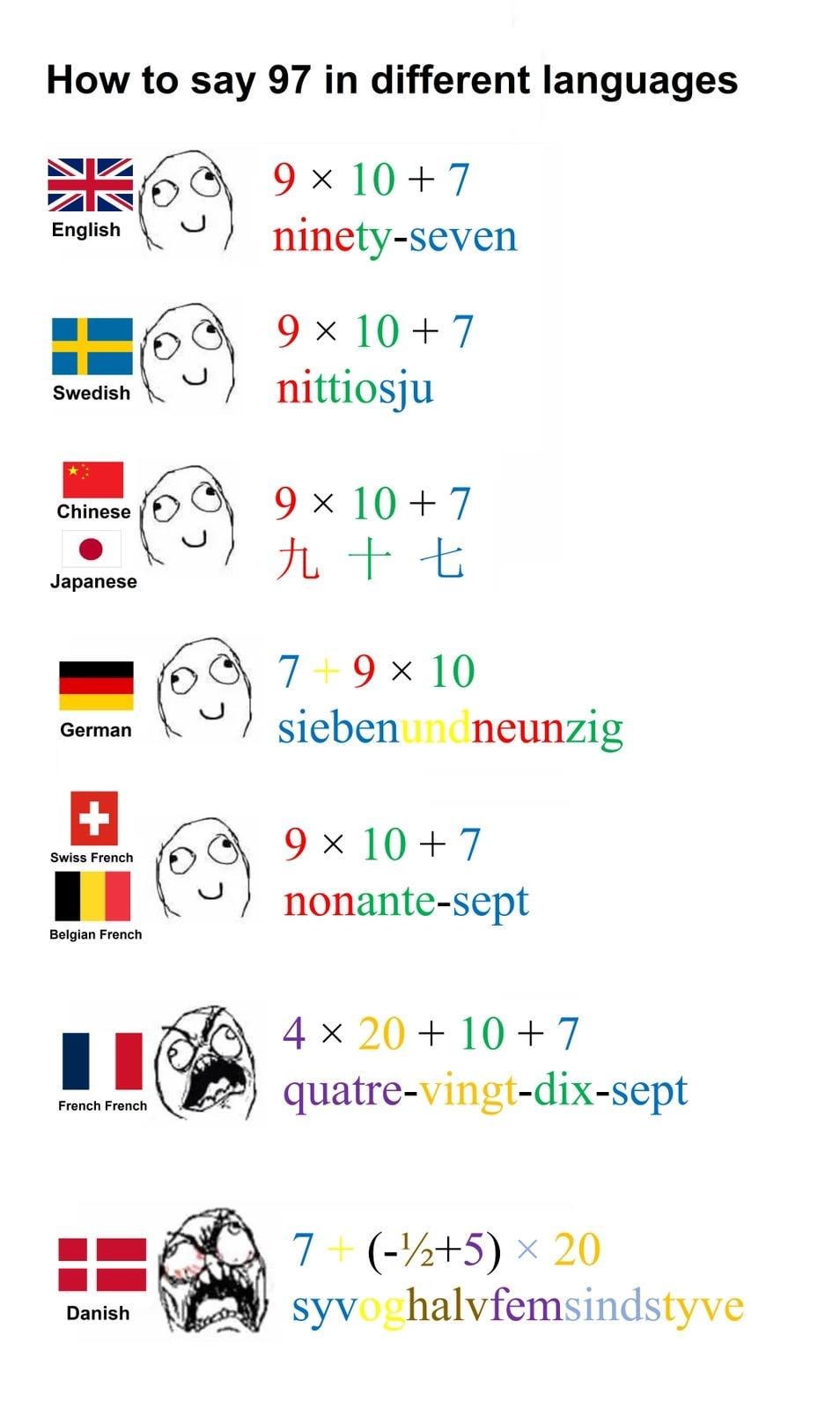
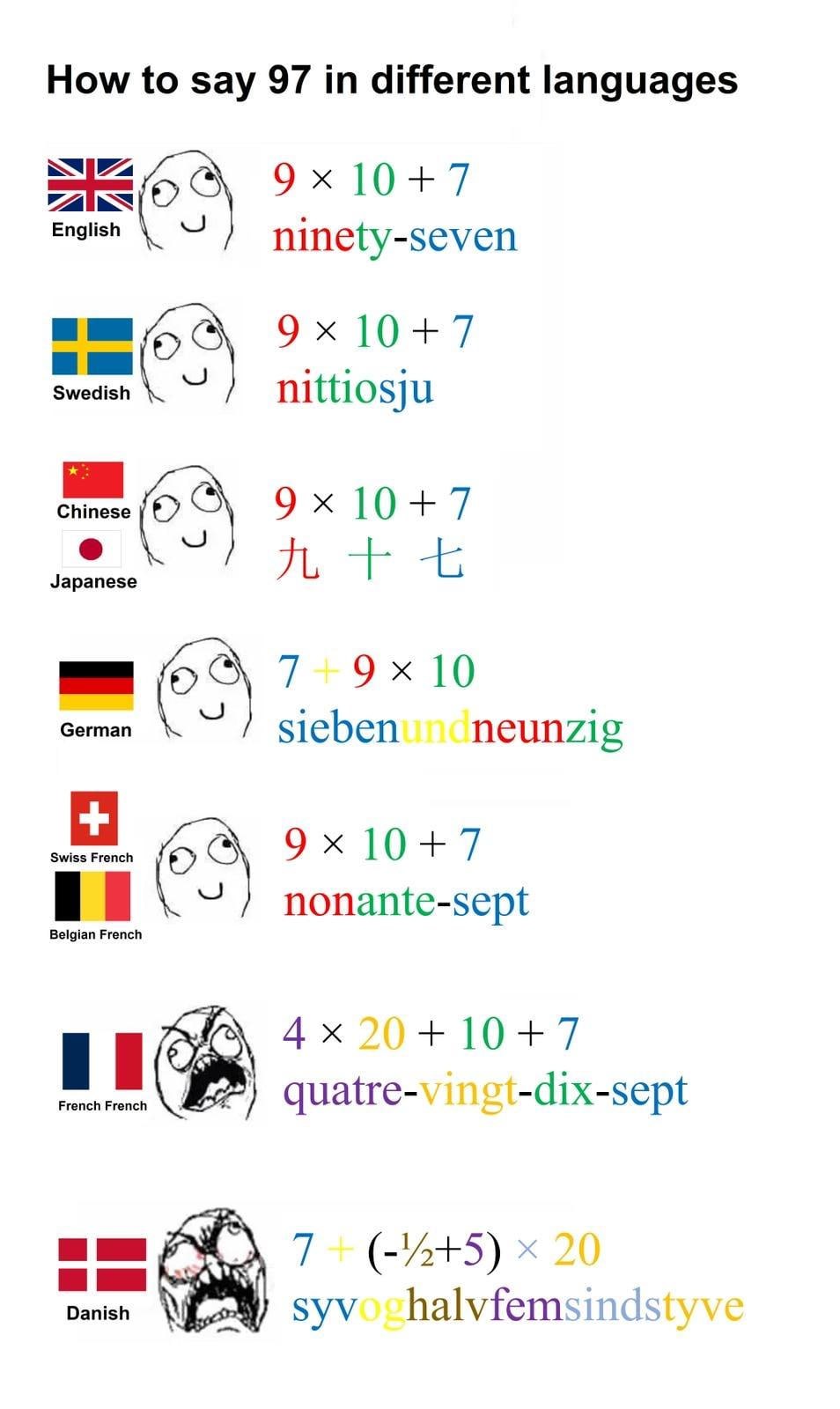
How to say 97 in different languages
Dialogue
Text content
How to say 97 in different languages
Overview
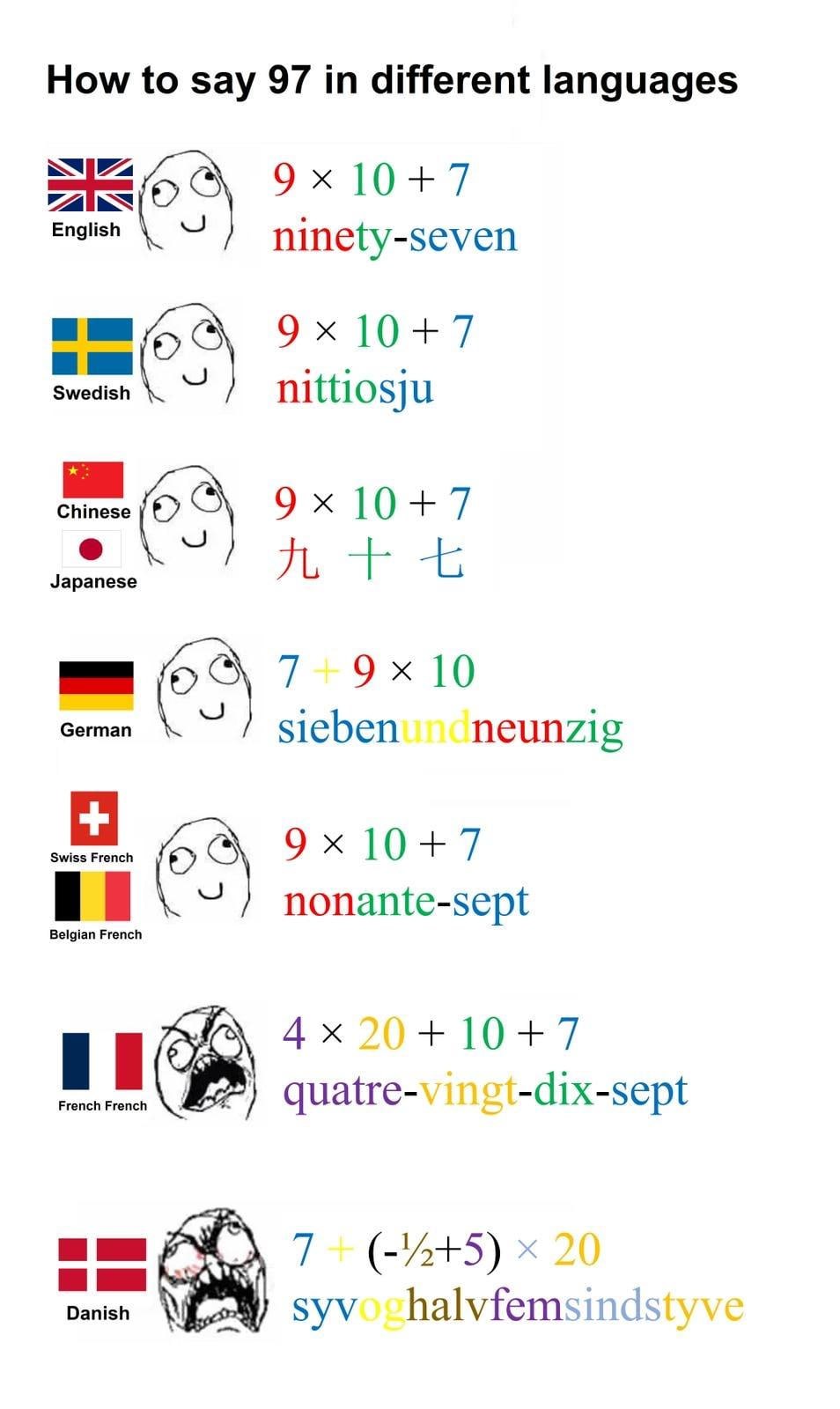
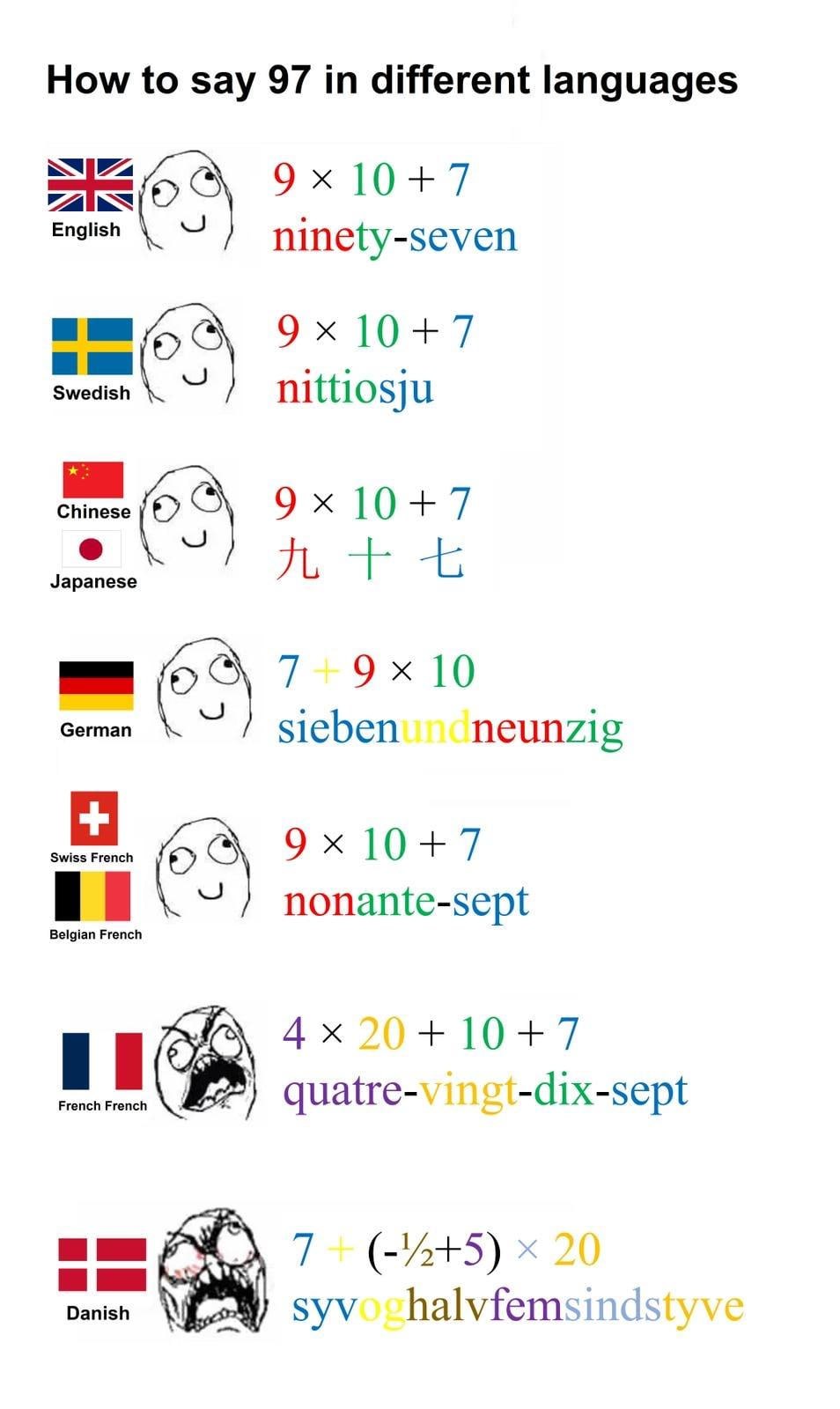
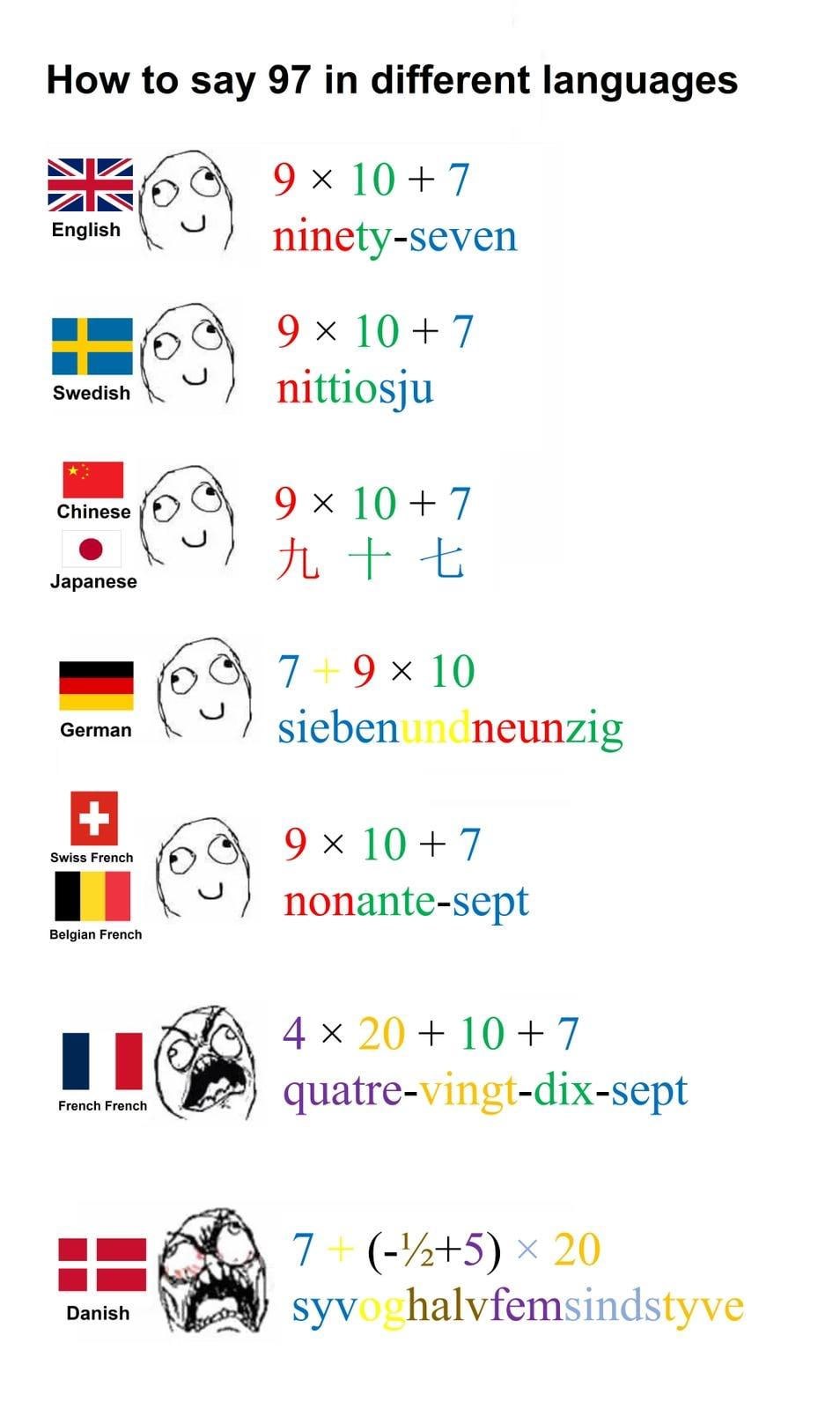
A humorous educational image titled 'How to say 97 in different languages' comparing the linguistic representation of the number 97 across various languages. Each entry includes a country flag, a simple hand-drawn face (with varying expressions), a mathematical formula representing 97, and the language-specific term for 97. Languages featured are English, Swedish, Chinese, Japanese, German, Swiss French, Belgian French, and French French. Most entries use the formula '9×10+7' with neutral faces, while German uses '7+9×10' and French French uses the more complex '4×20+10+7' accompanied by an angry/shocked face, highlighting the perceived complexity of French numbering systems.
Origin notes
This image is likely a user-created graphic designed to humorously illustrate differences in number terminology across languages, particularly emphasizing the complexity of French French compared to others. It was probably created using simple graphic design tools (e.g., Canva, Photoshop) and shared on social media platforms like Reddit or Twitter for educational and comedic purposes. No visible watermarks or author credits suggest it is a original creation intended for viral sharing among language enthusiasts or those interested in linguistic oddities.