Summary
Futurama is Matt Groening and David X. Cohen's animated science-fiction comedy about delivery worker Fry and the Planet Express crew in the year 3000. Since its 1999 debut, the series has become a deep source of English-language reaction images and caption formats. Fry, Bender, Zoidberg, Leela, and Professor Farnsworth are regularly reused for enthusiasm, suspicion, mockery, consumer frustration, and absurd workplace or technology jokes. Its most recognizable format, “Shut Up and Take My Money!”, turns Fry into an instant signal of enthusiastic approval. The show's future setting also makes it a flexible frame for satirizing present-day internet culture.
Description
Overview
Futurama is an animated science-fiction comedy created by Matt Groening and developed with David X. Cohen. First released in 1999, it follows 20th-century delivery worker Philip J. Fry after he wakes in the year 3000 and joins the Planet Express crew in New New York.12 Its fast-moving mix of workplace comedy, pulp sci-fi, and satire has made the show an unusually durable source of reaction images and caption formats.
From television sitcom to meme library
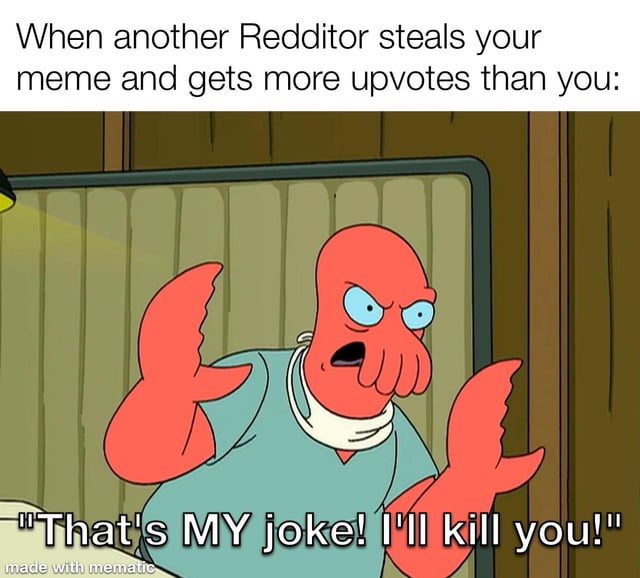
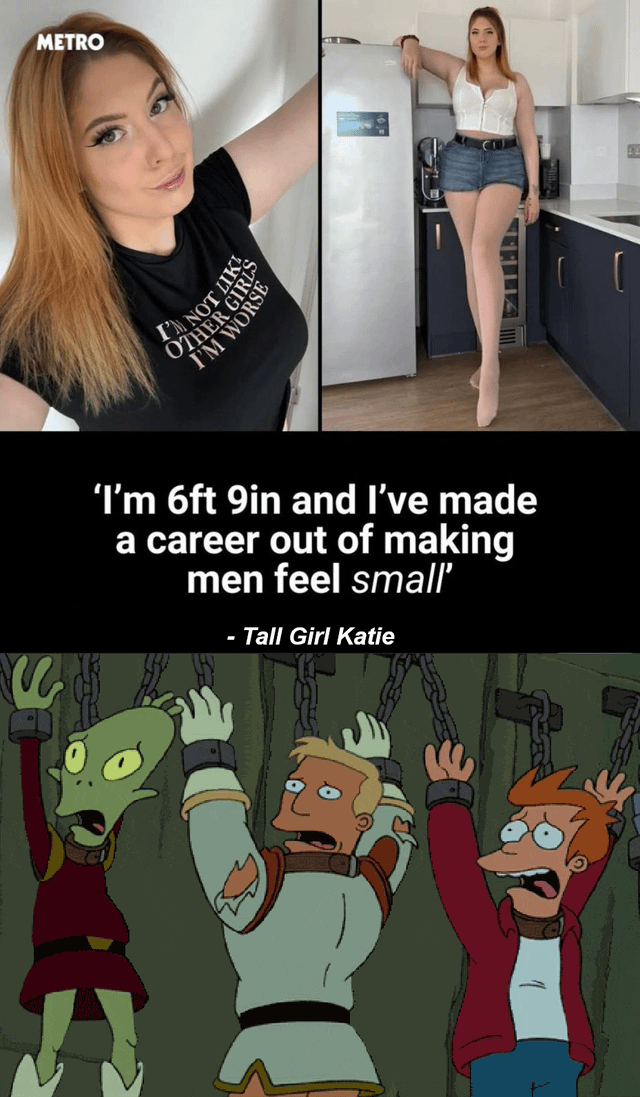
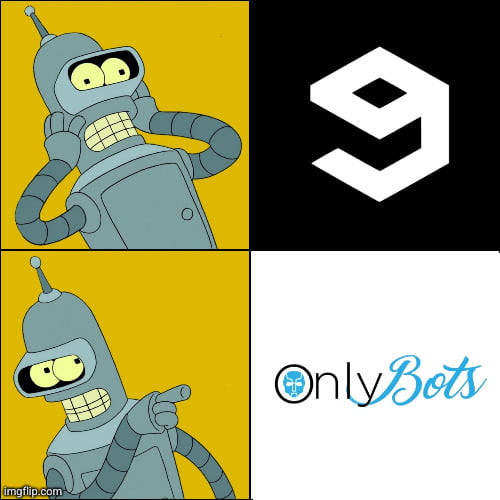
The series supplies a large, expressive cast—especially Fry, Bender, Leela, Professor Farnsworth, and Dr. Zoidberg—whose faces and sharply phrased dialogue can be detached from their original plots without losing their emotional meaning. Online communities have therefore reused Futurama for enthusiasm, suspicion, disbelief, mockery, consumer frustration, and deliberately overblown annoyance. Know Your Meme documents the show as the source of several long-running image-macro and catchphrase families, rather than a single isolated template.4
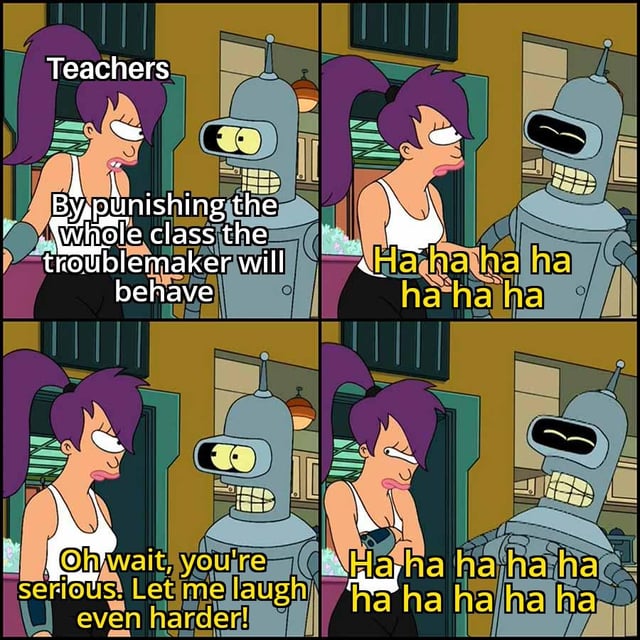
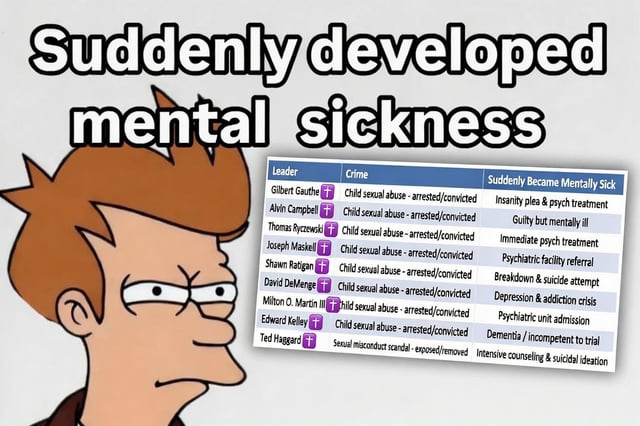
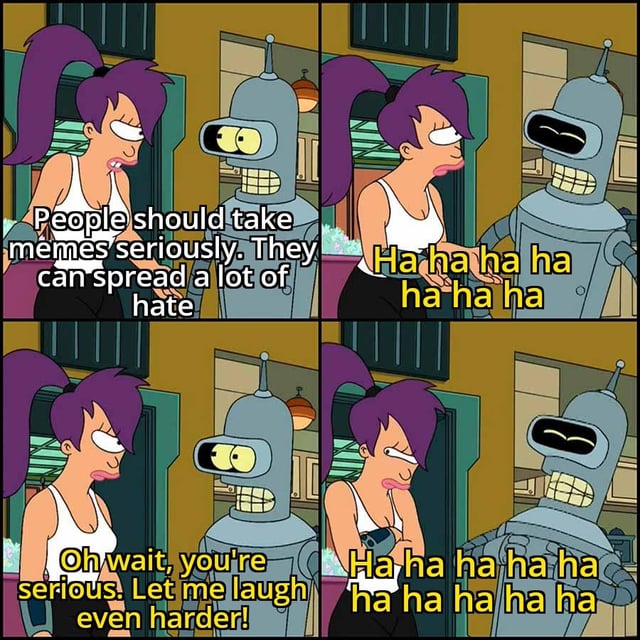
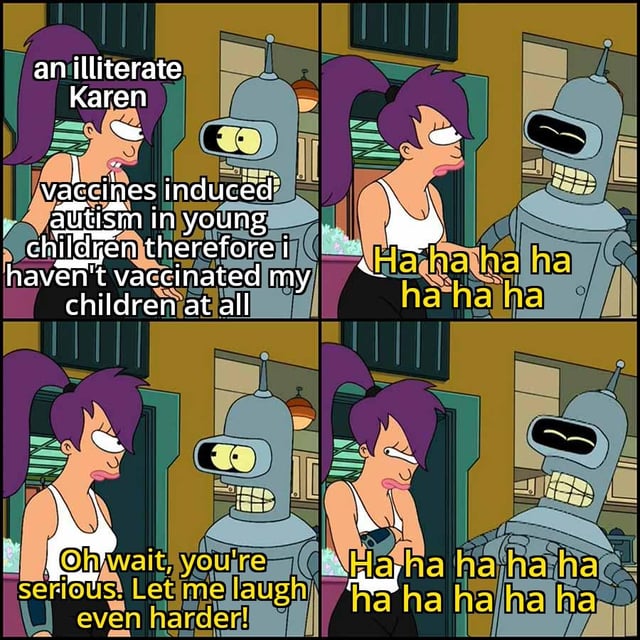
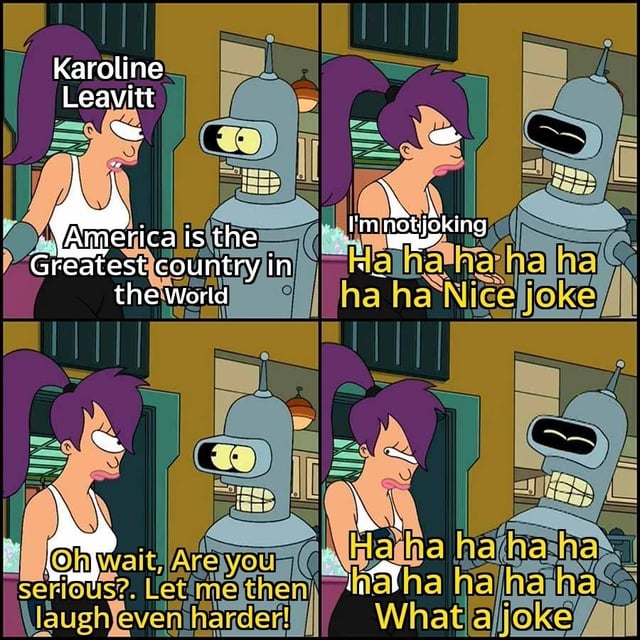
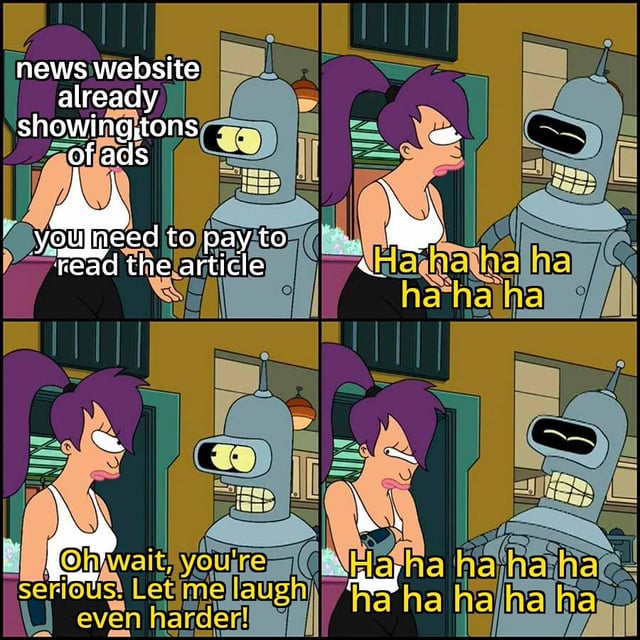
One of the best-known examples is Fry's “Shut Up and Take My Money!” reaction: a demand to buy or support something immediately, often used under product announcements, fan art, game news, or intentionally tempting bad ideas. The phrase became a widely recognized catchphrase and image macro after circulating online in 2010.5 Other recurring formats include Fry's narrowed-eye “Not Sure If…” suspicion image, Bender's escalating laughter, Zoidberg's blunt disapproval, and Professor Farnsworth-style declarations of frustrated judgment.
Common meme uses
| Visual or line | Typical online meaning |
|---|---|
| Fry holding cash | Enthusiastic approval or impatient willingness to spend money |
| Suspicious Fry | Doubt, ambiguity, or a caption with two competing explanations |
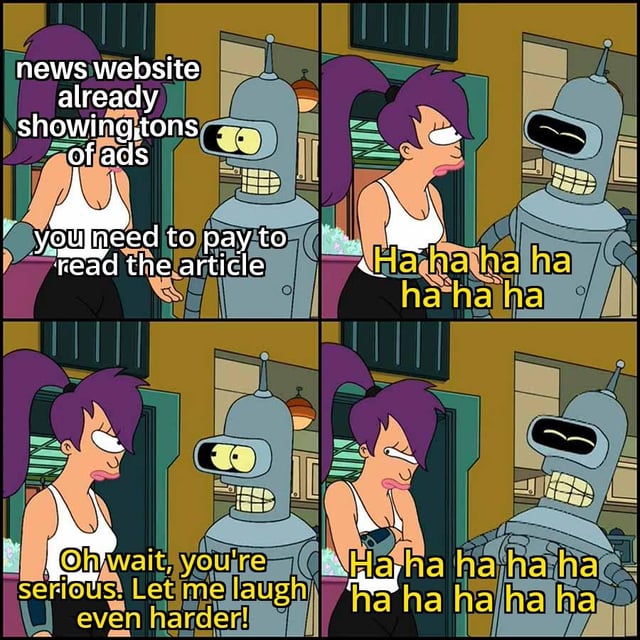
| Bender laughing | Treating a claim as so absurd that it deserves a stronger laugh |
| Zoidberg reaction | Dismissal, awkwardness, or exaggerated insult comedy |
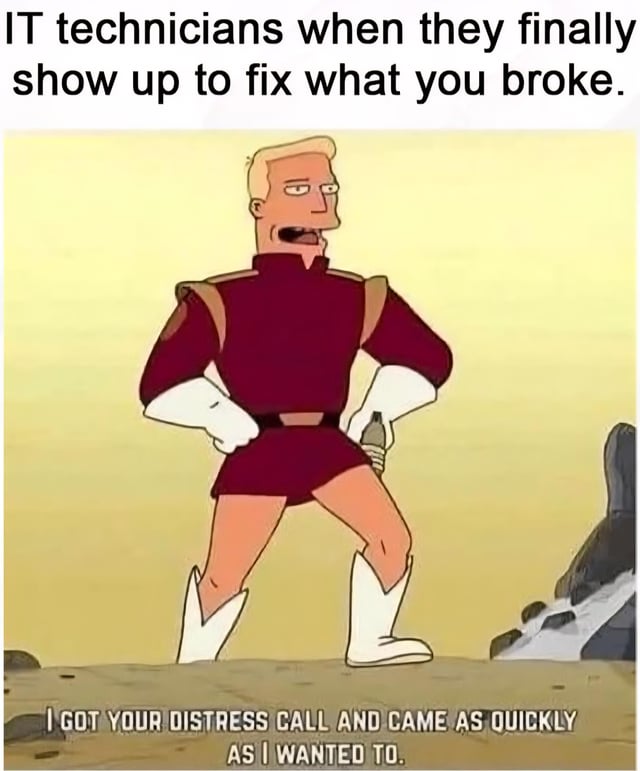
| Planet Express and future scenes | Satire about work, technology, consumer culture, or imagined dystopias |
These formats work especially well because the show's future setting lets a joke feel both contemporary and slightly displaced: a complaint about a paywall, a new phone, an office policy, or an internet argument can be staged as a small disaster in New New York. The captions usually do the topical work, while a familiar expression supplies the reaction.
Legacy in online culture
Futurama has remained visible across image boards, Reddit, social platforms, chat servers, and meme databases because its clips are adaptable rather than tied to a single event. Its science-fiction premise also makes it a convenient vocabulary for jokes about technology, corporate behavior, social trends, and the future. The official Hulu description still presents it as an adult animated science-fiction comedy, while the show's continuing release history has kept its characters available to newer audiences.13
Note
A Futurama screenshot is not automatically one single meme template. The same source work contains distinct formats—such as “Shut Up and Take My Money!” and Bender's laugh—that are best treated as their own template-level origins when a page is specifically about that reusable joke.