Summary
Tom and Jerry is one of the internet's most durable cartoon source works: a 1940 Hanna-Barbera cat-and-mouse franchise whose expressive slapstick still powers reaction images, image macros, GIFs, and comparison memes. Online, Tom often stands for panic, suspicion, failure, exhaustion, or self-sabotage, while Jerry supplies smugness, mischief, and chaotic victory. This page should anchor memes sourced from the franchise as a whole, while specific character pages handle Tom Cat, Jerry Mouse, Spike, and other visible subjects, and origin pages handle named templates such as Tom Shoots Himself or Zoot Suit Tom.
Description
Overview
Tom and Jerry is the long-running animated cat-and-mouse franchise created by William Hanna and Joseph Barbera for Metro-Goldwyn-Mayer in 1940.1 Its basic premise is simple enough to survive almost any remix: Tom, a gray house cat, tries to catch Jerry, a small brown mouse, and the attempt turns into escalating slapstick, improvised traps, impossible physics, and expressive defeat.
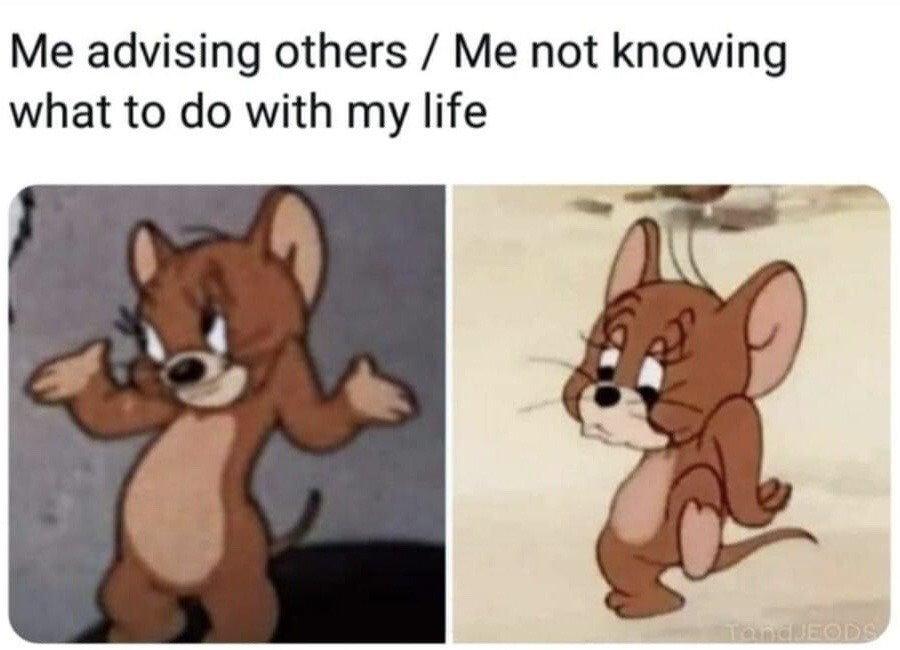
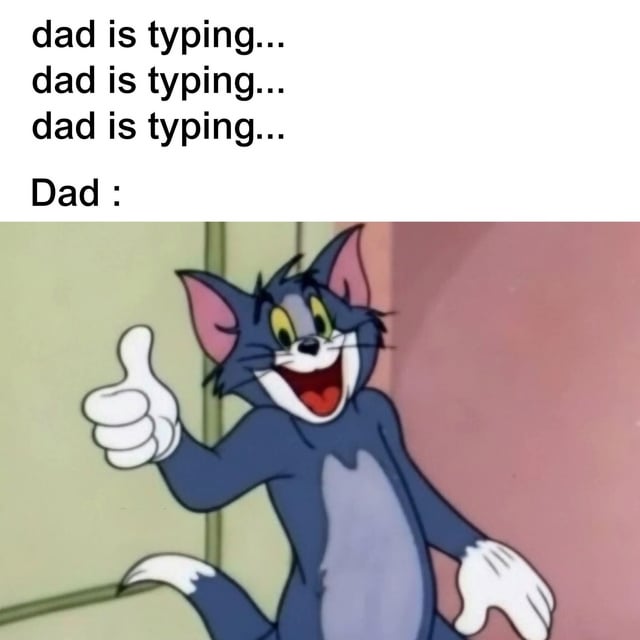
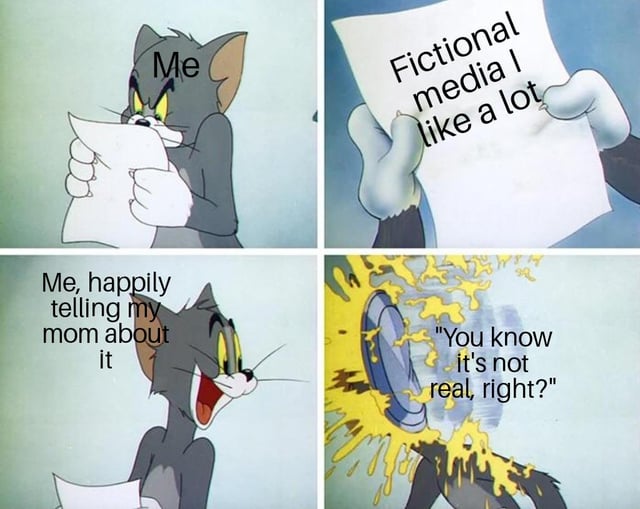
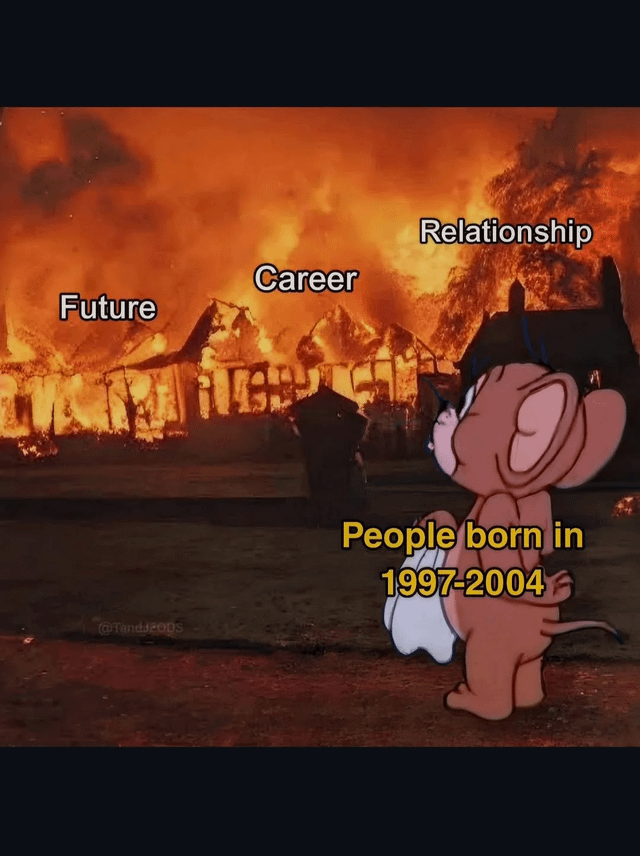
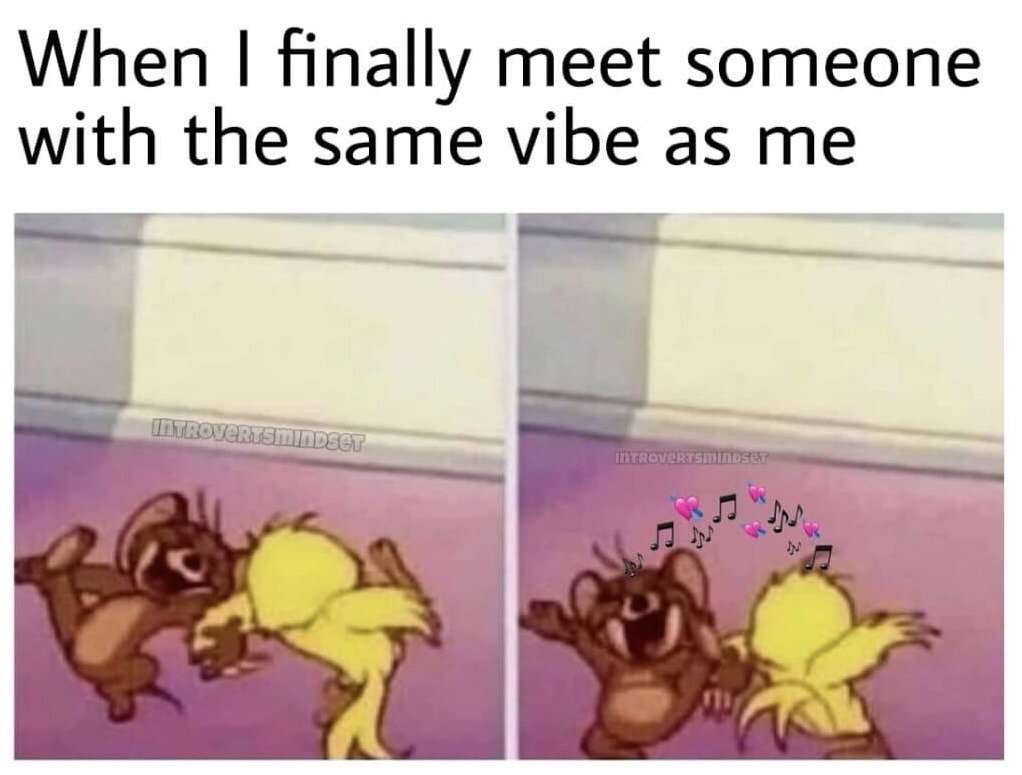
On the internet, Tom and Jerry works less like one single meme and more like a visual library. Its frames are used for reaction images, image macros, GIFs, comparison formats, "me vs. my problem" jokes, childhood-nostalgia posts, and absurd caption edits. Because the original cartoons communicate so much through poses and facial expressions rather than dialogue, a single still of Tom smirking, panicking, reading, collapsing, or looking suspicious can carry a joke with almost no extra context.
Origin and Source Context
The franchise began with the 1940 short Puss Gets the Boot, released before the characters had their familiar names. In that short, the cat was called Jasper, while the mouse was not yet formally established as Jerry.2 After the cartoon's success and awards attention, MGM continued the formula, and Hanna and Barbera developed the pair into Tom Cat and Jerry Mouse.
The original theatrical shorts became famous for precision timing, music-driven gags, and extreme but bloodless slapstick. The Hanna-Barbera MGM run produced many of the images now recycled online, including Tom's suspicious stare, Jerry's smug grin, sword-fighting panels, exaggerated injury reactions, chase scenes, and "Tom fails at his own plan" setups.
That long afterlife matters for meme culture. Tom and Jerry is not just recognizable to viewers who grew up with American television reruns; it also spread globally through Cartoon Network, Boomerang, home video, YouTube clips, reaction GIFs, and reposted screenshot templates. Know Your Meme lists Tom and Jerry as a confirmed subculture entry and tracks multiple sub-entries based on individual frames and recurring templates.3
How It Functions as a Meme
Most Tom and Jerry memes work by borrowing the show's instantly readable body language:
| Meme use | Typical visual cue | Common joke function |
|---|---|---|
| Reaction image | Tom shocked, suspicious, exhausted, or smug | A stand-in for embarrassment, doubt, panic, laziness, or overconfidence |
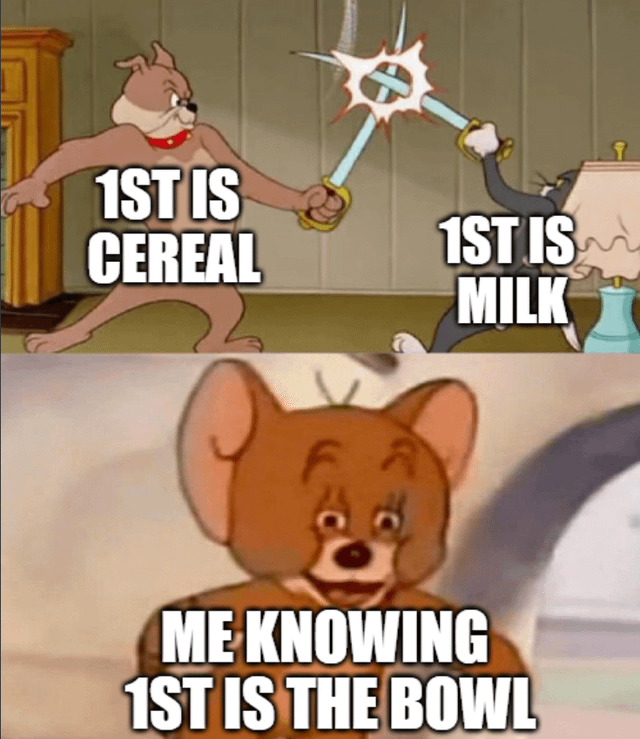
| Comparison format | Tom and Spike fighting while Jerry watches | Two sides argue while a third option wins |
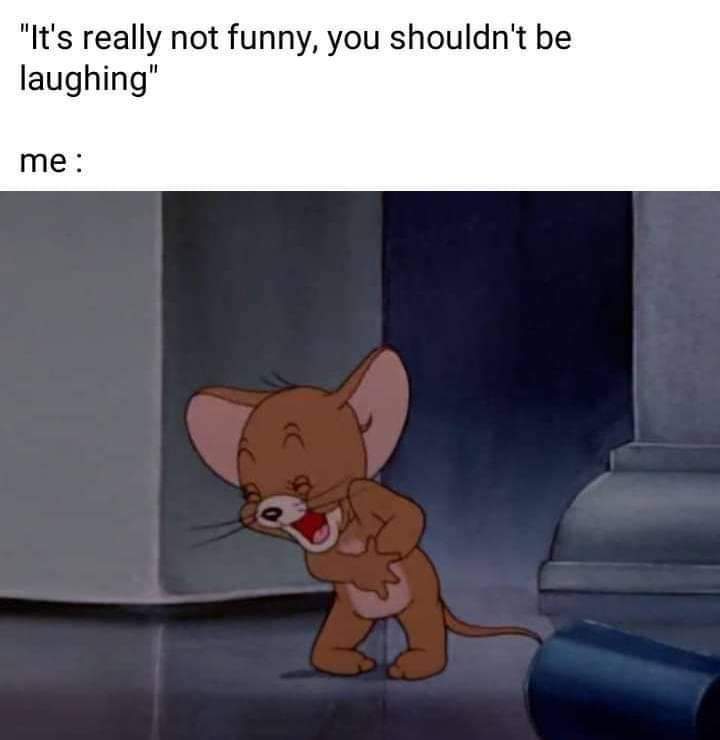
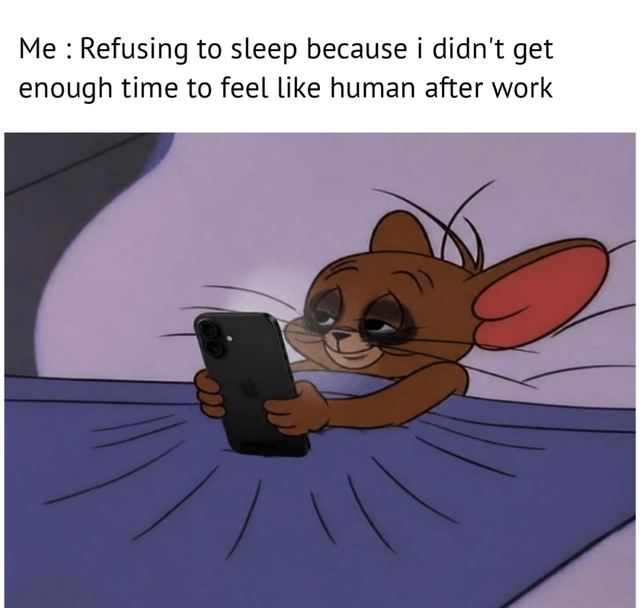
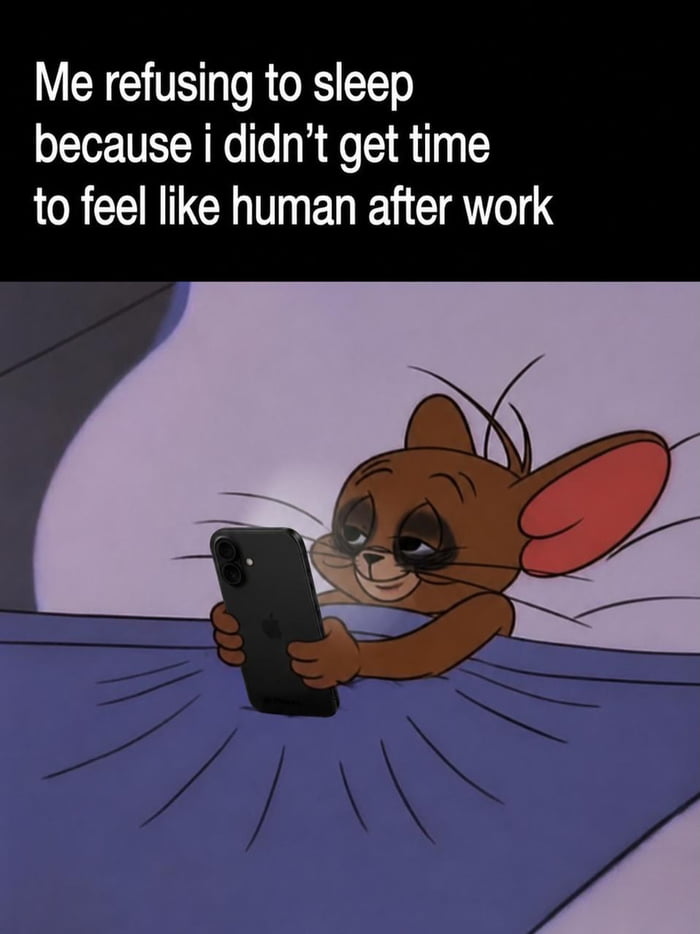
| Relatable image macro | Jerry laughing, sleeping, eating, or sneaking | Everyday laziness, petty satisfaction, social awkwardness, or failed self-control |
| Self-sabotage joke | Tom's plan backfires | A person, company, or group harms itself while trying to attack someone else |
| Nostalgia joke | Kids cheering Jerry / adults sympathizing with Tom | A change in perspective between childhood and adulthood |
The format is flexible because the original show already exaggerates emotion. Tom can represent the overworked person, the punished rule-follower, the villain of the joke, or the user about to make a bad decision. Jerry can be clever, chaotic, smug, innocent, or cruel, depending on the caption. Spike, Tyke, Little Quacker, and other side characters let creators turn the basic chase into a three-way argument, parental threat, or "bigger problem arrives" punchline.
Common Templates and Variants
Several Tom and Jerry frames have become semi-independent meme templates:
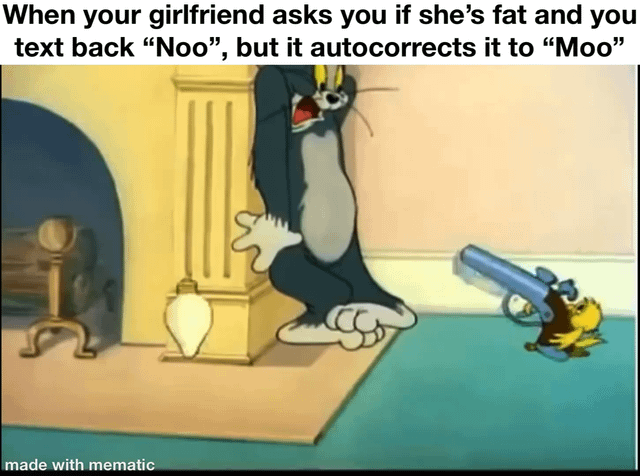
- Tom Shoots Himself: Tom aims into Jerry's mouse hole without realizing the weapon is pointed back at himself, often used for institutions or people whose strategy backfires.3
- That Cat / Cover Tom: Tom peeking from behind a structure, usually used as a smug or lurking reaction image.3
- Zoot Suit Tom: Tom in a stylish zoot suit from The Zoot Cat, often used in ironic "cool guy" edits.3
- Polish Jerry / Khe Berga?: A Jerry reaction image used in more chaotic or edgy caption memes.3
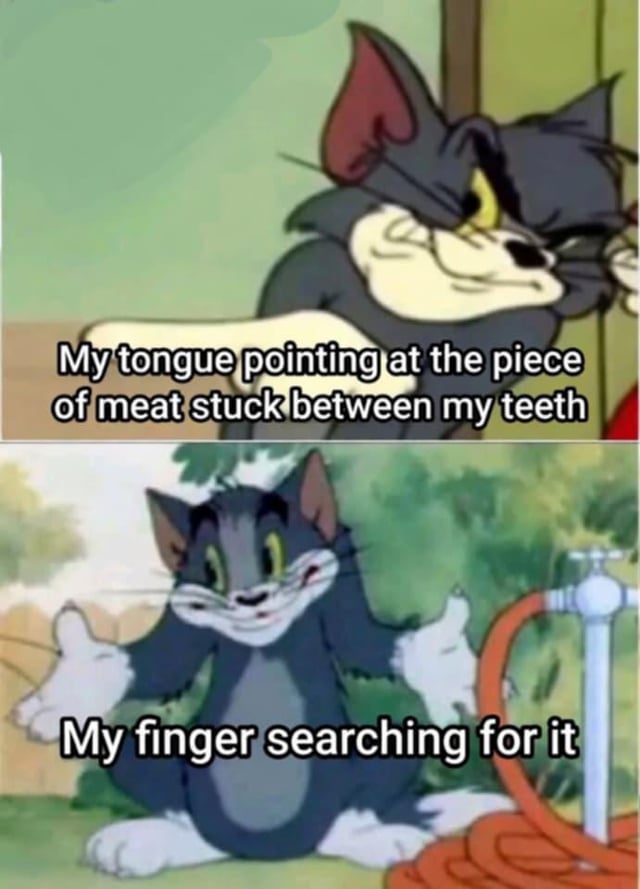
- Tom Reading The Newspaper and Shrugging Tom: reaction templates for disbelief, indifference, or resigned confusion.3
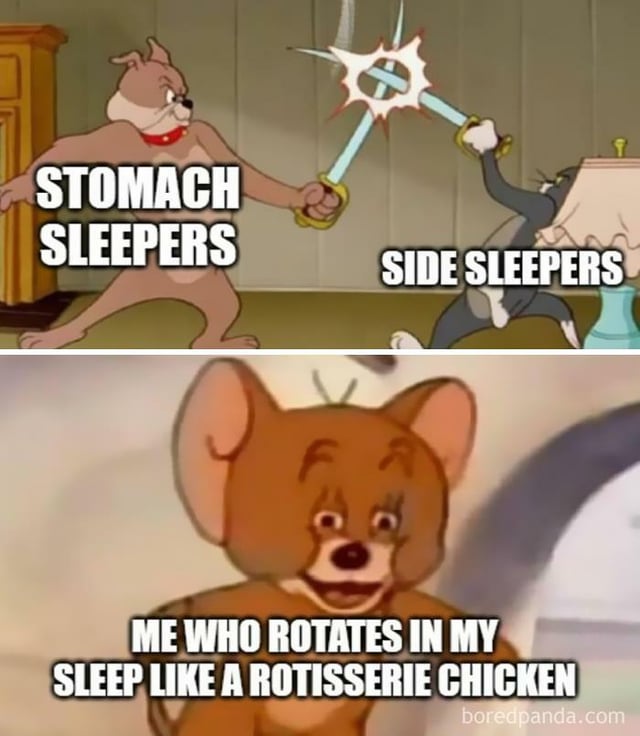
- Tom vs. Spike sword-fight panels: commonly relabeled for two arguing groups while Jerry, Tyke, or another character represents the obvious third answer.
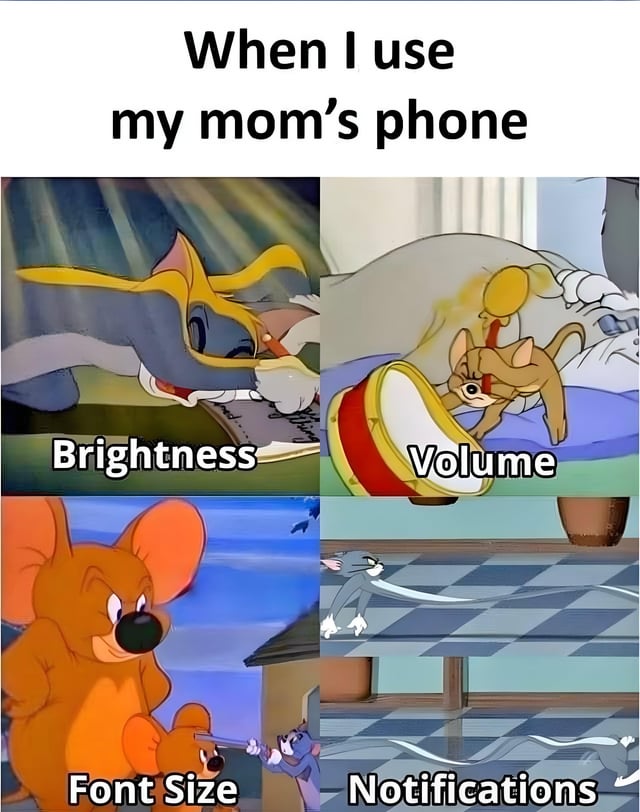
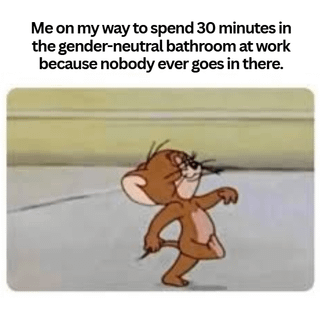
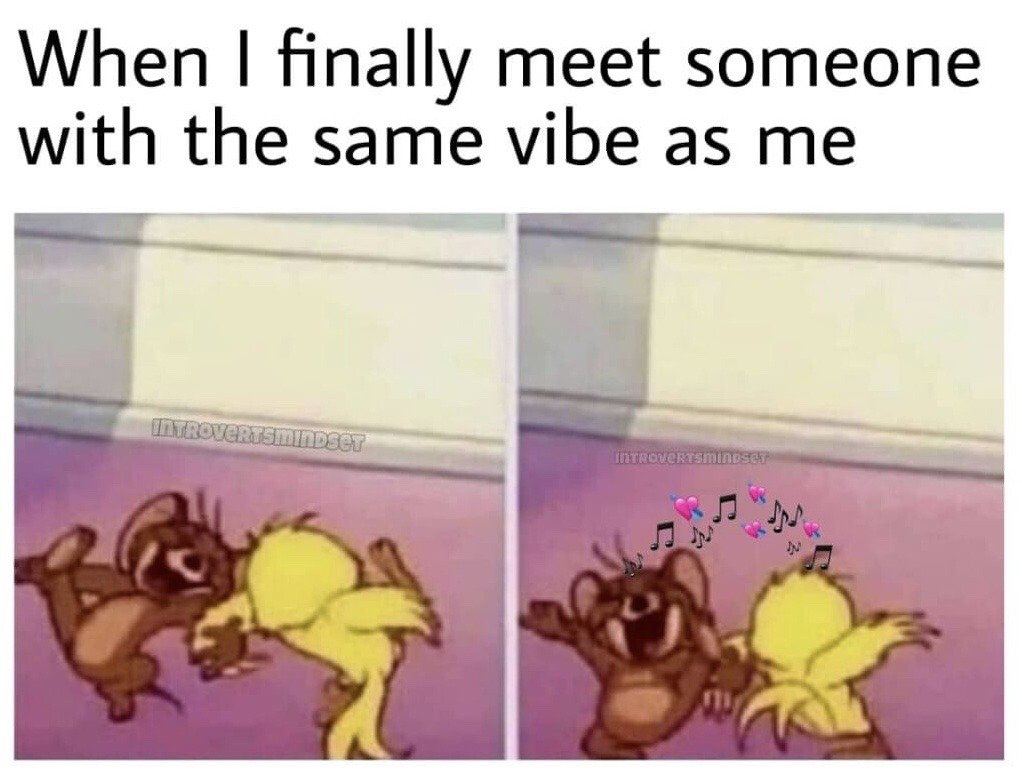
Gagbase examples around this work include phone-setting jokes, sleep-position comparisons, Jerry laughing reaction images, Tom-as-ChatGPT edits, food-stuck-between-teeth jokes, and "Tom was replaced by AI" workplace satire. These are not all the same origin meme, but they share the same source work and visual grammar.
Visual Identifiers
Tom and Jerry meme images are usually easy to recognize:
- Tom is a gray-and-white cat, often shown with yellow eyes, exaggerated eyebrows, and elastic body language.
- Jerry is a small brown mouse with round ears, a mischievous smile, and expressive eyebrows.
- Many classic frames have painted backgrounds, mid-century cartoon color palettes, and theatrical-short staging.
- The humor often depends on a sudden reversal: Tom thinks he has control, Jerry outmaneuvers him, or a third character punishes Tom for chaos Jerry helped cause.
- Captions frequently use "me," "my parents," "the company," "my brain," "sleepers," or "people who..." labels to turn the scene into a relatable social comparison.
Editorial Notes
For Gagbase, this page should function as the source-work anchor for memes clearly derived from Tom and Jerry. Use character pages for visible subjects such as Tom Cat, Jerry Mouse, Spike, Tyke, Little Quacker, or Mammy Two Shoes when the character is the core joke. Use origin/template pages for highly specific formats such as Tom Shoots Himself or Zoot Suit Tom when the frame itself becomes the named meme.
Do not attach unrelated cartoon cats to this work merely because the caption says "Tom." For example, Talking Tom & Friends is a separate franchise and should not be folded into Tom and Jerry. Likewise, generic cat-and-mouse jokes, AI-generated cats, or ordinary animal photos need stronger visual or textual evidence before being linked to this source work.
Legacy
The reason Tom and Jerry remains useful to meme creators is the same reason the shorts worked theatrically: the images are immediate. A raised eyebrow, a clenched fist, a smug mouse, or a doomed cat can explain a social situation faster than a paragraph. Modern captions turn those old chase scenes into jokes about phones, work, school, dating, streaming, AI, politics, parenting, and everyday fatigue.
That makes Tom and Jerry one of the internet's most durable cartoon source works. It is both nostalgic and endlessly reusable: old enough to feel universal, expressive enough to work without sound, and chaotic enough to survive whatever caption the internet puts on top of it.
-
Wikipedia contributors, "Tom and Jerry," Wikipedia. ↩
-
Wikipedia contributors, "Puss Gets the Boot," Wikipedia. ↩