Summary
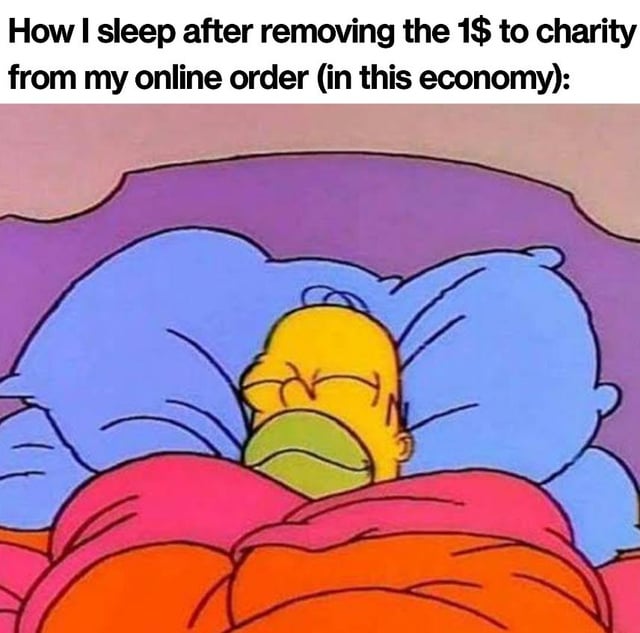
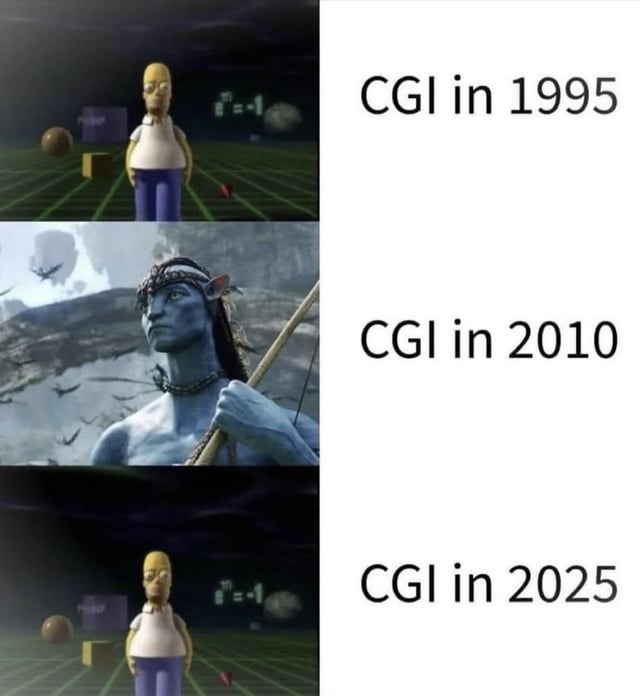
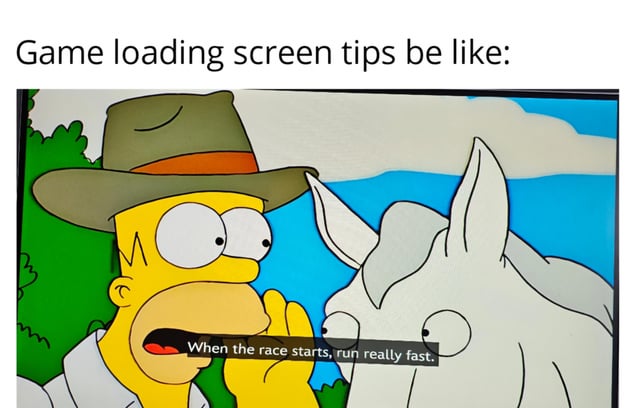
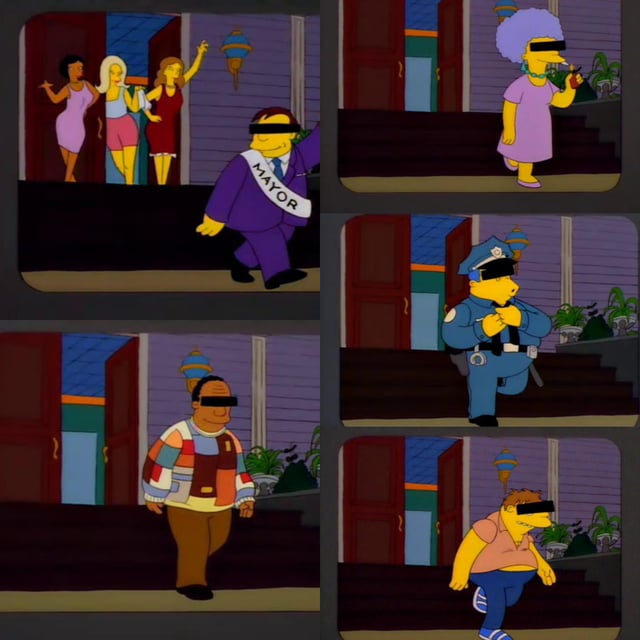
The Simpsons is one of the richest source works in English-language meme culture. Its long broadcast history, instantly recognizable yellow characters, and compact visual gags make it a flexible library for reaction GIFs, social commentary, quote remixes, and exploitable templates. Common meme formats include Homer backing into bushes, Lisa Simpson's Presentation, Old Man Yells at Cloud, Steamed Hams, Milhouse Is Not a Meme, and Simpsons Shitposting. On Gagbase, this work page should anchor memes clearly sourced from the show, while character and origin pages handle more specific subjects and templates.
Description
Overview
The Simpsons is the long-running American animated sitcom created by Matt Groening and developed with James L. Brooks and Sam Simon. The family first appeared as short animated segments on The Tracey Ullman Show in 1987 before expanding into a half-hour Fox series with the Christmas special "Simpsons Roasting on an Open Fire" on December 17, 1989.1 Its visual shorthand is instantly recognizable: yellow-skinned characters, expressive freeze frames, Springfield's everytown setting, and a cast built to satirize families, media, schools, workplaces, politics, fandom, and consumer life.
For meme culture, The Simpsons is less a single format than a whole image library. The series has produced reaction GIFs, exploitable screenshots, fake headline templates, quote remixes, absurd fan edits, and recurring in-jokes that can be detached from the episode and reused for nearly any online argument. Guinness World Records describes the show as a record-setting animated sitcom by episode count, while Britannica notes its broader role as a cultural touchstone whose catchphrases and character voices entered common usage.23
Meme Culture Role
The show's internet value comes from three overlapping traits:
- High expressiveness: Homer, Lisa, Bart, Marge, Abe, Milhouse, Mr. Burns, Skinner, Chalmers, and other Springfield characters can sell embarrassment, smugness, panic, boredom, denial, and righteous certainty in a single frame.
- Modular scenes: Many gags already work like small sketches, so they survive cropping, captioning, GIF looping, and out-of-context reposting.
- Shared cultural memory: Because the series has circulated for decades in English-language television, streaming, clips, and fan communities, many viewers can read a Simpsons frame even when they do not know the exact episode.
This makes The Simpsons a useful source-work page for memes where the image, GIF, or quote clearly comes from the show. More specific pages should still be used for visible subjects such as Homer Simpson, Lisa Simpson, Bart Simpson, Abe Simpson, or named templates like "Homer Simpson Backs Into Bushes."
Notable Meme Formats
| Format | Typical Use | Meme-Culture Notes |
|---|---|---|
| Homer Simpson Backs Into Bushes | Embarrassment, retreat, awkward exits, abandoning a take | Know Your Meme traces the GIF to the 1994 episode "Homer Loves Flanders" and notes its use as a reaction GIF that is often edited so Homer disappears into other objects.4 |
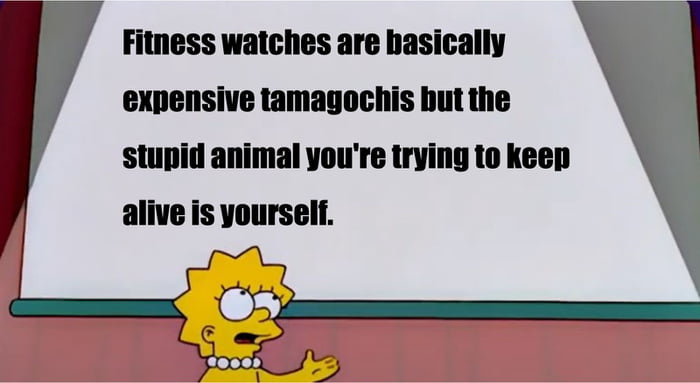
| Lisa Simpson's Presentation | Hot takes, fake lectures, earnest arguments, ironic explainers | The template uses Lisa presenting in front of a blank screen; online users replace the screen with their own thesis or complaint.5 |
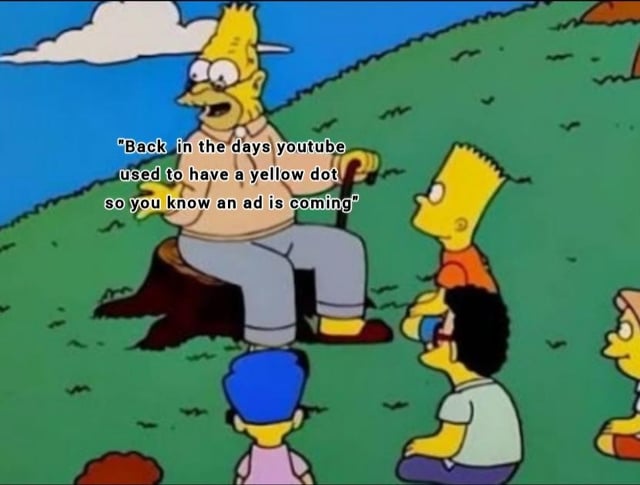
| Old Man Yells at Cloud | Complaints, generational grumbling, absurd grievances | The fake newspaper headline from a 2002 episode became a phrasal template, often rewritten as "X yells at Y."6 |
| Steamed Hams | Quote remixing, surreal edits, YouTube/Facebook fan remix culture | The Skinner-and-Chalmers sketch from "22 Short Films About Springfield" became a major quote and remix source, especially in Simpsons shitposting communities.7 |
| Milhouse Is Not a Meme | Meta-meme debate, forced-meme jokes, recursive humor | The phrase became a 4chan-era argument about what counts as a meme, using Milhouse as the object of the debate.8 |
| Simpsons Shitposting | Absurd edits, deep-fried jokes, low-context fan remixing | The Facebook-centered community popularized deliberately strange Simpsons edits and helped keep older scenes active as internet material.9 |
Common Visual Identifiers
Most Simpsons memes are recognizable through saturated yellow character designs, bold outlines, Springfield interiors, classroom or living-room scenes, and flat-color broadcast animation. Common meme edits include:
- top-text reaction captions over screenshots;
- replacement text on signs, newspapers, whiteboards, or projector screens;
- political or social labels placed on characters in a scene;
- GIF loops used as chat reactions;
- redrawn, deep-fried, or intentionally low-effort edits associated with shitposting.
Because the show is so widely quoted, a meme may be a Simpsons reference even when the visible edit is minimal. At the same time, vague yellow-cartoon artwork or generic family-sitcom captions should not be attached to the work unless the source image, character, quote, or scene is clearly identifiable.
Spread and Platforms
Simpsons memes spread across older imageboards, Tumblr, Reddit, Facebook groups, YouTube remix channels, Twitter/X reaction threads, Discord servers, meme generators, and mainstream entertainment coverage. Some formats traveled as traditional image macros, while others moved as GIFs or short video remixes. The show has also absorbed its own meme status back into later episodes: the popularity of Homer disappearing into the hedge became recognizable enough that later commentary treated it as a meta moment for the show and its online afterlife.
The strongest examples tend to work even without specialist fandom knowledge. A viewer does not need to remember "Homer Loves Flanders" to understand Homer vanishing into the hedge as social retreat, and they do not need the full context of Lisa's school presentation to read the projector as "here is my serious take." That portability is why The Simpsons remains a durable meme source rather than only a nostalgia object.
Gagbase Indexing Notes
Use this work entity for memes that use screenshots, GIF frames, clips, quotes, redraws, or obvious visual edits from The Simpsons. Character pages should carry the more specific visible subject when possible, especially Homer, Lisa, Bart, Marge, Abe, Milhouse, Mr. Burns, Ned Flanders, Principal Skinner, and Superintendent Chalmers. Origin/template pages are better for named formats such as "Homer Backs Into Bushes," "Lisa Simpson's Presentation," "Old Man Yells at Cloud," or "Steamed Hams" when the meme depends on that exact recurring format.
-
Britannica, "The Simpsons", overview and origins section. ↩
-
Guinness World Records, "The Simpsons: Longest-running animated sitcom (number of episodes)". ↩
-
Fox Corporation, "FOX Announces Fall 2025 Premiere Dates...". ↩
-
Know Your Meme, "Homer Simpson Backs Into Bushes". ↩
-
Know Your Meme, "Lisa Simpson's Presentation". ↩
-
Know Your Meme, "Old Man Yells at Cloud". ↩
-
Know Your Meme, "Steamed Hams". ↩
-
Know Your Meme, "Milhouse Is Not A Meme". ↩
-
Know Your Meme, "Simpsons Shitposting". ↩