Summary
Spider-Man (1967 animated series) is the first animated TV adaptation of Marvel's web-slinger and a major source work for internet meme culture. Its low-budget staging, repeated poses, and odd frozen frames became ideal reaction-image material, powering 60's Spider-Man image macros, Spider-Man Pointing at Spider-Man, Peter Parker Reading a Book, Me and the Boys villain edits, and J. Jonah Jameson variants. Use this page for memes visibly sourced from the 1967 cartoon, while using narrower character or origin pages for specific templates.
Description
Overview
Spider-Man (1967 animated series), often called Spider-Man '67 or 60's Spider-Man, is the first animated television adaptation of Marvel's Spider-Man. The show aired from 1967 to 1970 and turned into an unusually productive meme source decades later: its stiff poses, repeated animation, flat colors, abrupt staging, and melodramatic comic-book gestures make single frames read like jokes even before captions are added.1
On Gagbase, this work page anchors memes visibly sourced from the 1967 show, including Spider-Man Pointing at Spider-Man, general 60's Spider-Man image macros, Peter Parker Reading a Book, Me and the Boys villain edits, and J. Jonah Jameson "pictures of Spider-Man" jokes. Specific characters and named templates should still have their own pages when the meme is about a narrower format, but the series itself is the source-work layer that ties those branches together.
Source Context
The series was based on the Spider-Man comics created by Stan Lee and Steve Ditko. Its first season was produced by Grantray-Lawrence Animation, while later seasons were handled by Krantz Films with Ralph Bakshi involved in production. It is remembered for Paul Soles's Spider-Man voice, the famous theme song, and a production style that relied heavily on reused animation and economical staging.1
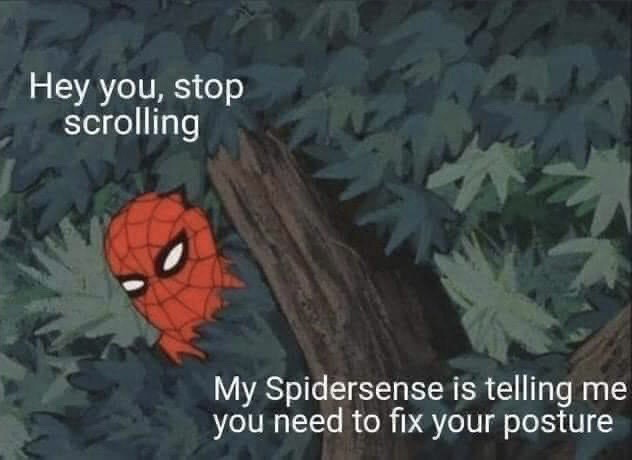
Those limitations became an internet advantage. Screenshots from the show often catch Spider-Man in odd, confrontational, thoughtful, or strangely casual poses. A frame that originally moved quickly in a Saturday-morning cartoon can become, when frozen, a perfect reaction image: Spider-Man hiding behind a tree, staring with suspicion, reading a book, pointing at himself, or being surrounded by villains who look like they are posing for a group chat.
Meme Development
The broader 60's Spider-Man image macro trend traces back to late-2000s and early-2010s online communities. Know Your Meme records that 4chan's /co/ board circulated screenshots during shared viewings around 2009, after which the stills spread into captioned image macros, reaction faces, Tumblr collections, Reddit posts, and meme-generator pages.2 The appeal was simple: the cartoon looked sincere, but the still frames looked like Spider-Man had wandered into absurd everyday situations.
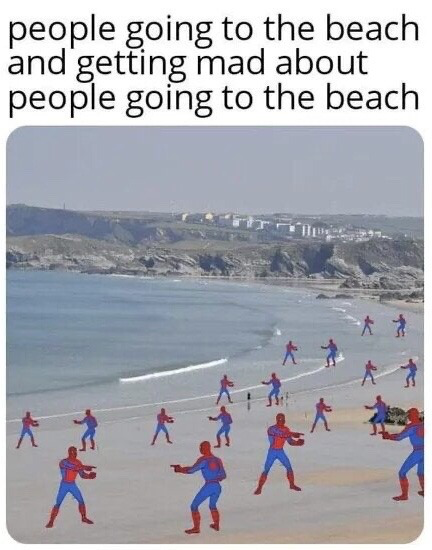
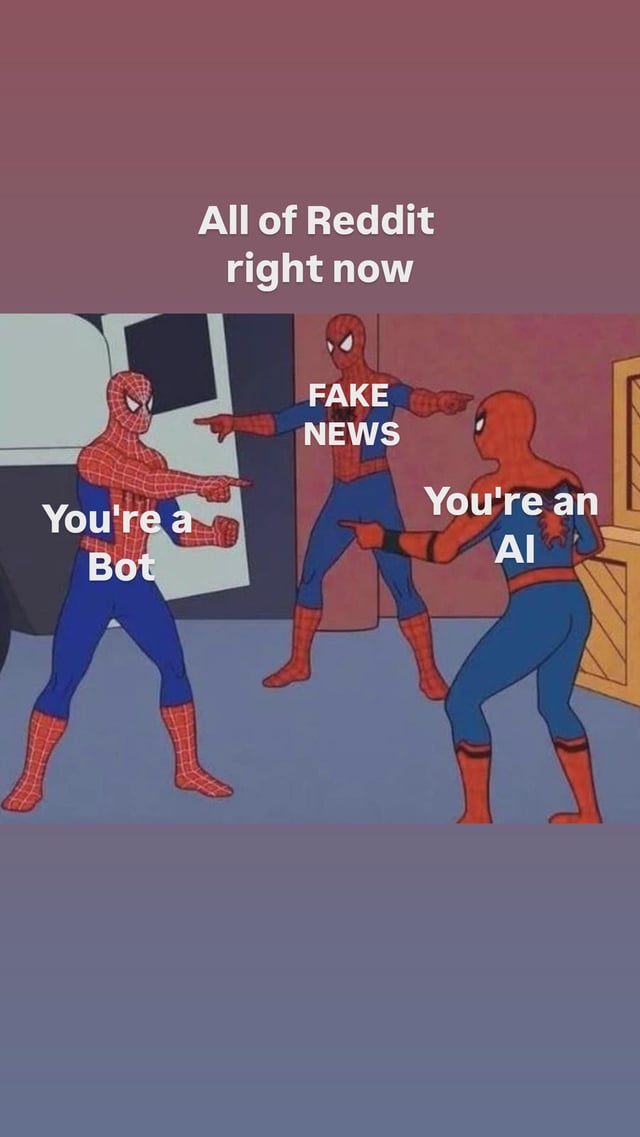
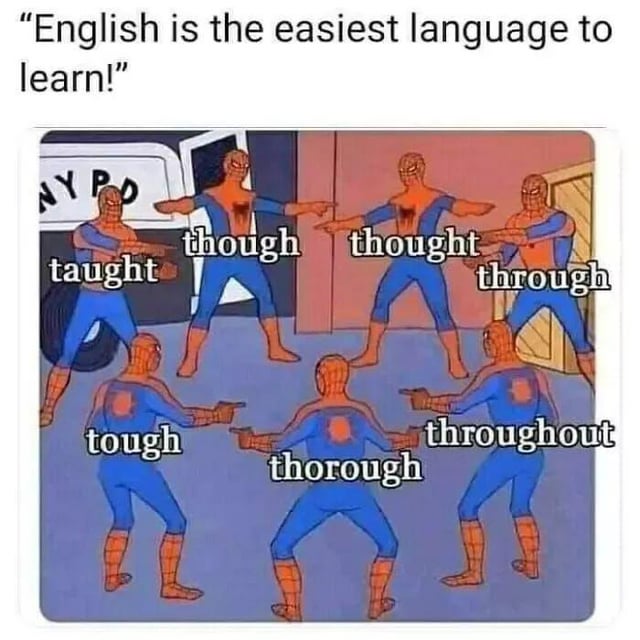
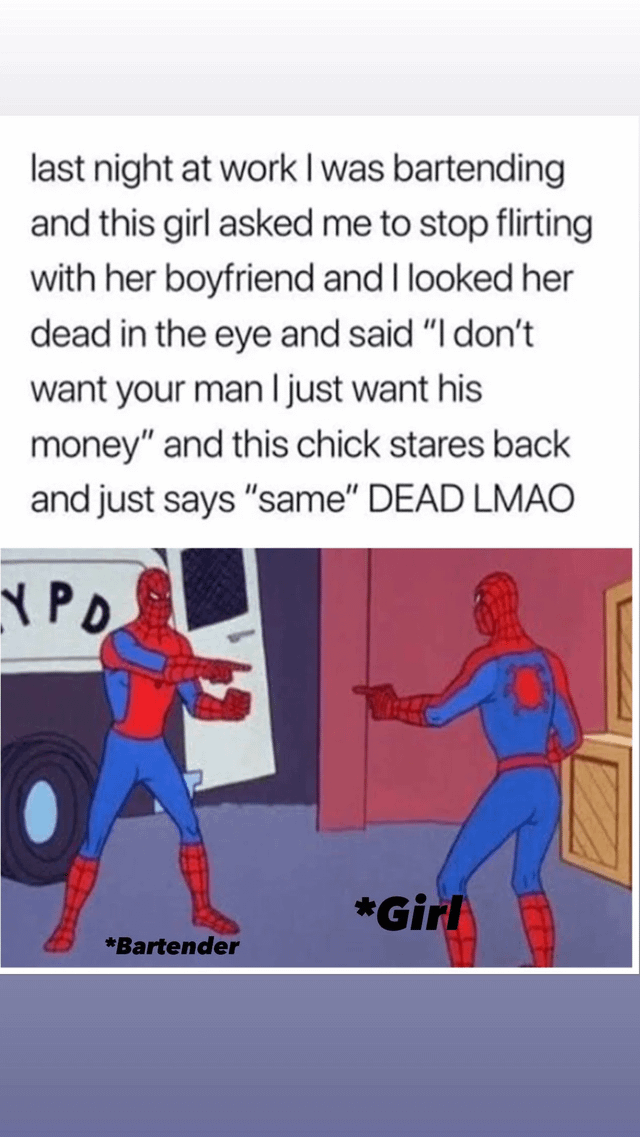
The most famous single template is Spider-Man Pointing at Spider-Man. The still comes from the 1967 episode "Double Identity," in which a villain impersonates Spider-Man and the two costumed figures accuse each other. Know Your Meme identifies early image-macro use in 2011 and later growth through the mid-2010s, especially on Black Twitter, Twitter/X, Reddit, and other social platforms.3 TIME summarized the format as a shorthand for similar people or things confronting each other, while also noting its later official references in No Way Home and Across the Spider-Verse.4
That feedback loop matters. What began as an old-cartoon screenshot became part of official Spider-Man media language. Into the Spider-Verse used the gag in a post-credits scene, No Way Home recreated it with three live-action Spider-Men in promotional material, and Across the Spider-Verse expanded the joke into a crowd-scale Spider-Society moment.4 WIRED described the Across the Spider-Verse version as a 56-year payoff for a shot from the 1960s cartoon.5
Common Meme Formats
| Format | Typical use | Visual identifiers |
|---|---|---|
| Spider-Man Pointing at Spider-Man | Calling out hypocrisy, duplication, similarity, mutual accusation, or "same energy" comparisons. | Two or more Spider-Men pointing at each other, often with labels over each figure. |
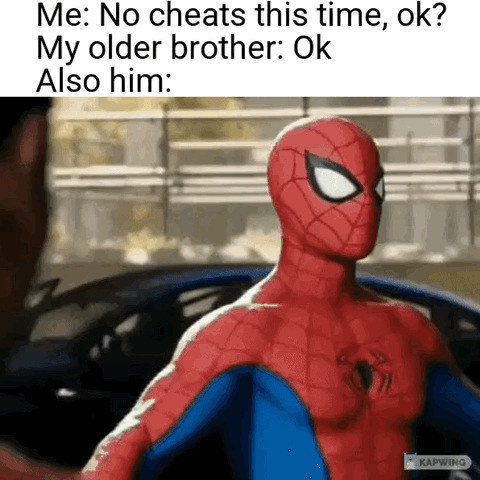
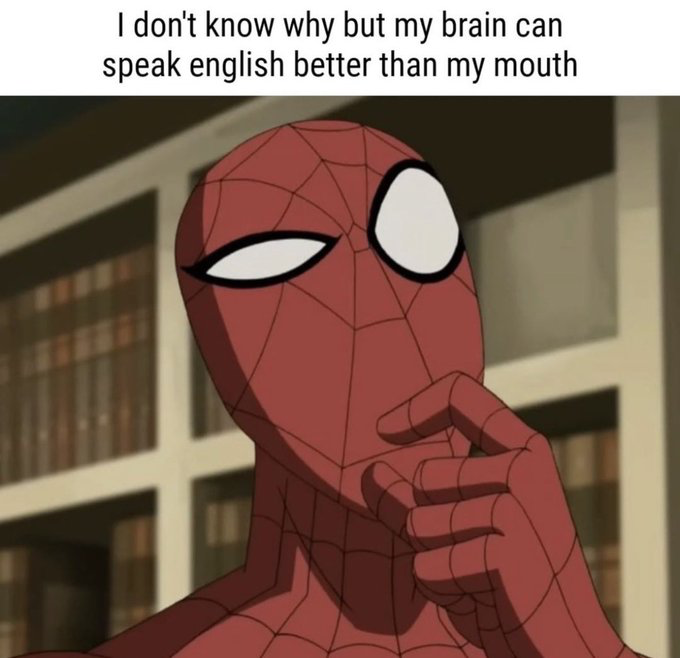
| 60's Spider-Man image macros | Absurd internal monologue, awkward reaction captions, or shitpost-style derailment. | Stiff cartoon screenshots, thick outlines, muted backgrounds, deadpan Spider-Man poses. |
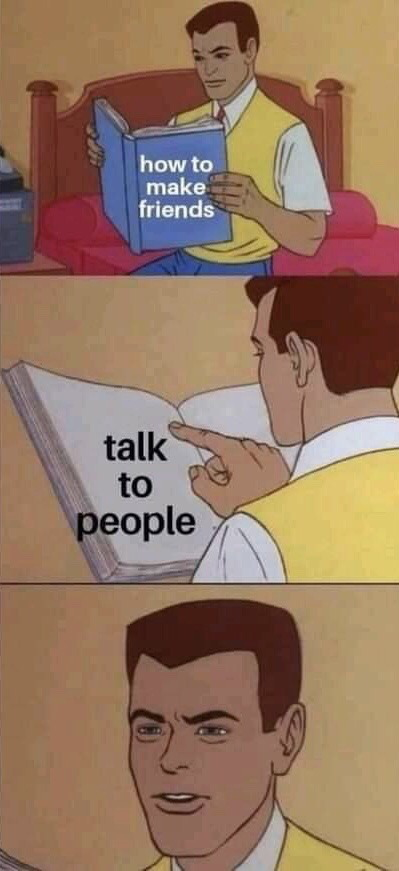
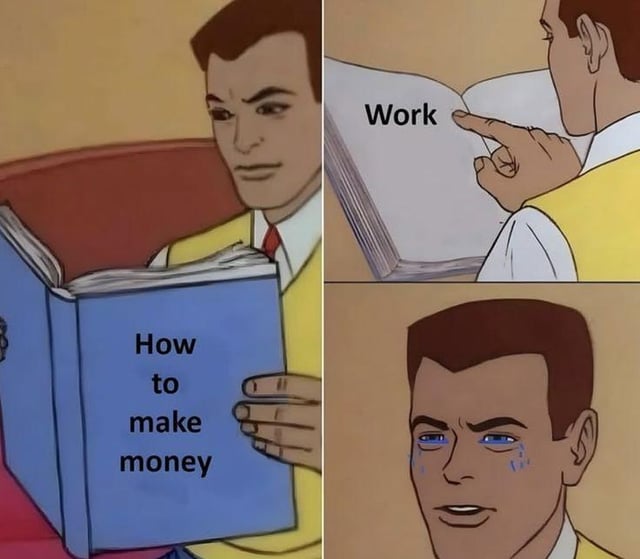
| Peter Parker Reading a Book | Obvious advice, disappointing instructions, anti-climax, or "the answer is boring" jokes. | Peter Parker seated with a book, often followed by a close-up of a single blunt sentence. |
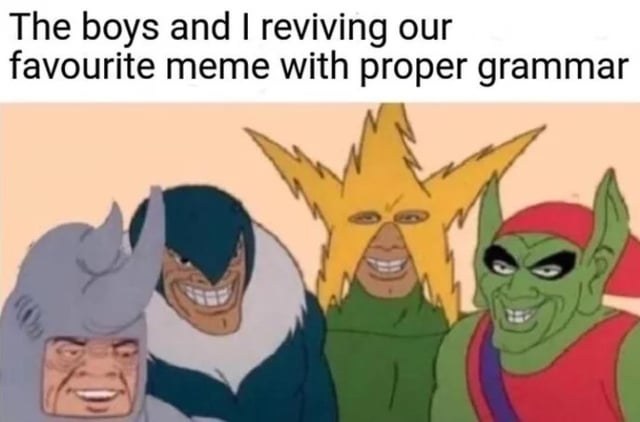
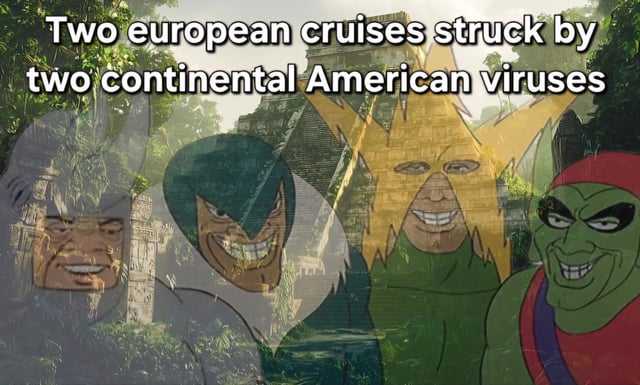
| Me and the Boys | Group mischief, nostalgic friend-group captions, ironic gang energy. | Green Goblin, Vulture, Electro, Rhino, or other villains arranged like a mischievous squad. |
| J. Jonah Jameson variants | Demanding content, rejecting distractions, or yelling for Spider-Man-related material. | Jameson at a desk, usually paired with "pictures of Spider-Man" style captions. |
Role in Meme Culture
The 1967 series works as a meme source because it is visually specific but emotionally flexible. Its frames can express suspicion, guilt, panic, smugness, confusion, resignation, boredom, or chaotic confidence with very little editing. This makes it useful for both clean reaction images and dense object-labeling memes.
The show also sits at a rare crossroads of nostalgia and internet absurdism. Older viewers recognize it as an early Spider-Man adaptation; younger meme communities often meet it first through screenshots detached from the original episodes. That split lets the same image function as superhero fandom reference, retro cartoon joke, and general-purpose reaction format.
Gagbase Usage Notes
Use this work page when a meme clearly uses footage, screenshots, redraws, or character art from the 1967 animated series. Attach narrower relationships when possible:
- Use the 1967 Spider-Man character page for memes centered on that version of Spider-Man.
- Use Peter Parker, J. Jonah Jameson, or villain character pages when the visible subject is specific.
- Use origin pages for named templates such as Spider-Man Pointing at Spider-Man, Peter Parker Reading a Book, or Me and the Boys if those template pages exist.
- Avoid using this work for unrelated Spider-Man movie memes, comic-panel memes, cosplay photos, MCU jokes, or general Spider-Man brand references unless the 1967 cartoon image is visibly part of the meme.
Related Trivia
- The pointing meme comes from "Double Identity," a 1967 cartoon segment about an impostor Spider-Man.3
- The 60's Spider-Man macro family predates the pointing template's mainstream revival and helped make odd stills from the show reusable reaction material.2
- Me and the Boys became a mainstream 2019 format after the phrase was paired with 60's Spider-Man villain imagery, especially the grinning group lineup.6
- Official Spider-Man media later folded the pointing meme back into the franchise, turning a fan-made internet joke into a recurring multiverse gag.4