Summary
Spider-Man (1967 animated series Spider-Man) is the meme-facing version of Marvel's hero from the 1967 cartoon, famous for pointing duplicates, stiff poses, awkward reaction shots, and retro image macros. The character's limited-animation look turned old TV frames into flexible online shorthand for hypocrisy, suspicion, confusion, and deadpan commentary. This page distinguishes the visible costumed character from the parent series, unmasked Peter Parker scenes, other Spider-Man media branches, and named templates such as Spider-Man Pointing at Spider-Man or Peter Parker Reading a Book. Use it when the 1967 suit is the central visual subject.
Description
Overview
Spider-Man (1967 animated series Spider-Man) is the costumed version of Peter Parker from the 1967 Spider-Man cartoon, treated here as a meme character rather than as the entire television series. Online, this Spider-Man is less a conventional superhero lead than a reusable reaction figure: a stiffly posed, bright-red-and-blue cartoon man who can point, lurk, judge, panic, think, or stare blankly with almost no extra setup.
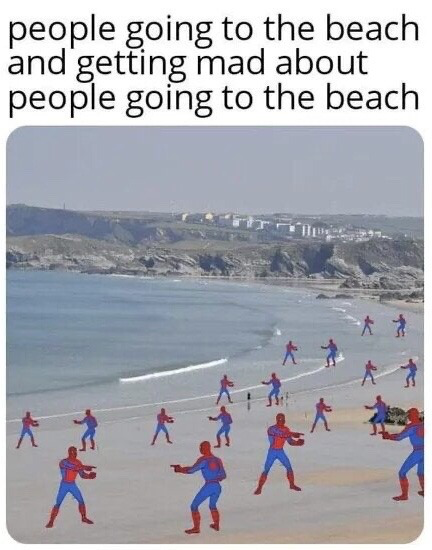
The broader source work already anchors memes from the 1967 show as a whole. This character page is for memes where the visible subject is the costumed Spider-Man himself, especially pointing-template edits, retro reaction images, posture reminders, "same person accusing same person" jokes, and object-labeling memes built around duplicated Spider-Men.
Source Context
The 1967 Spider-Man animated series aired from September 9, 1967, to June 14, 1970, and was the first television adaptation of Marvel's Spider-Man comics. The show followed Peter Parker as a student, photographer, and costumed crimefighter, with Paul Soles voicing Peter Parker / Spider-Man in the English-language version.1
Its production history shaped its later meme life. The show relied heavily on economical animation: repeated poses, reused swinging footage, simple backgrounds, limited motion, and dramatic comic-book gestures. Those choices could look awkward in motion, but they became unusually useful as still images. A single frozen frame can make Spider-Man look guilty, suspicious, smug, baffled, lonely, exhausted, or weirdly overconfident.
Meme Development
The main online image-macro family is usually called 60's Spider-Man. Know Your Meme traces the trend to 2009, when screenshots from the old cartoon circulated around 4chan's /co/ board and later spread through Tumblr, Reddit, image macro pages, and meme compilations.2 The captions often pushed the character into absurd internal monologue, deliberately low-effort shitposting, or everyday behavior that felt funnier because it was attached to a sincere superhero image.
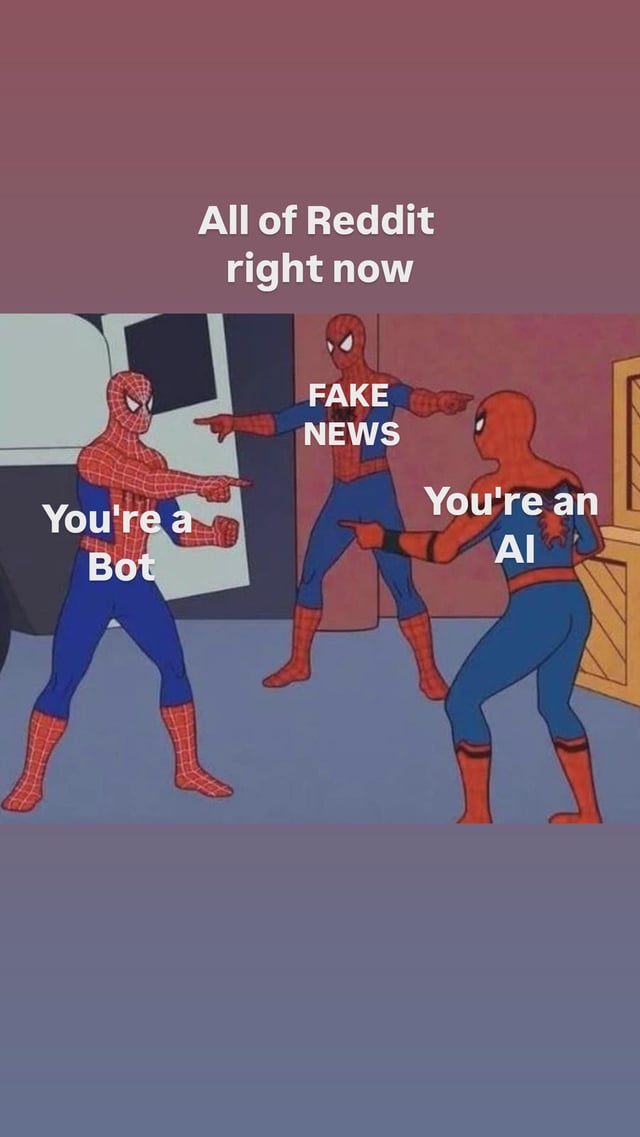
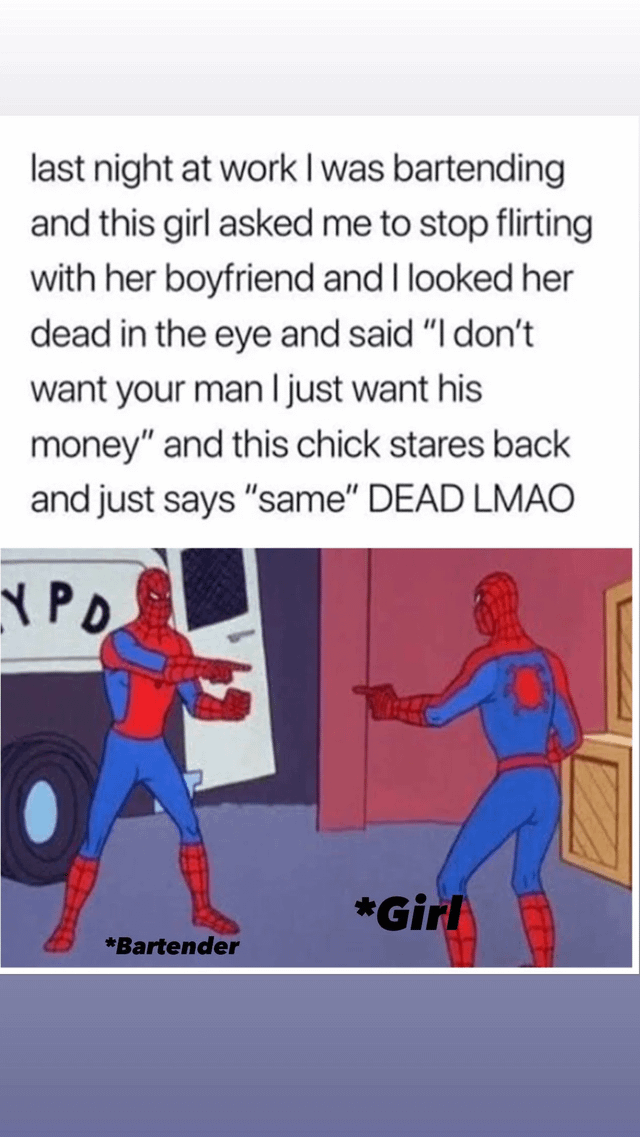
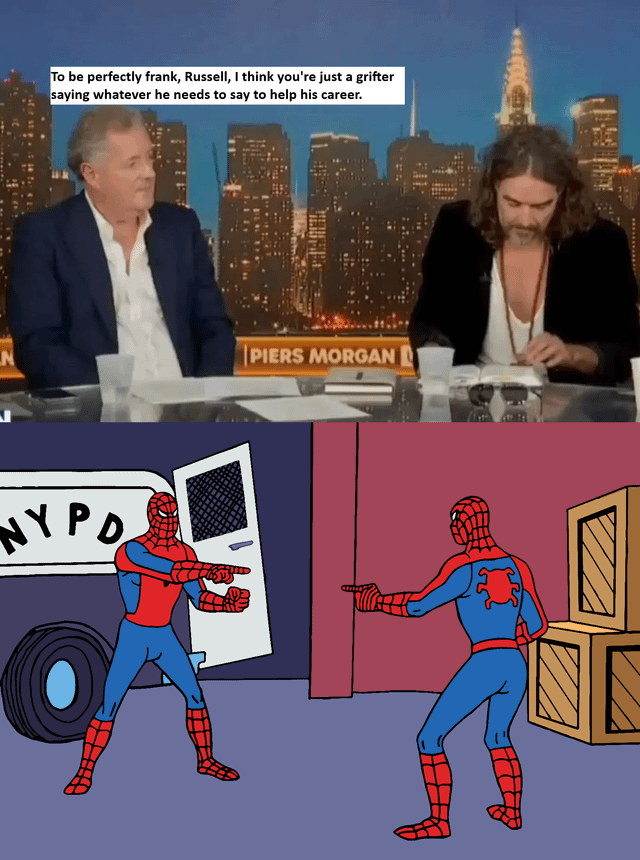
The most durable character pose is Spider-Man Pointing at Spider-Man. The still comes from the 1967 episode segment "Double Identity," where an impostor Spider-Man and the real Spider-Man confront each other. Know Your Meme records early image-macro use in 2011, and the format became a mainstream shorthand for hypocrisy, duplication, mutual blame, and "same energy" comparisons.3
That pointing pose later fed back into official Spider-Man culture. The gag was referenced in Spider-Man: Into the Spider-Verse, recreated with the three live-action film Spider-Men around Spider-Man: No Way Home, and expanded into a crowd-scale moment in Spider-Man: Across the Spider-Verse.4 WIRED described the Across the Spider-Verse gag as a payoff to a shot from the 1960s cartoon, showing how completely the meme had been absorbed back into the franchise.5
Visual Identity
The meme character is recognizable through a few repeated signals:
| Trait | Meme function |
|---|---|
| Bright 1960s cartoon suit | Marks the image as the retro Spider-Man cartoon, not the MCU, comics, or live-action films. |
| Stiff pointing pose | Used for hypocrisy, duplication, mutual accusation, and "you too" jokes. |
| Odd frozen body language | Turns heroic motion into awkward reaction-image material. |
| Flat backgrounds and simple staging | Makes object labels, captions, and edits easy to read. |
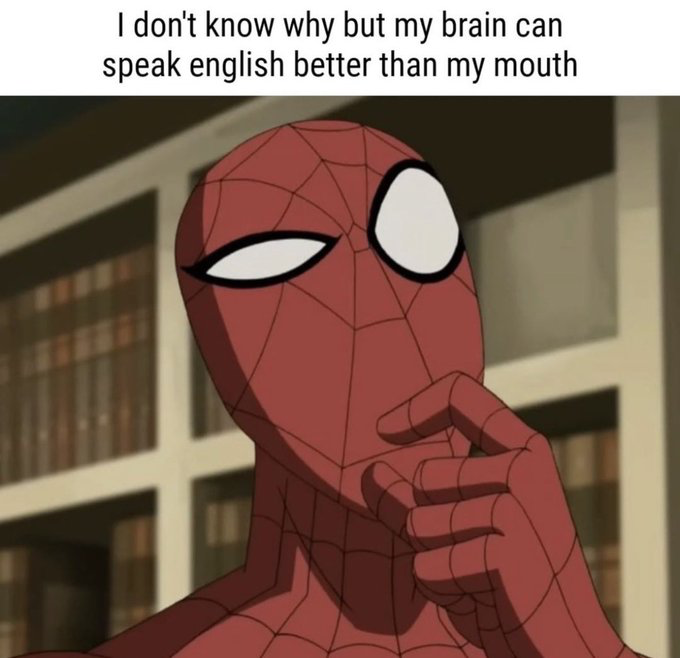
| Deadpan face and mask | Lets the same image work for confusion, suspicion, resignation, or smugness. |
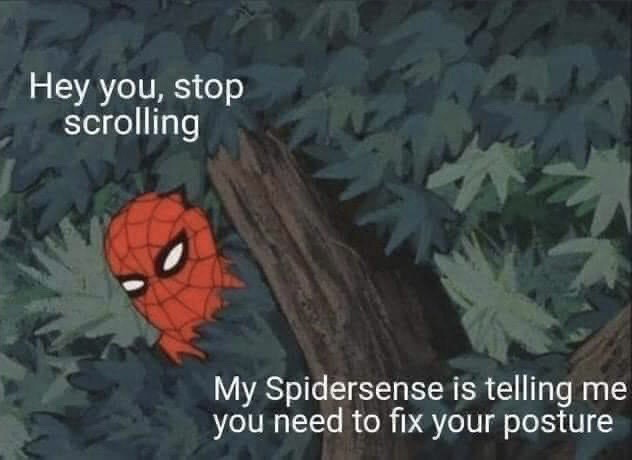
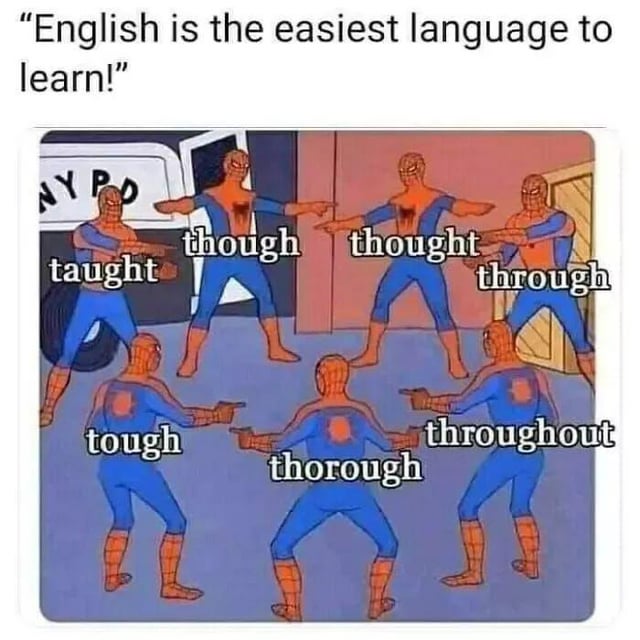
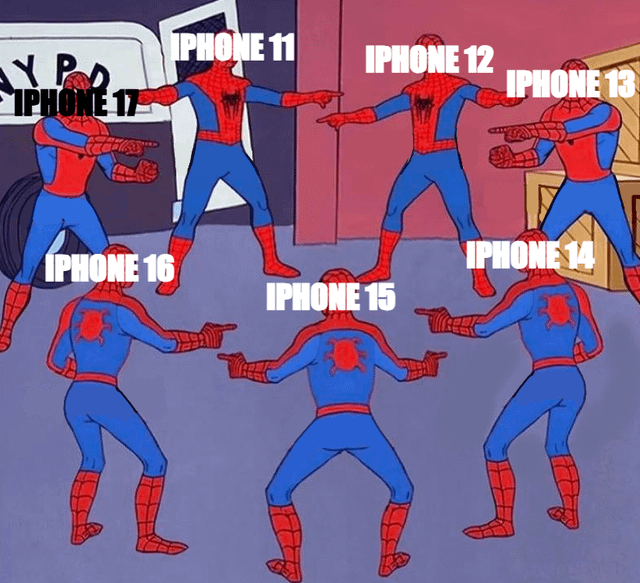
This flexibility is why the character can carry both clean reaction memes and dense label memes. A pointing Spider-Man can represent political factions, fandoms, browser icons, language quirks, social-media accusations, or two people with identical motives. A seated or lurking Spider-Man can become a posture reminder, a sarcastic advice image, or a "what job?" reaction to anxiety about AI.
Common Formats
- Spider-Man Pointing at Spider-Man: two or more costumed Spider-Men point at each other, usually labeled as groups, products, languages, fandoms, or people accusing each other of the same thing.
- Retro Spider-Man reaction macros: single frames of the 1967 character with captions that make him seem bored, suspicious, useless, distracted, or absurdly self-aware.
- Posture and scrolling reminders: Spider-Man peeks from behind an object or interrupts the viewer with a mock "spider-sense" warning.
- Multi-character collages: the pointing pose appears alongside other recognizable reaction figures, often to direct attention or exaggerate a comparison.
- Source-work crossover jokes: the character appears with other 1967 Spider-Man material such as J. Jonah Jameson, Peter Parker, or the villains used in Me and the Boys variants.6
Gagbase Usage Notes
Use this character page when the costumed 1967 Spider-Man is the central visual subject. It is especially appropriate for pointing templates, duplicated Spider-Man comparisons, masked Spider-Man reaction shots, and edits where the 1967 suit itself carries the joke.
Use the parent work page, Spider-Man (1967 animated series), when the meme is about the show as a source work or contains broader 1967 cartoon material. Use a Peter Parker character page for unmasked reading or advice-book scenes. Use narrower origin pages for named templates such as Spider-Man Pointing at Spider-Man or Peter Parker Reading a Book when those pages exist. Keep unrelated MCU, Raimi-film, comic-panel, game, cosplay, and general Spider-Man brand memes on their own branches unless the 1967 cartoon Spider-Man is visibly present.
Trivia
- The pointing pose comes from "Double Identity," a 1967 segment about an impostor Spider-Man.3
- 60's Spider-Man image macros helped normalize old-cartoon screenshots as deliberately absurd reaction images before the pointing template became the dominant mainstream association.2
- Me and the Boys became a 2019 meme wave through 1967 Spider-Man villain imagery rather than through Spider-Man himself, but it helped keep the same cartoon's visual style active in mainstream meme culture.6
- The character's meme identity depends on limitation: the fewer frames and facial details a screenshot has, the more easily captions can redirect its meaning.